
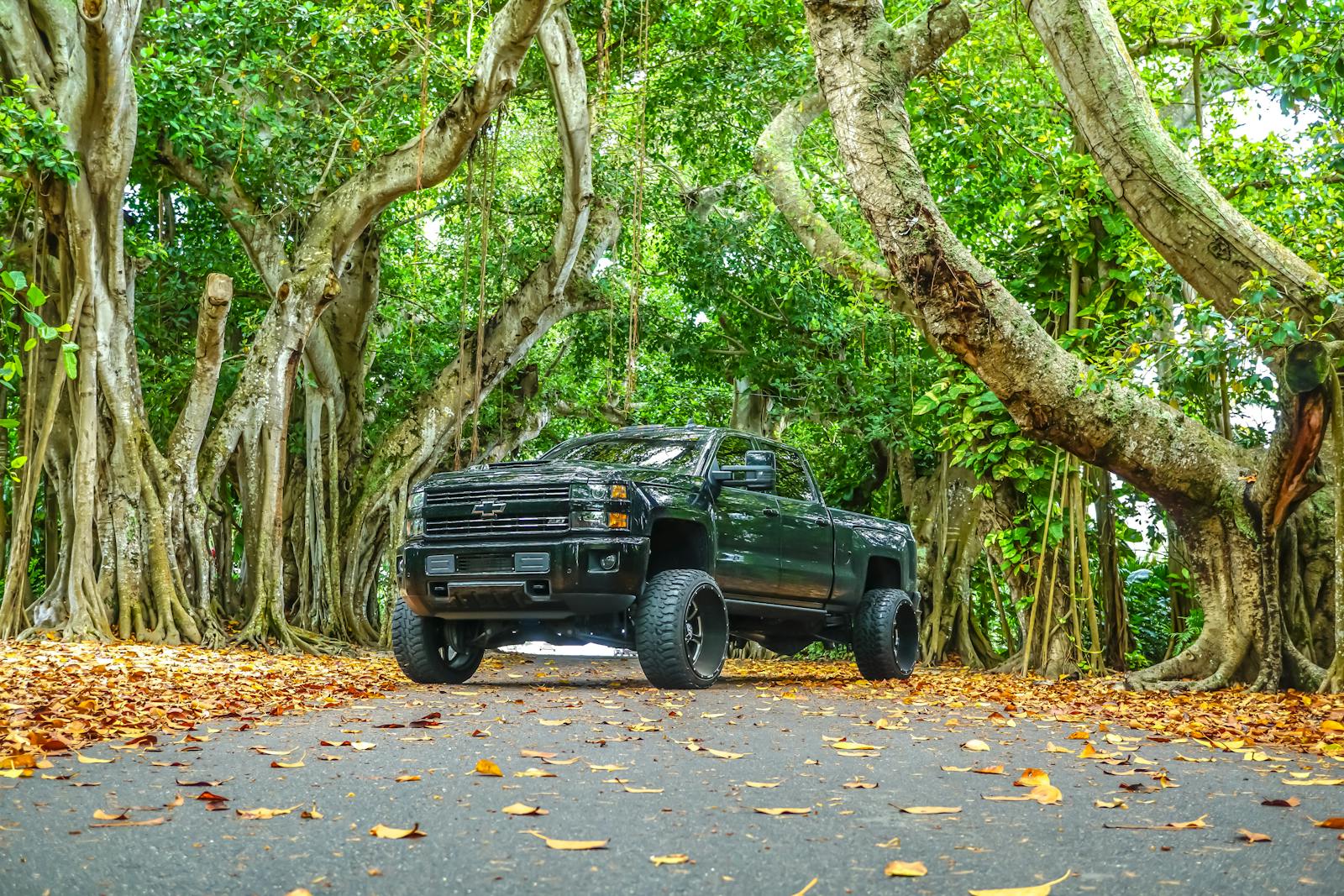

By the time the lifted Silverado rolled into the bay, everyone in the shop already had a rough read on the guy driving it. The truck was tall enough to cast a shadow over the service counter, riding on chunky tires with the sidewalls still shiny, and it had that “built, not bought” vibe—except the details didn’t quite add up.
The customer walked in like he owned the place, keys swinging from one finger, talking louder than necessary. He wasn’t there for anything dramatic, he said—just an alignment, maybe a quick look at a clunk in the front end. He kept repeating that it was “basically new” under there because he’d “just had work done” somewhere else.
The mechanic—older guy, the kind who doesn’t waste motion—didn’t argue. He wrote it up, nodded, and had one of the techs pull it onto the lift. The vibe didn’t go sideways until the truck was in the air and the tech’s flashlight found something that made him stop moving for a second, like his brain needed a moment to accept what his eyes were telling him.
The Lift Goes Up, the Smile Goes Away
Once the Silverado was high enough to stand under, the mechanic started with the normal stuff: checking tie rods, ball joints, steering linkage, anything that would explain a clunk. He had a habit of narrating his own process quietly, not for an audience—just that steady murmur of someone doing math with his hands.
Then he shifted his light toward the steering column area and the whole pace changed. There, tucked up where you’d expect to see proper brackets and hardware, were a bunch of zip ties—different colors, different ages—looped around parts that should never be “secured” that way. Not one emergency tie to keep a wire out of the way, but a whole little web of plastic holding something structural together.
He didn’t immediately yell or start cussing, which was somehow more unsettling. He just stared, reached up, and gently pushed on the column. The zip ties flexed. The column moved in a way it absolutely shouldn’t.
“Who Did This?” Turns Into “Don’t Touch My Truck”
He called the tech over, then called another guy over, because sometimes you need a second set of eyes just to confirm you’re not hallucinating. They all stood under the truck in that awkward silence shops get when something is so wrong it stops being funny. The mechanic finally said, calm but tight: “This steering column’s being held with zip ties.”
When the customer came back from the waiting area—coffee in hand, phone out—he expected the usual: “You need tires soon,” “We found play in the front end.” Instead he walked into three people standing under his Silverado like it was a crime scene.
The mechanic asked who installed the lift and who’d been in the steering column recently. The customer’s first reaction wasn’t confusion or concern; it was offense. He got defensive fast, like the question itself was an accusation, and snapped that he’d had “a guy” do it and it was fine.
The mechanic didn’t take the bait. He explained—still in that measured voice—that zip ties aren’t a fastener for steering components, and that if the column shifts under load, the truck can lose steering input. He used the kind of language shop people use when they’re trying to be unarguable: simple, direct, no drama. The customer heard none of it.
The Refusal to Release It
The mechanic did something a lot of customers don’t expect: he refused to put it back on the ground and send it out. Not because he wanted to upsell some big repair, but because he didn’t want the Silverado leaving his shop in a condition that could kill someone. He said he’d lower it, but it wasn’t leaving under its own power unless it was fixed or towed.
That’s the moment the customer stopped pretending it was a misunderstanding and started treating it like a hostage situation. He demanded his keys back. He demanded the truck back “right now.” He kept saying he only came for an alignment and they had no right to touch anything else.
The mechanic held the line and pointed out the obvious: they had touched it because it was on the lift for an alignment inspection, and the steering column being improvised together was part of what made the truck unsafe. He wasn’t shouting, but he also wasn’t backing up. The whole thing turned into that tense standoff where one person is trying to keep it factual and the other is trying to win by sheer volume.
The shop manager drifted closer, not getting in the middle, just close enough to step in if it went sideways. You could feel the technicians pretending not to listen while absolutely listening. Nobody likes this part of the job—the part where you become the adult in a tantrum you didn’t start.
The Lawsuit Threat, Right There at the Counter
The customer changed tactics and went straight to legal threats, like pulling a pin on a grenade. He told the mechanic he was going to sue him for “holding his property” and for “damaging the truck,” even though the truck was literally still in the air and nobody had done anything except look at it. He said he had a lawyer, he said he knew his rights, he said the shop was going to “pay.”
The mechanic didn’t flinch, which somehow made the customer angrier. He said, evenly, that he wasn’t keeping the truck; he was refusing to release an unsafe vehicle to be driven out. If the customer wanted it off the lift and onto a flatbed, they’d help coordinate a tow, and he could take it wherever he wanted.
That didn’t satisfy the customer because what he wanted wasn’t a solution—it was control. He started accusing the mechanic of trying to force repairs. He threw out numbers, like the shop was about to bill him five grand for something that hadn’t even been quoted yet. He kept insisting it “drove fine yesterday,” like yesterday’s luck was a warranty.
The mechanic offered to show him the zip ties up close. That was the wild part: he wasn’t hiding anything. He was willing to walk the customer under the lift and point at the exact problem. The customer looked, but it didn’t land as fear; it landed as humiliation, like the truck was being insulted in public.
How It Ends When Nobody Wants to Back Down
Once the word “sue” is in the air, shops tend to go rigid, because now everything is liability. The manager stepped in and told the customer that if he was threatening legal action, they couldn’t continue work and they’d need to document the condition of the vehicle. The customer took that as proof they were scared, and he got louder, pacing by the counter like he was performing for an audience.
The mechanic wrote up a refusal-to-release note and an unsafe-vehicle disclaimer, the kind of paperwork nobody reads until something terrible happens. He took photos—not to shame the customer, but to protect the shop if this came back as “they broke it.” The customer kept demanding the truck be lowered so he could drive out, and the answer stayed the same: tow truck or proper repair.
Eventually the customer did the thing people do when they realize they can’t bully physics: he called for a tow, furious the whole time. While they waited, he hovered near the bay doors, tossing out little jabs about “rip-off shops” and “people who don’t know what they’re doing.” The mechanic didn’t respond, just kept working on other cars like his heart rate hadn’t changed at all.
When the flatbed finally showed up, the customer’s mood shifted again—less rage, more tight-lipped damage control. He watched the driver winch the Silverado down, staring like he was memorizing who to blame. The mechanic handed him the paperwork and told him, one last time, that he was welcome to bring it back if he wanted it fixed correctly.
The truck left on a tow truck, which felt like the only reasonable ending and still didn’t feel like a win. The shop was safe, the mechanic had done what he could, and the customer was gone—but the real tension was what came next. Somewhere, that Silverado was going to land in another driveway or another shop, and the guy was going to decide whether to admit the zip ties were a problem or keep treating them like an insult somebody invented to mess with him.
More from Steel Horse Rides: