

The mechanic didn’t even hear the car pull in at first. He just heard the familiar rasp of a starter struggling a half-second longer than it should, followed by an engine settling into an idle that sounded… slightly wrong. Not “tow truck wrong,” not “cloud of smoke” wrong—just a little off, like someone playing a song half a beat behind.
The customer hopped out acting casual, keys swinging, coffee in hand, the whole vibe screaming: quick stop, in-and-out, don’t upsell me. They walked up to the counter and said they needed “just an oil change” because they were going on a trip soon. Then, like an afterthought, they added, “Oh, and there’s this tiny noise, but it’s probably nothing. Been doing it for a while.”
The mechanic asked the obvious question—how long is “a while”? The customer shrugged and said something like, “A few weeks? Maybe longer. It comes and goes.” You could practically hear the mechanic’s patience tighten, because that’s the kind of sentence that’s either harmless, or it’s the opening line to an expensive story.
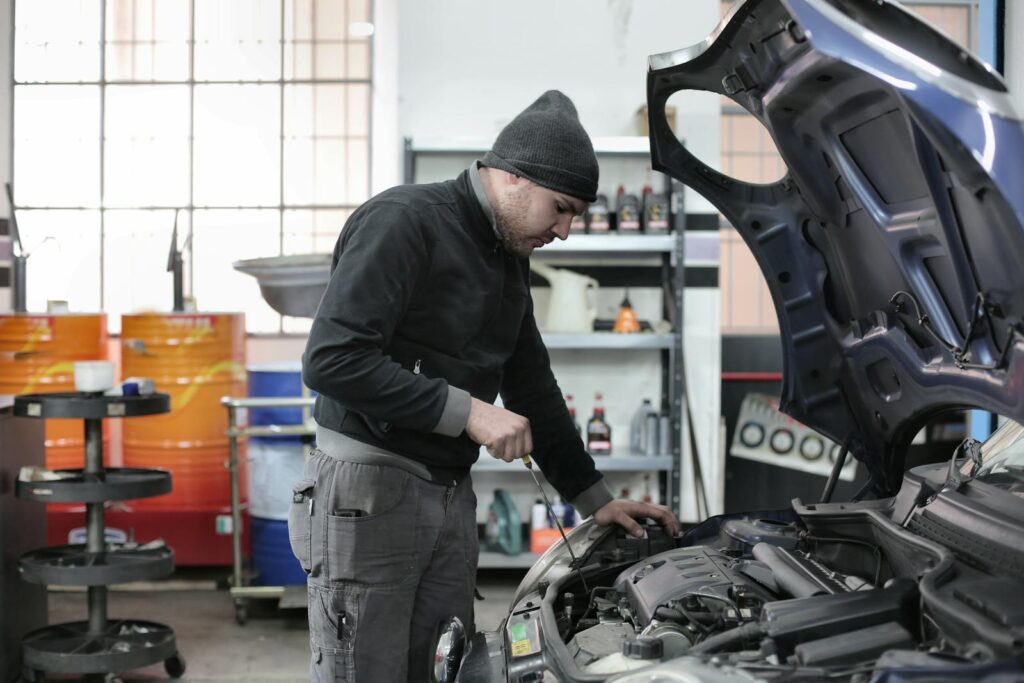
The tiny noise that wouldn’t sit still
He took it for a short loop around the block first, not because he loved joyriding customers’ cars, but because “tiny noise” is the most unhelpful description on earth. It’s either brake squeal, a heat shield vibrating, a loose plastic undertray, or the beginning of something catastrophic. The customer’s version of “tiny” can mean “I turned the radio up and it disappeared.”
On the test drive, the sound showed up right on cue—faint tapping that blended into road noise unless you were listening for it. It wasn’t a consistent tick like an injector or a clean exhaust leak puff; it was irregular, like a lazy knock hiding behind the rhythm of the engine. And then, at a light, the oil pressure warning flickered so quickly it was almost plausible to deny it happened at all.
Back at the shop, the mechanic asked if the light ever came on. The customer stared for a second, thinking hard, like they were trying to remember if the dashboard had ever tried to communicate anything besides “seatbelt.” Then they said, “Maybe once? But it went away, so I figured it was a sensor.”
The inspection turns into a slow, quiet panic
He popped the hood, checked the oil level, and the dipstick told its own horror story. The level was low enough that it took an extra wipe-and-dip just to be sure it wasn’t reading wrong. What oil was there looked tired, darker than it should’ve been, and thin in a way that made the mechanic’s eyebrows lift without him meaning to.
He asked when the last oil change was. The customer gave a mileage estimate with that confident uncertainty people get when they’re guessing but don’t want to sound like they’re guessing. It was one of those moments where the mechanic didn’t argue—he just nodded and moved on, because arguing early never fixes anything.
Up on the lift, there were no obvious leaks pouring out, no dramatic spray patterns, no puddle under where they parked. But the underside had a film that suggested it had been misting and weeping for a while, the kind of slow loss that lets someone convince themselves it’s “fine.” When he pulled the oil filter, the oil that came out didn’t look like it wanted to be oil anymore.
He cut the filter open, because the sound had his attention now. That’s when the little metallic glitter showed up in the pleats—tiny specks that caught the light and made his stomach drop. Not a few harmless flecks either, but enough that you didn’t need a magnet to know something inside that engine had been shaving itself down.
The conversation nobody enjoys having
He brought the customer over and tried to keep his voice neutral. He explained what he found—metal in the filter, low oil, that tapping noise that wasn’t “just a noise.” The customer did that thing where they smile tightly, like friendliness might negotiate reality into a cheaper shape.
“But it still drives,” they said, like the car was supposed to stop moving out of politeness. The mechanic told them, yeah, it drives right now, but the engine’s essentially warning you in a language it only gets to speak once. He asked again about the noise and the light, and the customer admitted they’d been commuting like normal and “trying not to think about it.”
The mechanic laid out the likely suspects in plain terms: oil starvation, bearing wear, possibly a timing component if the noise was coming from the top end, but the metal suggested the bottom end wasn’t happy. He said the scary part out loud—the kind of failure where it goes from “tiny noise” to “dead engine” can happen fast, and highways are where people find out how fast. The customer’s face shifted from skeptical to irritated, like they were hearing an accusation instead of a diagnosis.
They asked if he was sure it wasn’t just “a loose belt or something.” He didn’t snap, but he did pause a beat longer than usual, the way people do when they’re deciding how honest they can be without starting a fight. Then he said he could keep checking, but the evidence so far wasn’t pointing at belts. It was pointing inside the engine.
The moment it becomes a highway problem
They agreed to let him do a deeper look, but only because the trip was coming up and they didn’t want “drama.” The mechanic hooked up a scan tool—nothing dramatic, no obvious codes screaming for attention. That almost made it worse, because it’s easier when a computer tells someone they’re wrong.
He listened with a stethoscope around the engine, and the tapping wasn’t where a harmless noise would be. It was deeper, duller, more like something with weight behind it. When he blipped the throttle gently, the noise sharpened in a way that made the shop go quiet for a second, because everyone’s heard that sound before and nobody likes where it leads.
He told the customer he didn’t want them taking it on the highway. He said, if this is what it looks like, it could spin a bearing, lose oil pressure, seize, or toss a rod—any of those could leave them stranded, and some could leave them in a dangerous situation if it happened at speed. The customer stared at the car like it had betrayed them personally.
That’s when the bargaining started. “What if we just do the oil change and see if it quiets down?” “What if we use thicker oil?” “What if it’s just because it’s old?” The mechanic didn’t lecture; he just repeated the part about metal in the filter and the flickering oil light. He said an oil change isn’t a reset button when the engine’s already eating itself.
Blame, denial, and the price tag hanging in the air
The customer asked how much it would cost, and the mechanic gave them the two paths: confirm the damage with more diagnostics, or prepare for the possibility of a rebuild or replacement if it’s as bad as it sounds. He didn’t quote a number like a villain; he explained the labor and parts reality. Still, the customer’s posture changed the second they heard anything that sounded like “thousands.”
They started replaying their own timeline out loud, searching for a version where the car was at fault and nobody else had to take responsibility. They mentioned a quick-lube place from months ago, then a friend who once said modern cars “don’t need oil changes as often,” then how the noise only happened with the AC on. It was less a conversation and more a person trying to build a raft out of excuses.
The mechanic, meanwhile, was stuck in that familiar trap: if he’s too blunt, he’s “rude” or “trying to upsell.” If he’s too gentle, they’ll hear permission and drive it until it grenades. He offered the simplest safe option—don’t take the trip in this car, decide whether to diagnose further or cut losses, and if they insist on driving, understand it might not make it home.
The customer didn’t like that framing at all. They wanted certainty. They wanted a guarantee that it would either be cheap or not real. But the only certainty the mechanic had was the metal he’d already pulled out of the filter, glittering like a warning label nobody reads until it’s too late.
In the end, the car stayed in that uncomfortable limbo: not officially dead, but no longer trustworthy, sitting there like a ticking bill. The customer left with that tight, defensive energy people get when they feel cornered by their own choices, muttering about getting a second opinion and how “it was just a tiny noise.” And the mechanic was left staring at an engine that had tried to whisper for weeks—quietly, politely—until it had to start speaking in a language that sounds a lot like being stranded on the shoulder with semis blasting past.
More from Steel Horse Rides: