

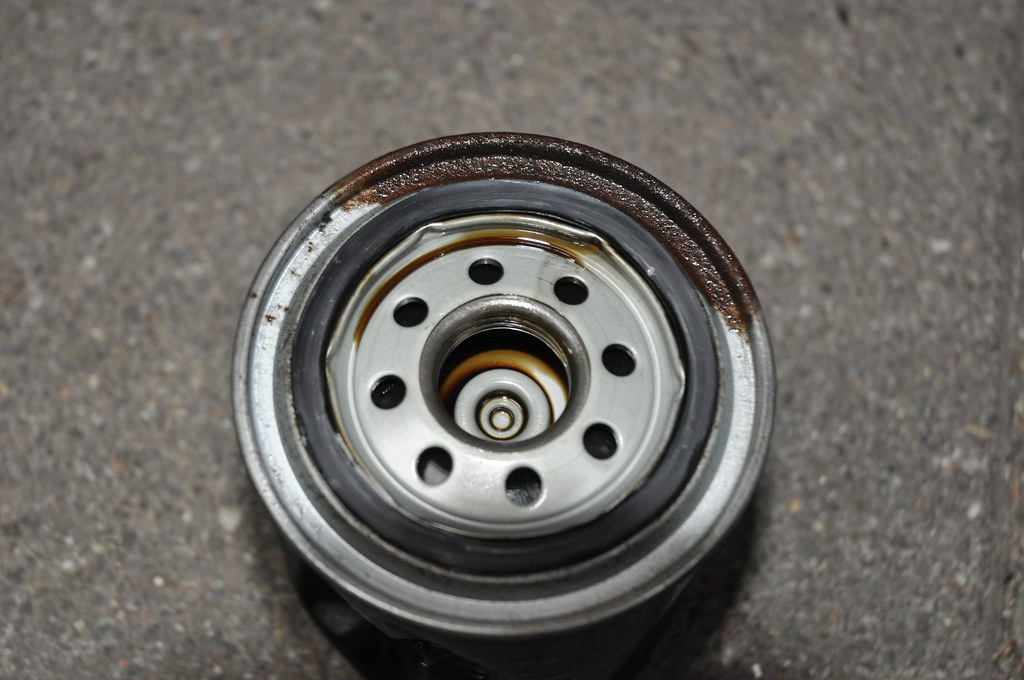
The car didn’t roll into the bay with a dramatic clatter or a trail of smoke. It was just a slightly stressed-out customer in a late-model commuter SUV, the kind that lives on school pickup lines and highway miles, saying the same thing people always say when something feels “off.” The oil light flickered once, then went away, and now there was a faint burning smell when they parked in the garage.
The mechanic—an experienced guy at a small independent shop that mostly survives on repeat customers and word of mouth—didn’t make a big show of it. He asked when the last oil change was, the customer pulled up the invoice on their phone, and it was recent. “Routine service,” the line item said, with a neat little checklist and a price that screamed quick-lube or dealership express lane.
They weren’t there for an oil change, technically. They were there because the customer couldn’t shake the feeling that the engine sounded a little sharper than usual, like it was working too hard to do the same job. The mechanic nodded, popped the hood, and started with the simplest stuff first—until he got under the car and had to stop for a second just to stare.
The drip that didn’t match the story
Underneath, there was oil where oil shouldn’t be: a thin, shiny film on the splash shield and a dark, wet smear that looked fresh. Not “old seep from a valve cover gasket” fresh—more like “this happened in the last few drives” fresh. The customer swore they hadn’t seen a puddle, and honestly, they might not have; modern undertrays can catch a leak and spread it out like a baking sheet.
The mechanic wiped a finger along the bottom edge of the oil pan, then traced the trail up toward the filter housing. It wasn’t dumping oil in a dramatic gush, but it was wet enough to be actively wrong. He told the customer to step over and take a look, not in a scolding way, more like a “you need to see this so we’re on the same page” way.
The customer tried to be casual about it—maybe it was just residue from the last service, maybe they spilled some and didn’t clean it. But the mechanic shook his head because the leak pattern had direction to it, and it wasn’t old grime. Then he put his hand on the oil filter and gave it a gentle twist, the way you do when you’re checking if something’s snug.
“It’s… barely attached”
The filter moved. Not a little “rubber gasket compressed” movement—actual, easy rotation like someone had spun it on and never finished the job. The mechanic looked up from under the car with that expression that’s half disbelief, half annoyance, like he’s mentally tallying all the ways this could’ve ended badly.
He slid out, told the customer not to start the vehicle again, and asked if anyone else had touched it since the last service. The customer’s face did that quick shift from confused to offended. They’d paid for an oil change, they had the paperwork, and they hadn’t been messing around under the car.
The mechanic didn’t argue with them. He just explained, carefully, that an oil filter should not be removable by hand with almost no resistance. A properly installed filter is tightened to spec, the gasket seats, and it stays put through heat cycles and vibration. This one felt like it had been left at the “good enough” stage, the moment before the tech would normally give it the final turn.
Then he did the part that made it all feel a lot less theoretical: he checked the oil level. The dipstick came out nearly dry, with just a thin smear at the very bottom like the engine had been running on whatever was left clinging to internal surfaces. The customer went quiet in the specific way people get when they realize a warning light wasn’t being dramatic—it was being polite.
The sound of an engine that’s been starving
To confirm what kind of damage they might be dealing with, the mechanic didn’t rev it or play hero. He added enough oil to bring it back into a safe range, then started it briefly, listening like someone reading a lie in real time. The engine ran, but it had a faint metallic edge—subtle, but there—like an instrument slightly out of tune.
He shut it down quickly and explained what the customer didn’t want to hear: engines can survive low oil, sometimes, but they don’t forget it. Bearings get scored, cam journals get chewed, timing components wear faster, and the damage might not announce itself today. It might show up later as a knock, a timing rattle, or a sudden appetite for oil that the car never had before.
The customer kept staring at the invoice on their phone like it might rearrange itself into a better outcome. “Routine service,” it said again, the same words, suddenly meaningless. The mechanic pointed at the filter area and the wet mess around it and said the part out loud that most people only think: if that filter had backed off another turn, the engine could’ve lost pressure entirely on the highway.
That’s when the emotional math kicked in. The customer wasn’t just worried about the car; they were angry at being put in this spot by someone they’d trusted because the building had a clean waiting room and a branded shirt. They asked, in a tight voice, if the shop could prove it was the last place’s fault.
The awkward dance of “prove it”
The mechanic knew this conversation. He’d seen it enough times to keep his voice neutral, because getting worked up doesn’t change what happened, and it definitely doesn’t help the customer get reimbursed. He offered to document everything: photos of the filter, photos of the oil residue, the current mileage, the oil level on arrival, and a note on the work order stating the filter was loose on inspection.
He also explained the limits of what documentation can do. Unless the other shop admits fault or there’s a clear policy for claims, it often turns into a back-and-forth where everyone defends themselves. The customer wanted certainty—someone to point at, someone to pay—and the mechanic could only give them evidence and a professional opinion.
So they did the practical stuff. The mechanic removed the filter and checked the gasket surface, looking for the classic mistakes: double-gasket, pinched seal, threads cross-started, housing cracked, O-ring missing. The gasket looked like it had seated once, which made it even more infuriating because it suggested the tech had started correctly and then simply didn’t finish tightening it.
He installed a new filter properly, cleaned the area enough to monitor fresh leaks, topped off the oil, and recommended an immediate follow-up: a fresh oil change sooner than normal, maybe an oil pressure test, and paying attention to any new noises. Not as a lecture—more like a grim checklist for how to live with a question mark.
The call to the last shop, and the way it went sideways
The customer didn’t even wait until they got home. They stood in the parking lot and called the shop listed on the invoice, putting it on speaker because they wanted the mechanic to hear. The voice on the other end sounded bored at first, then defensive as soon as the customer said “oil filter” and “nearly no oil on the dipstick.”
The shop asked the usual questions—did anyone else service it, did the customer hit something, was the oil light on, why did they keep driving. The customer’s tone sharpened with every question, because it felt like the shop was building a case against them instead of taking the claim seriously. The mechanic didn’t jump in immediately, but when the person on the phone implied the filter “can’t just loosen itself,” he finally spoke up and said, evenly, that he’d physically turned it by hand and it was nowhere near spec.
That didn’t magically fix the conversation. The other shop pivoted to process: bring the vehicle in, let their manager inspect it, no promises, they can’t authorize anything without seeing it. The customer looked at the mechanic like, “Do I even dare drive it there?” and the mechanic gave a careful answer: if they do, keep it short, keep an eye on oil pressure, and stop immediately if the light comes on. But he also made it clear he didn’t love the idea of the car being used as a bargaining chip while it was already compromised.
By the end of the call, the customer had an appointment and no reassurance. What they did have was that sour feeling of being caught between two places: one that found the problem and didn’t cause it, and one that might’ve caused it and now wanted control of the narrative. The mechanic handed them the printed work order and told them, gently, to keep every receipt from this point forward.
The messiest part wasn’t the oil on the undertray or the loose filter—it was the uncertainty hanging over the engine like a storm cloud. The car started and drove, sure, but now every sound would feel suspicious, every slight vibration would trigger that memory of the dipstick coming out nearly dry. And the real fight wasn’t even in the bay anymore; it was in whatever fluorescent-lit office was going to decide whether “routine service” meant anything when the filter was barely attached and the engine had already paid the price.