

The mechanic knew something was off the second the customer rolled in, because the car didn’t sound broken. No grinding, no screaming belts, no limp mode tantrum. It was just a normal mid-2010s sedan gliding into the bay like it had nothing to hide, the kind of car that disappears in a grocery store parking lot.
The customer, a tired-looking guy in work boots, wasn’t panicking either. He was mildly annoyed, like the car was inconveniencing him on purpose. He told the service writer the steering felt “kinda floaty” on the highway and the braking felt “weird in the rain,” and he wanted someone to take a quick look before his weekend drive.
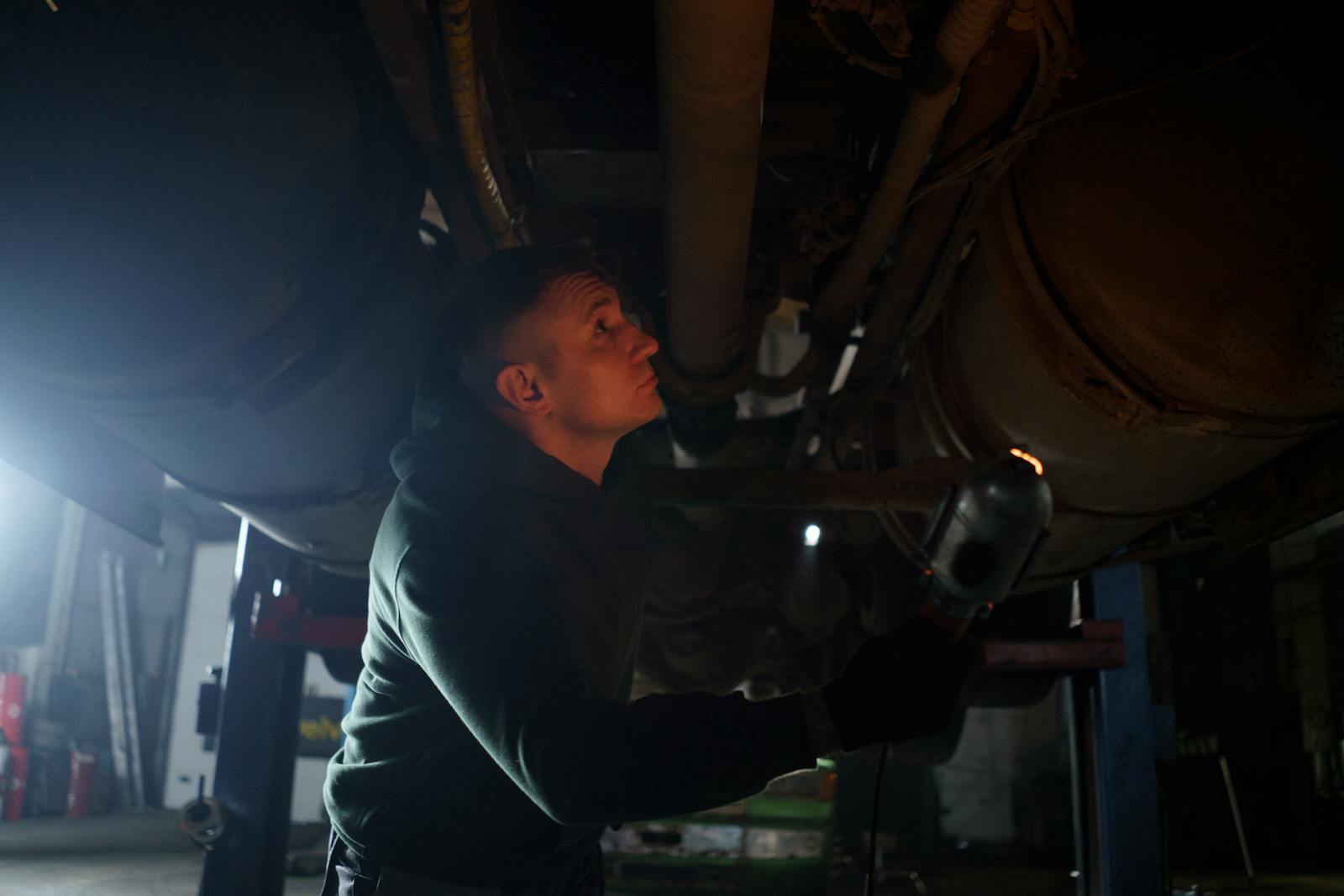
When the tech pulled it onto the lift and walked around with a flashlight, the “quick look” turned into that quiet, stunned pause mechanics get when they see something that makes them rethink their own commute. The tires weren’t just worn. They were so bald they looked like somebody had taken a belt sander to them until the tread gave up entirely.
The lift goes up, and the mood shifts
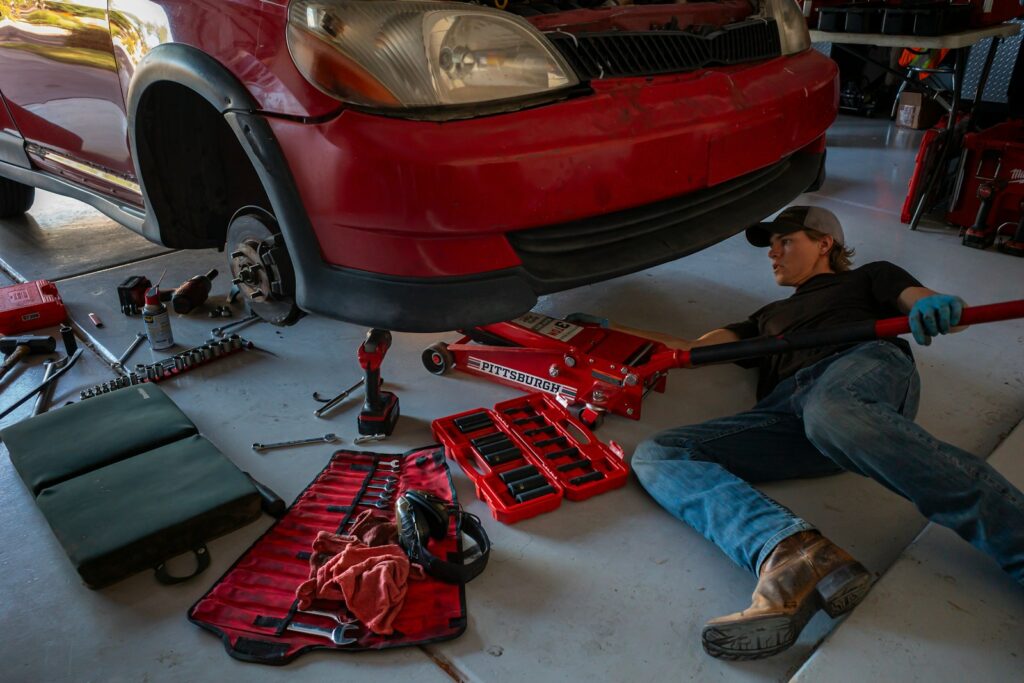
At first, the mechanic did what they always do: the little ritual inspection. A glance at the sidewalls, a check for uneven wear, a quick spin of the wheel. But as soon as the tire rotated, the lack of tread became undeniable—no grooves, no channels, nothing to move water out of the way, just a smooth, shiny surface with faint, ghostlike remnants of what used to be pattern.
He leaned in closer and found the wear bars were long past “flush.” The tire had worn down beyond the point where it was even pretending to be street legal. In a couple spots, the rubber looked thin enough that the structure underneath was basically waiting for a reason to introduce itself.
The mechanic called another tech over, not with a dramatic yell, just a low, “Hey, come look at this.” The second guy took one look and let out a short laugh—the kind that isn’t funny, just disbelief wearing a smile. Someone muttered that they’d seen track-day tires with more bite.
Then came the part that made it tense: the mechanic walked back toward the waiting area with that printed estimate face, the one that says, “I’m about to ruin your day, but also maybe save your life.” The customer was scrolling on his phone, totally relaxed, like this was going to be a $40 alignment and a free coffee.
“Almost racing slicks” and a customer who doesn’t want to hear it
He started politely. He said the steering “floaty” feeling made sense, because the tires had basically no tread left. Then he said the line that stuck: they were “almost racing slicks,” except racing slicks belong on a dry track with warm rubber and a driver who expects zero traction in the wet.
The customer looked up and blinked like the mechanic had accused him of something. “They’re not that bad,” he said, already halfway into defensive mode. He insisted he’d just passed inspection a while back, and besides, he doesn’t drive “crazy,” and he hasn’t had a blowout, so what’s the problem?
The mechanic didn’t argue in that “sir, actually” way that sets people off. He just asked a couple questions: how long since the tires were replaced, whether the car had been sliding in the rain, whether he’d felt any vibrations. The customer shrugged and admitted he’d noticed the car hydroplaned once or twice, but that was “just the roads” and everyone hydroplanes sometimes.
That’s when the mechanic switched from polite to blunt, because there’s only so much you can soften a safety issue. He told him flat-out that if he hit standing water at highway speed, the car could lose control like it was on ice. He also pointed out that a tire with that little rubber left doesn’t need much—a pothole, a curb tap, one hard brake—to fail in a way that doesn’t give you a second chance.
The awkward walk to the bay
The customer didn’t believe him, so the mechanic did the thing that always makes it real: he invited him into the shop. Not in a “let me educate you” tone, but more like, “Come see it yourself.” They walked past the lifts and tool carts, the customer trying to look unimpressed while also craning his neck to find his car.
Under the bright shop lights, the tires looked even worse. The rubber had that smooth, worn sheen that makes your stomach drop, like a shoe sole that’s been worn through. The mechanic put his finger against where tread should’ve been and dragged it across the surface—no grooves, no edges, nothing to catch.
He showed him the shoulder of the tire, where it was rounded off from wear. He pointed out the faint scuffing and the slight cracking that suggested it wasn’t just bald, it was tired. The customer stared for a few seconds, then did that thing people do when they’re embarrassed: he got more stubborn.
“So you’re saying I need all four?” he asked, like it was an accusation. The mechanic said yes, and also recommended an alignment because the wear pattern hinted the car had been chewing through rubber unevenly for a while. The customer exhaled hard through his nose, the universal sound for “I didn’t budget for this and I’m mad about it.”
The fight isn’t about tires, it’s about money and pride
Back at the counter, the estimate hit the screen, and the customer’s posture changed instantly. He leaned forward, squinted at the numbers, and started negotiating like the laws of friction were a markup tactic. Could he just do the fronts? Could he get used tires? Could they patch the “bald” part? (The mechanic stared at him for a beat on that one.)
The mechanic kept it simple: you can’t patch missing tread, and mixing random tires on a car that already feels unstable is a great way to make a bad situation worse. He offered cheaper options—basic all-seasons, not fancy performance tires—and explained the difference between “safe” and “premium.” The customer heard “cheaper” and latched onto it like it was proof the whole thing was negotiable.
Then came the flash of anger. The customer said something along the lines of, “You guys always find something,” and the mechanic’s face tightened. Because in that moment, it stopped being about the tires and became about being accused of running a scam, while staring at four rolling hazards that had somehow made it there without exploding.
The mechanic didn’t raise his voice, but he did get sharp. He told him they weren’t “finding something,” they were finding the only thing connecting his car to the road, and right now it was basically a gamble. He also told him, calmly, that the shop wasn’t going to let him drive it out like that if he declined service—because if he left, slid into someone, and there was a paper trail that they’d warned him, it wasn’t just his problem anymore.
The standoff: leave it, tow it, or fix it
The customer hated that. He called it “holding his car hostage,” which is a phrase that shows up any time a shop draws a hard safety line. He asked for his keys, and the service writer explained the policy again: they could reinstall the wheels, but they couldn’t in good conscience send it back on the road with tires that were past the point of dangerous.
For a minute it hovered there, that tense limbo where both sides feel wronged. The customer paced, made a phone call, and kept looking at his car through the shop window like it had betrayed him. The mechanic went back to work, but you could tell he was still irritated—partly at the accusation, partly at the fact that this guy had been driving around with “almost slicks” and acting like it was normal wear and tear.
Eventually the customer asked the question that matters: “What are my options?” And the options were exactly what you’d expect—replace the tires there, have it towed somewhere else, or sign the paperwork that he’d been warned and accept that the shop still might refuse to release it if it violated their safety policy. None of those options felt good to him, which was kind of the point.
He ended up choosing the cheapest new set they had that still met the car’s specs, grumbling the whole time like he’d been forced into it. The alignment got postponed “for later,” which made the mechanic’s eye twitch, because “later” is how cars end up back on the lift with the same problem. When the new tires went on, the difference was immediate—suddenly the car looked normal again, like it belonged on public roads.
But the weird part wasn’t that he replaced them. The weird part was how close he came to not replacing them, even after seeing the tires up close, even after hearing the word “hydroplane” said out loud like a warning instead of a story. The mechanic watched him leave, safer than he’d arrived, and still couldn’t shake the same thought: the customer didn’t realize he’d been lucky—he only realized he’d been inconvenienced.
More from Steel Horse Rides: