
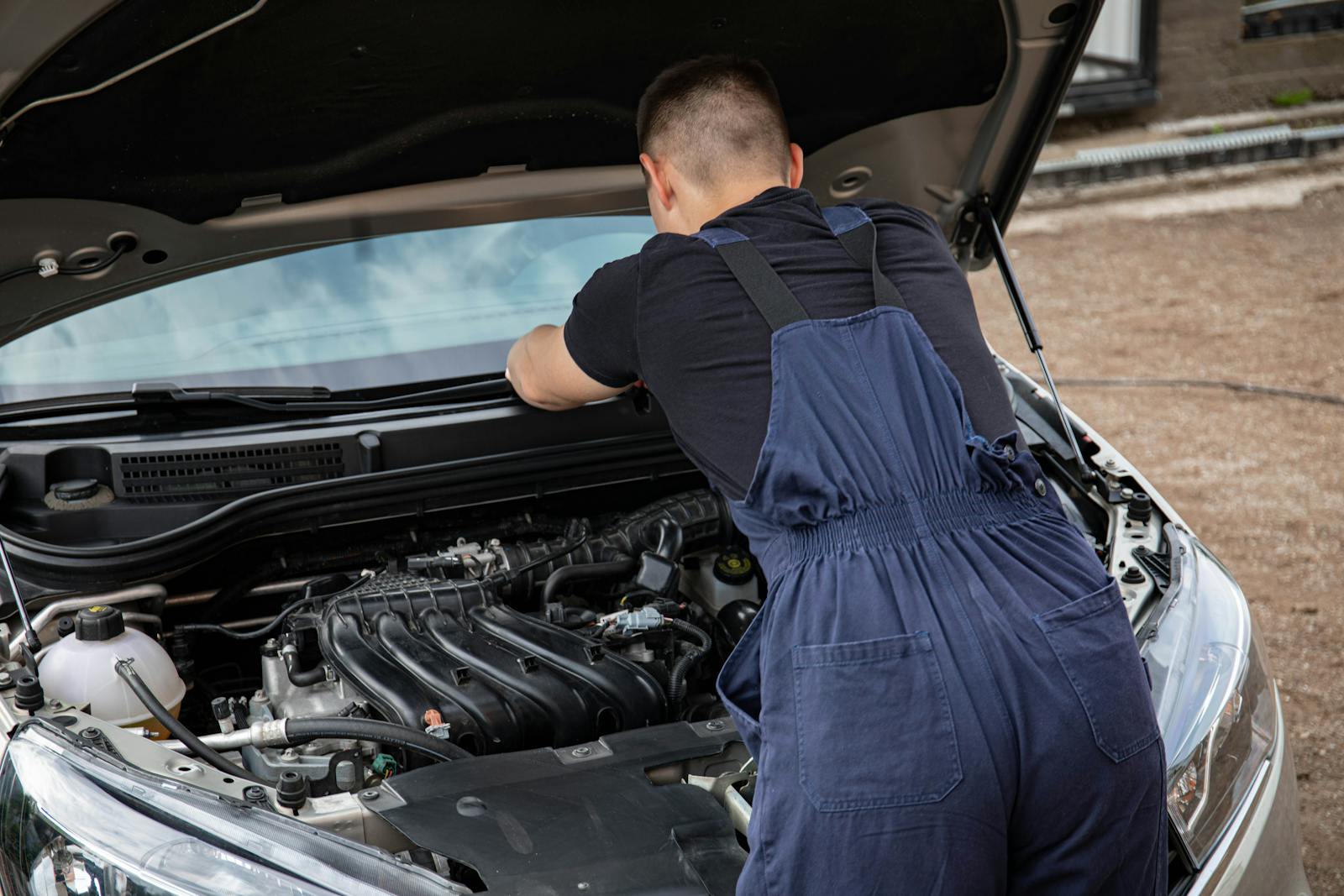

Every mechanic has “that conversation” at least a few times a week: the one where a customer comes in hoping for a quick fix, and the estimate lands with a thud. Suddenly the question isn’t “Can you fix it?” but “Should I even fix it?” And honestly, that’s a fair question—because there are a handful of repairs that can turn a perfectly normal car problem into a financial faceplant.
To be clear, “not worth it” doesn’t always mean “junk the car.” If you love the vehicle, it’s paid off, or you know its history, you might still decide to repair it. But if you’re trying to be practical, these are five common repairs mechanics say frequently cost more than the car’s market value—especially on older, high-mileage vehicles.

1) Engine Replacement (or Major Internal Engine Work)
When your engine is truly done—thrown rod, cracked block, severe oil starvation damage—your wallet usually feels it before the tow truck arrives. A replacement engine can run anywhere from a few thousand dollars to well over $10,000, depending on the car, the shop, and whether you’re using a used, rebuilt, or new engine. Labor alone is a big chunk because modern engines are packed tight, and everything seems connected to everything.
Even if you don’t replace the whole engine, major internal work (timing chain failures that grenaded the top end, spun bearings, valve damage) adds up fast. Mechanics often see people sink big money into an engine only to discover the transmission is next, or the suspension is worn out, or rust is creeping in. That’s when a “repair” starts looking suspiciously like a long-term payment plan to keep an old car on life support.
2) Transmission Replacement or Rebuild
Transmissions are the other budget-buster that makes mechanics wince. If your automatic transmission is slipping, banging into gear, or refusing to move the car altogether, you might be looking at a rebuild or replacement. Depending on the vehicle, it’s common to see quotes in the $3,000–$7,000 range—and that’s before you add potential extras like new mounts, fluids, programming, or related cooling issues.
Here’s the tricky part: transmissions don’t usually fail in a neat, isolated way. If the car has high mileage, the same wear-and-tear that took out the transmission may be working on the engine, wheel bearings, or differential too. A lot of mechanics will say this is the point where you should at least pause, check the car’s value, and ask if you’re fixing transportation—or funding a mechanical hobby.
3) Hybrid Battery Pack Replacement
Hybrids can be wonderfully reliable, but the high-voltage battery is a different kind of expense. When a hybrid battery pack starts failing, you might notice warning lights, reduced fuel economy, or odd power behavior. Replacement costs vary wildly: some cars have more affordable options, while others can run several thousand dollars, especially with OEM parts and dealer labor.
Now, there are middle-ground solutions—reconditioned packs, refurbished cells, independent hybrid specialists—sometimes at a much friendlier price. But mechanics will tell you to be careful: the cheapest option isn’t always the best, and warranties can be all over the place. If the car itself is worth only a few thousand dollars, dropping most of that on a battery can feel like buying a very expensive “maybe.”
4) Head Gasket Failure (Especially on High-Mileage Cars)
A blown head gasket sounds like one part, one fix. In reality, it’s often a whole saga. You’re paying for lots of labor because the top of the engine has to come apart, and then you’re paying for machine work, new bolts, fluids, gaskets, and the little surprises that pop up once everything’s open.
And those surprises matter. If the engine overheated, the cylinder head could be warped, the block could be damaged, or the cooling system could have underlying issues that caused the failure in the first place. Mechanics see plenty of head gasket jobs where the repair estimate climbs, and climbs again, until it’s uncomfortably close to—or higher than—what the car would sell for on a good day.
5) Severe Rust Repair (Frame or Structural Rust)
Rust is the quiet villain of older cars, especially in places that use road salt. Surface rust is one thing, but structural rust—rotted subframes, corroded frame rails, suspension mounting points that look like lace—can make a vehicle unsafe. And fixing it properly isn’t just expensive; it’s sometimes not even realistically doable.
Welding, fabrication, and structural restoration take serious time and skill, and many shops won’t touch it because liability is huge. Even if someone will, the cost can easily exceed the value of the car, and there’s no guarantee other rust won’t pop up right behind the fresh repair. Mechanics often joke that rust repair is like chasing a stain on a white shirt: it keeps spreading the moment you look away.
How Mechanics Decide If It’s Time to Walk Away
Most good shops won’t just toss you a scary number and send you on your way—they’ll help you think it through. A common rule of thumb is comparing the repair cost to the car’s current value and your near-future risk. If the repair is close to (or more than) what the car is worth, it’s worth asking what else is likely to fail in the next year.
Mechanics also look at “the bones”: is the body solid, is there rust underneath, does it drive straight, does it burn oil, is the maintenance history decent? A $4,000 repair on a well-kept car you know can make more sense than a $2,000 repair on a mystery vehicle that’s been neglected. The goal isn’t perfection—it’s avoiding the trap of paying top dollar to keep a bottom-dollar car alive.
If You’re Staring at a Huge Estimate, Here’s the Calm Next Step
First, ask for a written breakdown of parts, labor, and any “while we’re in there” items. Then get a second opinion—especially on big-ticket jobs like engines, transmissions, head gaskets, and hybrid batteries. Different shops may suggest different approaches, and sometimes there’s a cheaper, smarter fix you weren’t offered.
Finally, price out your alternatives realistically: what a comparable replacement car costs, what taxes and fees look like, and what you’d pay in insurance. Sometimes repairing is still the cheapest path, even if it hurts. But when the numbers say otherwise, walking away isn’t failing your car—it’s just making a grown-up decision with your money.
More from Steel Horse Rides: