
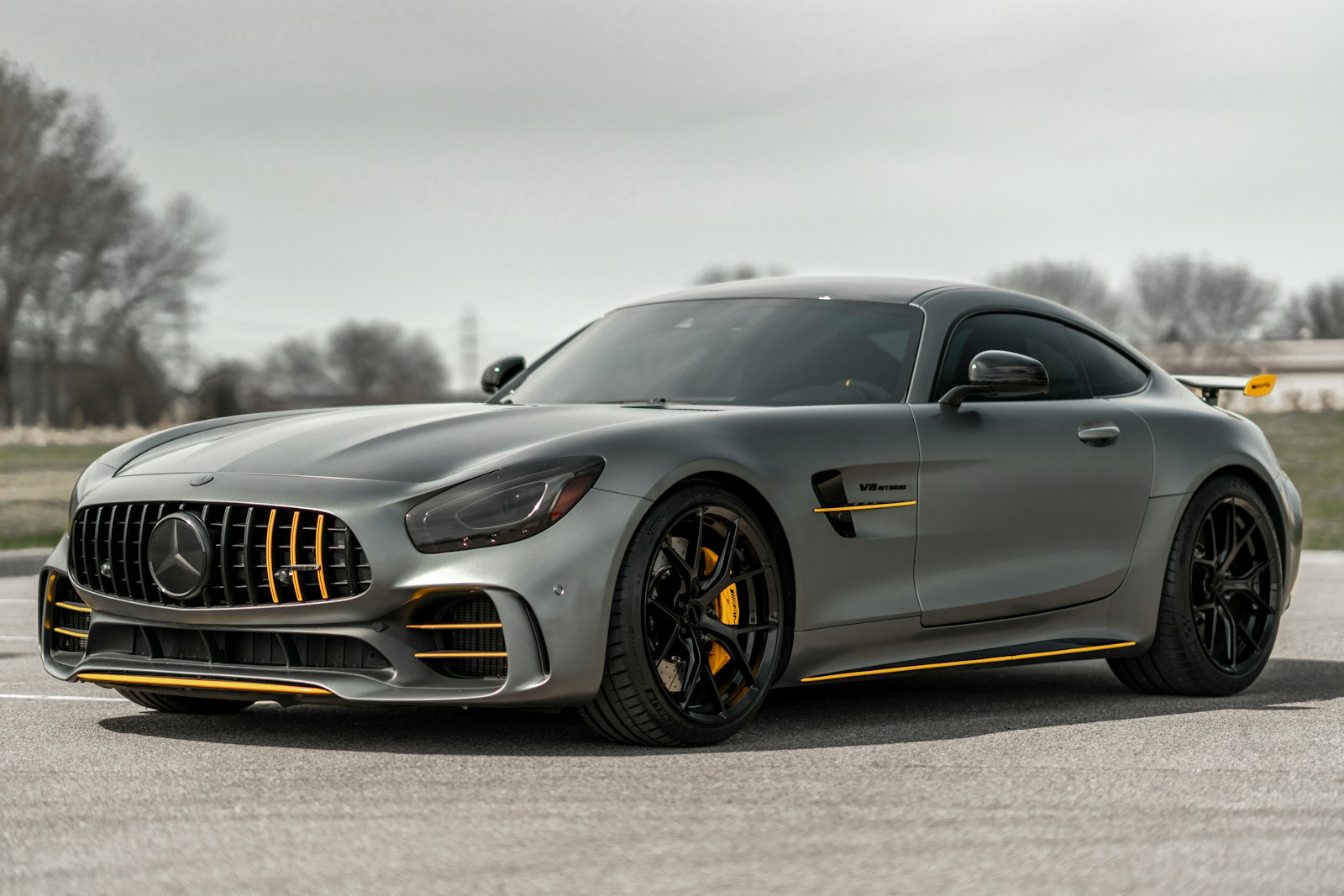

Mercedes-AMG spent decades building its reputation on a snarling V8, and in 2023 it pulled that engine out of the C63 and replaced it with a turbocharged four-cylinder bolted to a hybrid system that produced more horsepower on paper than the car it replaced. The spec sheet looked like a win: 671 horsepower and 752 lb-ft of torque, numbers no previous C63 ever touched. The sales numbers didn’t agree. Three years later, Mercedes-AMG has publicly admitted the swap cost it loyal customers, confirmed it’s killing the four-cylinder hybrid entirely, and started walking V8 power back into other models, proof that horsepower alone doesn’t sell a performance car if it doesn’t sound or feel like the one it replaced.
The Numbers Don’t Lie
Real registration data backs up what enthusiasts were saying online long before Mercedes admitted anything. In Australia, the four-cylinder hybrid C63 sold 238 units in its first full year of deliveries, according to plug-in hybrid registration figures from the Federal Chamber of Automotive Industries. That’s a roughly 70 percent decline from the twin-turbo V8 generation’s peak-era volumes, and it means the new hybrid C63 was outsold by BMW’s rival M3 Competition, which moved 342 units over the same stretch, by about 44 percent. For context, the old V8 C63 used to outsell the M3 comfortably. The four-cylinder version couldn’t keep pace with its direct competitor in the exact market segment AMG built the car for.
AMG’s Own Admission
Michael Schiebe, who has run Mercedes-AMG since March 2023, didn’t dodge the criticism when asked about it directly. “We see that some of our very loyal customers struggle a bit with the concept,” Schiebe said, adding plainly: “Of course, no doubt we have also lost some customers who are just into V8s.” He placed some of the blame on AMG’s own messaging, saying the brand “jumped far ahead with this technology, but we should have explained the technology more to our salespeople and customers.” It’s a rare moment of a performance brand admitting, on the record, that a major engineering decision alienated the exact buyers it depends on most.
The Fix: Six Cylinders, Then Maybe Eight Again
Mercedes-AMG confirmed in February 2026 that the four-cylinder hybrid C63 is being discontinued outright, not revised. Schiebe told reporters the replacement will be a turbocharged inline-six-cylinder model badged C53, borrowing the combustion engine from the CLE 53: “We’re taking the combustion engine from the CLE 53. No hybrid engine. Pure inline six-cylinder.” He pointed to tightening European emissions rules as part of the reasoning, noting that “under the regulations of EU7, it’s quite difficult to carry [the four-cylinder engine] into the future.” The new C53 makes a comparatively modest 443 horsepower and 413 lb-ft, well down from the outgoing car’s numbers, but it trades a widely disliked hybrid system for a straightforward gas-only inline-six that sounds like a performance engine again.
The V8 question hasn’t fully closed, either. Mercedes-Benz board member Mathias Geisen said in July 2026 that a V8 return for the C63 and E63 remains under consideration, telling reporters to “stay tuned” while noting the company still needs “a very nice and sophisticated V8” and is watching market demand before committing. Separately, Mercedes-Benz CEO Ola Källenius confirmed in May 2026 that a new V8 engine is coming in three versions, including a high-performance AMG variant, though its debut is expected first in the GLS63 rather than the C-Class.
The used market shows the same story in dollar terms. The four-cylinder hybrid C63 started at $85,050 when new, climbing toward $90,000 on current dealer stock, yet lightly used examples with only a few thousand miles have turned up for $55,000 to $58,000, more than $30,000 off sticker on cars mechanically identical to what’s sitting in showrooms today. Compare that to a used 2024 BMW M3, which still commands $70,000 and up on the resale market, and the gap says everything about which car buyers actually wanted to hold onto.
What This Means for Enthusiasts
The lesson here isn’t that hybrid performance cars can’t work; plenty of hybrid supercars have sold just fine. It’s that AMG tried to replace an emotional product with a more efficient one and underestimated how much of the C63’s appeal was never about the spec sheet in the first place. Buyers who wanted a genuine V8 experience went and bought something else, whether that meant a BMW M3, a used previous-generation C63, or simply waiting out the four-cylinder generation entirely. Mercedes-AMG now finds itself doing something rare in the industry: publicly reverse-engineering its way back toward the exact formula it walked away from, one inline-six and one “stay tuned” at a time.