

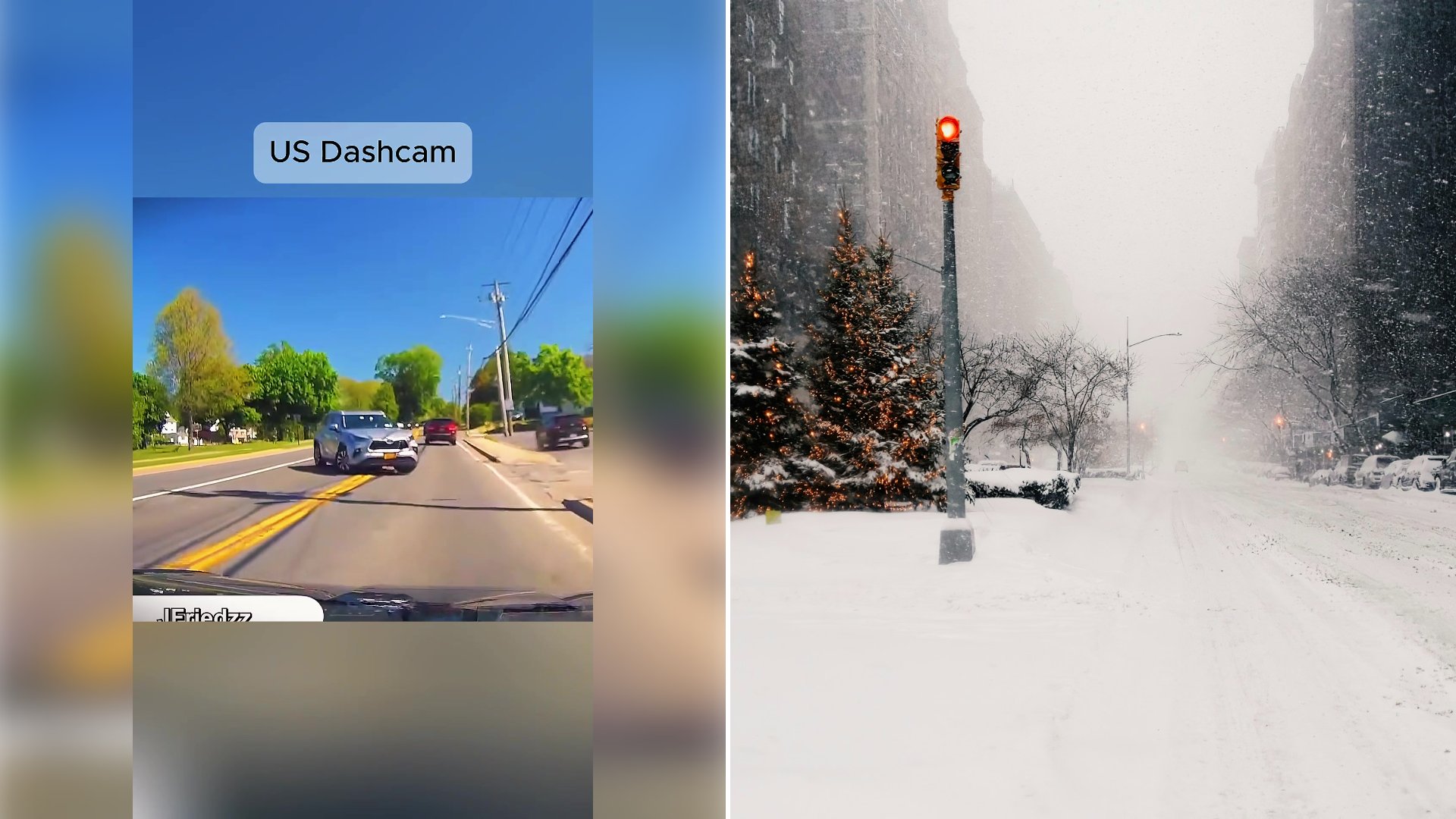
The TikTok account @alexander_kd42 posted a one minute compilation of dashcam clips with a “US Dashcam” label across the top and a caption that is only hashtags about dashcams, driving fails and driving lessons. It does not credit the drivers who recorded the footage, does not say where or when any clip was filmed, and carries no narration, so what follows describes only what the pictures show.
The compilation cuts quickly between many separate recordings, each only a few seconds long. One opens with a silver SUV filling the windshield at close range on a sunlit street. Others show a dark sedan changing lanes on a multi lane highway, a gray SUV waiting beside a road sign, a red semi truck on the highway with another vehicle close by, and a red coupe, a white SUV and a white van sharing space in dense traffic on a commercial strip.
Later clips switch the scenery. A traffic light hangs over a snow covered intersection, a long street lined with palm trees sits under a bright sky, and the final shots follow a white SUV along a road in low evening light. Most of the clips do not show a crash, and it is often not clear from the picture alone what the viewer is supposed to notice.
The sound track is a poor guide. The platform’s automatic transcript picks up a few exclamations, a stray line of foreign language and a stretch of music, none of it tied to a particular clip. Because the audio is mixed from different sources, nothing in it can be used to say what any driver was thinking or what caused any incident.
That makes the video a good illustration of a general point and a poor source for any specific claim. The viewer cannot tell who was at fault in any clip, whether the footage is from the United States as the label says, or whether any of it was edited or sped up. The clips also show other drivers’ vehicles and, in some, readable plates, so this article does not describe those details.
Some federal numbers give the compilation context. The Federal Highway Administration says roughly one quarter of traffic fatalities and about one half of all traffic injuries in the United States are attributed to intersections, and that many fatalities at signalized intersections involve red light running. It lists 1,272 signalized intersection deaths tied to red light running in 2022. Those facts match the many intersection scenes in this clip, but the footage does not show any red light running that can be confirmed.
The National Highway Traffic Safety Administration’s research note on distracted driving in 2024 says 3,208 people died in distraction affected crashes, which was 8 percent of the 39,254 traffic fatalities that year, and that an estimated 315,167 people were injured in such crashes, 13 percent of the people hurt in police reported crashes. Nothing in the clip shows a phone or any other distraction, so these figures are background and not a description of what happened in the video.
As a piece of content, it works because it is fast and easy to watch, and each clip invites the viewer to ask what they would have done. What it cannot do is teach the lesson its hashtags promise, since there is no commentary explaining what went wrong in any of the recordings. The safest takeaway is the oldest one, which is to leave space, watch the intersection before entering it, and expect that someone else may not.
More from Steel Horse Rides
- Son Takes His Dad for a Ride in His 1,000 Horsepower Hellcat Chrysler, and the Back Seat Camera Catches Dad Twisting Around Mid Ride to Look at Everyone Behind Him
- Motorcyclist Explains How Inductive Traffic Sensors at Stoplights Work and Why Some Bikes Never Trigger a Green Light and What Riders Can Do
- Drivers in Five Battered Race Cars Chase a Ford Super Duty Towing a Flatbed Around a Banked Oval, Trying to Drive Onto the Moving Trailer, in a Race Cleetus McFarland Fans Call Violent