
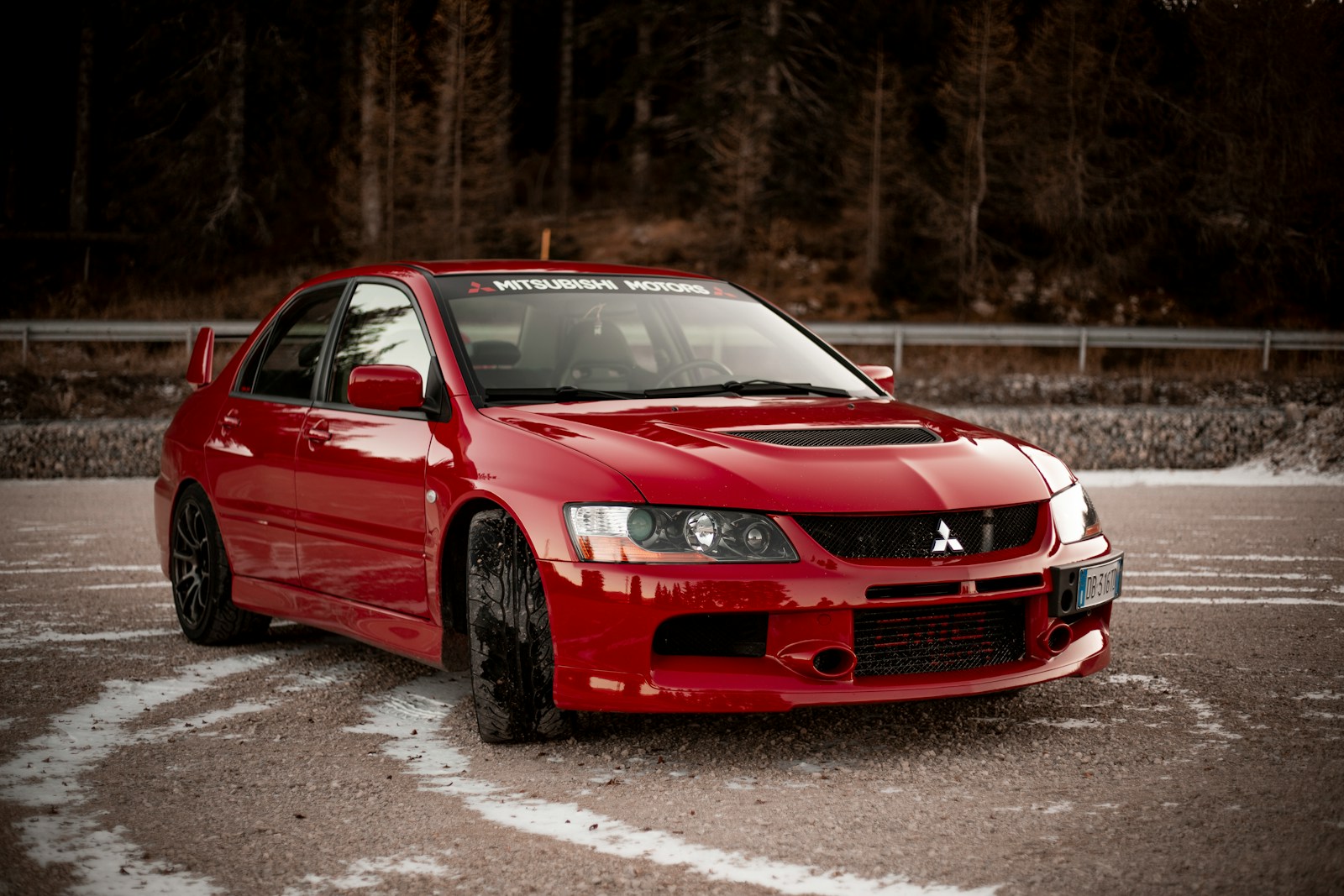

Mitsubishi never marketed the 3000GT VR-4 as a track weapon, but underneath that anonymous early-1990s two-door body sat one of the most electronically ambitious vehicles any mainstream manufacturer built that decade. Full-time all-wheel drive, rear-wheel steering, electronically adjustable dampers, and spoilers that raised themselves automatically at highway speed all worked together on a car most American buyers associated with unremarkable Mitsubishi dealer lots. Three decades on, that technology reads like a period curiosity, and the surviving cars have become scarce enough that clean, low-mileage examples now draw six-figure bids at auction.
A Halo Car Engineered Like Nothing Else Mitsubishi Sold
The VR-4’s twin-turbocharged 3.0-liter 6G72 V6 made 300 horsepower and 308 lb-ft of torque in the earliest cars, with later six-speed models rated at 320 horsepower and 315 lb-ft. That engine drove all four wheels through a 45/55 front-to-rear torque split, but the powertrain was almost the least interesting part of the car. Mitsubishi also fitted four-wheel steering that turned the rear wheels up to 1.5 degrees in either direction above 30 mph, electronically controlled active suspension damping, and an active aerodynamics system with front and rear spoilers that adjusted automatically based on speed — a feature built into the car from its 1991 launch. None of it was cheap to engineer, and Mitsubishi never fully recouped the cost. The active aero system and an active exhaust note generator were both quietly dropped from the lineup by the mid-1990s as the company simplified production to control costs.
How Many Are Actually Left
Mitsubishi built the 3000GT VR-4 and its Dodge-badged twin, the Stealth R/T Turbo, in relatively small numbers to begin with. Across the full 1991-1999 run, the two combined for a little over 16,400 units, a fraction of the roughly 86,000 3000GTs Mitsubishi built across every trim level, including the far more common naturally aspirated versions cited on the model’s own production history. Add three decades of road salt, a turbocharged all-wheel-drive platform that was never cheap to keep running, and a manufacturer that hasn’t sold anything resembling a sports car in the U.S. in years, and the population of driveable, unmolested VR-4s left on the road today is a small and shrinking slice of an already small production run.
What the Market Is Telling Us
Hagerty’s price guide currently values a concours-condition 1999 VR-4 at roughly $60,900, with excellent-condition cars trading closer to $35,100 — modest numbers next to a Supra Turbo or Skyline GT-R, but numbers that have been climbing. That guide got a real-world stress test when a 1999 VR-4 with just 168 miles on the odometer sold for $100,499, more than double what even a pristine example was supposed to bring. Broader transaction data backs up the trend without the outlier: tracking service Classic.com puts the average sale price for third-generation (1997-1999) VR-4s at $44,920 across recorded sales, with the highest price on record — $121,999 — closing in February 2026. Typical clean, low-mileage cars on the open market still change hands in the $25,000 to $45,000 range, but the ceiling keeps rising every time an unmolested example surfaces.
A Car the Collector Market Is Only Now Catching Up To
Part of what kept VR-4 prices low for so long is the same thing that makes the cars scarce now: Mitsubishi’s fading presence in the U.S. left the 3000GT without the enthusiast fan base that kept Supra and Skyline values climbing for two decades. Hagerty’s own market analysts have noted the car suffers from a relative lack of recognition compared to its 1990s rivals, even though its spec sheet arguably out-engineered all of them at launch. That gap is closing. As the generation of enthusiasts who could buy these cars new ages into serious collector budgets, and as unmodified survivors get harder to find outside private sales and swap meets, the VR-4 looks less like a forgotten also-ran and more like one of the last inexpensive tickets into Japan’s most technologically overbuilt era.