

The clip from @gypsytalespodcast puts its guest in front of a studio microphone, in headphones and a backwards cap, telling a story about his own dirt bike. The show burns its captions into the video a word or two at a time, and the first one sets the tone: “ballsy-est.” The next few are “probably,” “my bike” and “clutch.”
The caption the podcast wrote for the post says how the show feels about what follows. It calls itself a friendly reminder not to let the guest work on your bike, adds a laughing emoji and a wrench, and points viewers to Chapter 400 on the Gypsy Tales YouTube channel for the full conversation.
The setup involves money. As the guest gets going, the figure “$250-$300” comes up on screen, followed a few seconds later by “website” and a blunt phrase about getting stuff online. The edit plays the whole thing for laughs. A black and white photo of a rider in goggles giving the camera the finger lands on the words “f***ing clutch,” and when the captions read “sign up for” and “next mechanic,” the screen fills with a studio portrait in a green and black Team Green Kawasaki jersey.
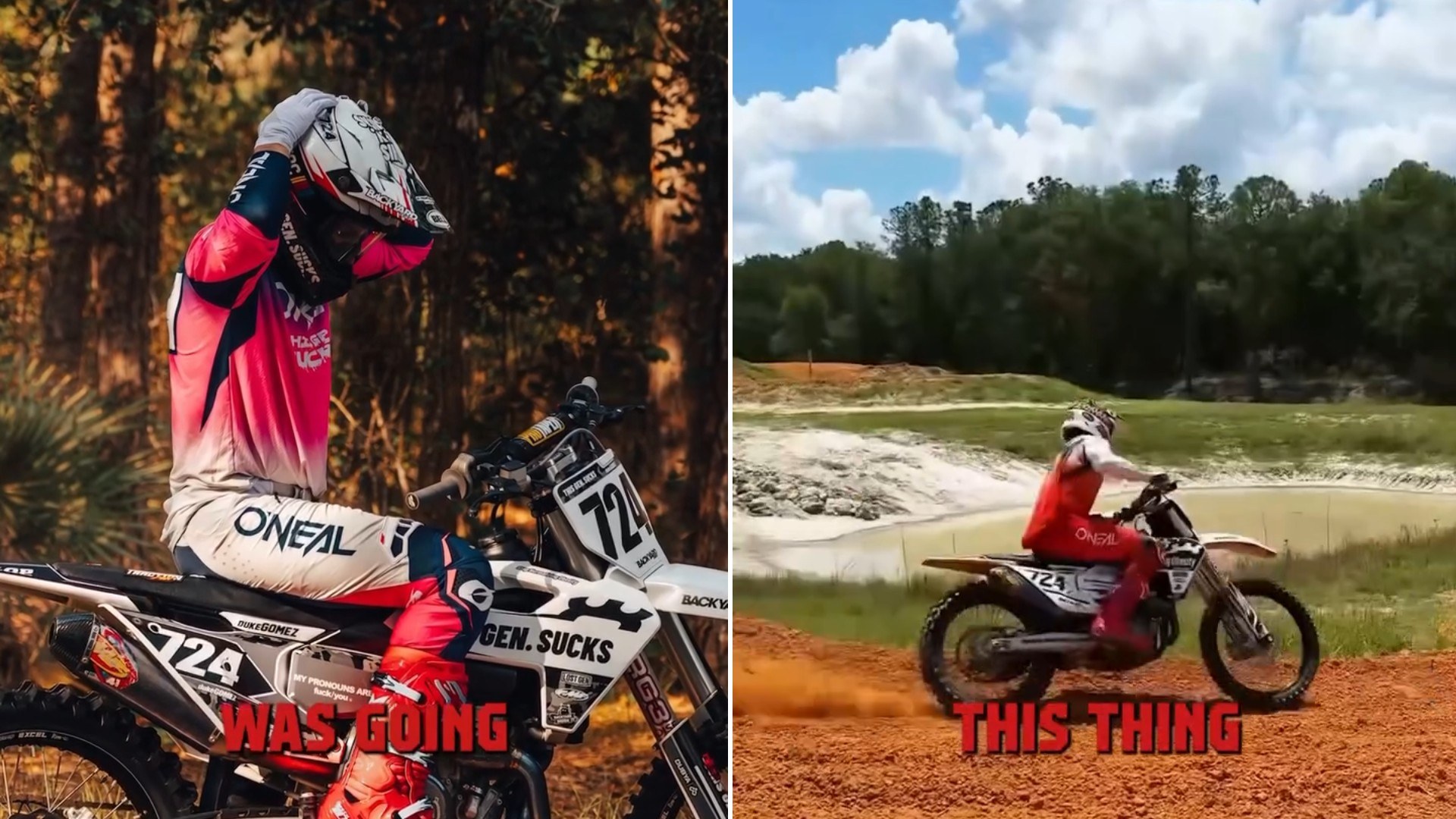
Between the studio shots, the clip cuts to riding footage: a rider in pink and white gear sitting on a bike in the woods and adjusting his helmet, a bike throwing red dirt through a turn, and a jump past a wooden tower against a blue sky. A photo of a couple dressed in white appears as the captions read “girl to,” and she comes back into the story later, first as “my girl” and then with a line that reads like an offer: “can I help.”
The middle of the story is where it gets tense. The words that flash by in this stretch are “blow up,” “hot,” “the oil,” “350 degrees,” “bolt” and “gets into.” The guest hunches toward the microphone and acts the scene out with his hands, and at one point the editors add sparks and flames around him as he grits his teeth. In the split-screen shots, the host, in glasses at a second microphone, is laughing.
Then comes “one of those,” and the screen cuts to a plain product image of a telescoping pickup tool, the pen-sized extendable wand mechanics keep around for fishing out dropped hardware. After that the captions pick up speed: “I put the,” “clutch out,” “bike ran.”
His verdict comes in two parts. The first is “sketchy though,” over footage of a bike in the air. The second, delivered back in the studio with his hands spread wide, is “ran amazing.” The host answers in split screen with captions that read “you’re a” and “sweetheart,” and the guest grins and says, “damn right.” The clip ends on a title card for Chapter 400 with the line “Watch the full podcast.”
The podcast’s warning is a joke, but the ingredients of the story are ones every home mechanic will recognize: a job with a few hundred dollars attached to it, parts found online, a hot engine, a bolt and a retrieval tool. A clutch is a job plenty of riders take on in their own garage, and a few habits keep it from turning into a story like this one.
Start with a cold bike. “Hot” and “350 degrees” are not words you want anywhere near a job that involves engine oil and bare hands. Let the engine cool fully before draining anything or pulling a cover.
Protect the openings. Once a cover is off, any gap that leads deeper into the engine should be stuffed with a clean rag before a single fastener is loosened above it. Keep a magnetic tray for hardware and count what comes off against what goes back on. If something goes missing, stop and find it before the engine turns over again. A pickup tool like the one shown in the clip costs very little and belongs in the toolbox before the job starts, not after.
Lay the parts out in the order they come off and take photos at each stage, so reassembly follows a record and not a memory. Use the service manual for your exact bike and a torque wrench for the final tightening. Guessing by feel is how small bolts get snapped or left loose.
Take the help. If someone in the garage asks “can I help,” hand them the flashlight, the parts tray or the manual. A second set of eyes catches the washer left on the bench.
Finally, “ran amazing” and “sketchy” can both be true of the same repair. After any clutch work, check the oil level, start with a short, easy ride, and look for leaks and feel the lever before going anywhere near a jump.