


Five hot rods that once anchored the permanent collection at the Petersen Automotive Museum in Los Angeles went across the block at Mecum’s Glendale sale in March, and the group pulled in more than $400,000, according to post-sale results from the auction. The top seller, a 1933 Ford roadster nicknamed “Impact,” hammered for $106,700. Every one of the five cars but one carries an America’s Most Beautiful Roadster trophy, the highest honor the hot rod world hands out, which is what makes a museum letting them go worth paying attention to.
The Cars That Left the Building
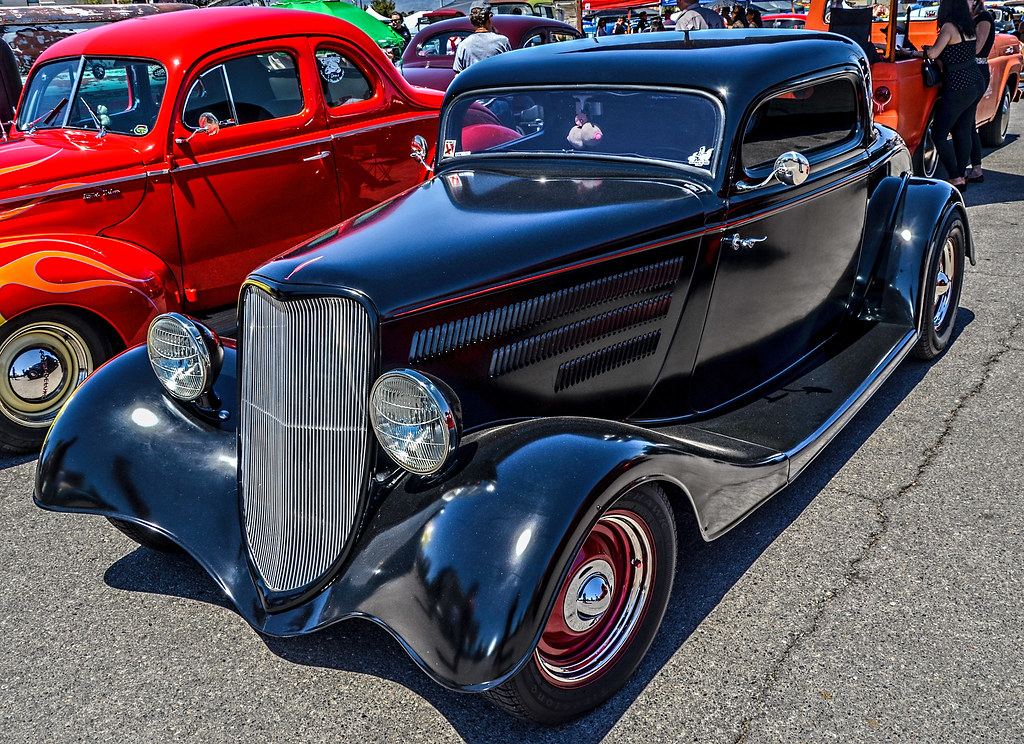
The consignment covered a specific slice of hot rod history: 1930s Ford roadster bodies rebuilt by some of the most recognized names in the custom car world, each one a showpiece rather than a shop project. According to coverage of the sale lineup, the group included “Possessed,” a 1933 Ford Model 40 built by Scott’s Hot Rods and Customs that won AMBR in 2010 with a 392-cubic-inch fuel-injected Ford Racing V8; “Orange Twist,” a 1932 Ford built by Ermie Immerso that took the AMBR crown in 1988 running a 284-cubic-inch Mercury flathead with Ardun heads and six Stromberg carburetors; “Impact,” the 1933 Ford designed by Chip Foose and built by Barry White that won AMBR in 2001; and “Passion,” a 1932 Ford designed by Thom Taylor and built by Boyd Coddington, notable as Coddington’s first all-aluminum build and a 1990 AMBR winner. The fifth car, a red 1932 Ford Model B Hi-Boy built by So-Cal Speed Shop with a 350-cubic-inch Chevy crate engine, carried no AMBR title but rounded out the group as a driver-oriented nostalgia build.
Why a Museum Sells What It Owns
Museums don’t typically explain individual deaccession decisions publicly, and neither Mecum nor the Petersen issued a statement tying a specific reason to this sale. But the mechanics of how museums are allowed to handle deaccessioning are public and well defined. Under the American Alliance of Museums’ code of ethics, any proceeds a museum collects from selling a collection item are restricted to two uses: buying new acquisitions or funding the direct care of the remaining collection. A museum cannot use that money to cover payroll, building costs, or general operations — the sale has to feed back into the collection itself, whether that means acquiring a new vehicle or maintaining the ones still on display.
That rule matters here because it draws a hard line between a museum quietly liquidating assets to cover a budget shortfall and a museum actively managing what it owns. Institutional collections rotate more than the public assumes; a car that isn’t on display and isn’t likely to go on display again ties up storage space and insurance costs that could otherwise support a piece the museum can actually exhibit. The Petersen has leaned into its role as a hub for the collector-car market more broadly — the museum is hosting its first Collectors’ Summit in June 2026, bringing together principals from six major auction houses, including Mecum, Barrett-Jackson, RM Sotheby’s, Gooding & Christie’s, Broad Arrow, and Cars & Bids, to discuss the state of the market and vehicle preservation. A museum that sits at the center of that conversation has every incentive to keep its own collection active rather than static.
What the Sale Actually Proved
The numbers from Glendale say something about where hot rod culture’s blue-chip pieces sit in the market right now. A four-time AMBR-winning lineup pulling roughly $400,000 combined — an average around $80,000 a car — is respectable for hand-built customs but nowhere near the seven-figure territory that top-tier muscle cars or numbers-matching classics reach at the same sale. Mecum’s Glendale event topped $47 million in total sales across the week, per the auction’s own results reporting, led by a Shelby 427 Cobra roadster. Against that backdrop, the Petersen’s roadsters were a footnote in dollar terms but a headline in provenance — cars built by Boyd Coddington, Chip Foose, and Scott’s Hot Rods don’t come up for sale together often, let alone from a single institutional collection with a documented ownership chain back to the show floor.
What happens to institutional car collections rarely gets this kind of visibility. Most museum vehicle moves happen through quiet donations, trades between institutions, or long-term loans that never generate a public sale record. A named collection crossing a major auction block, with real hammer prices attached to real cars, is one of the few moments the public gets to see how a museum actually manages the metal it owns rather than just the metal it displays.