
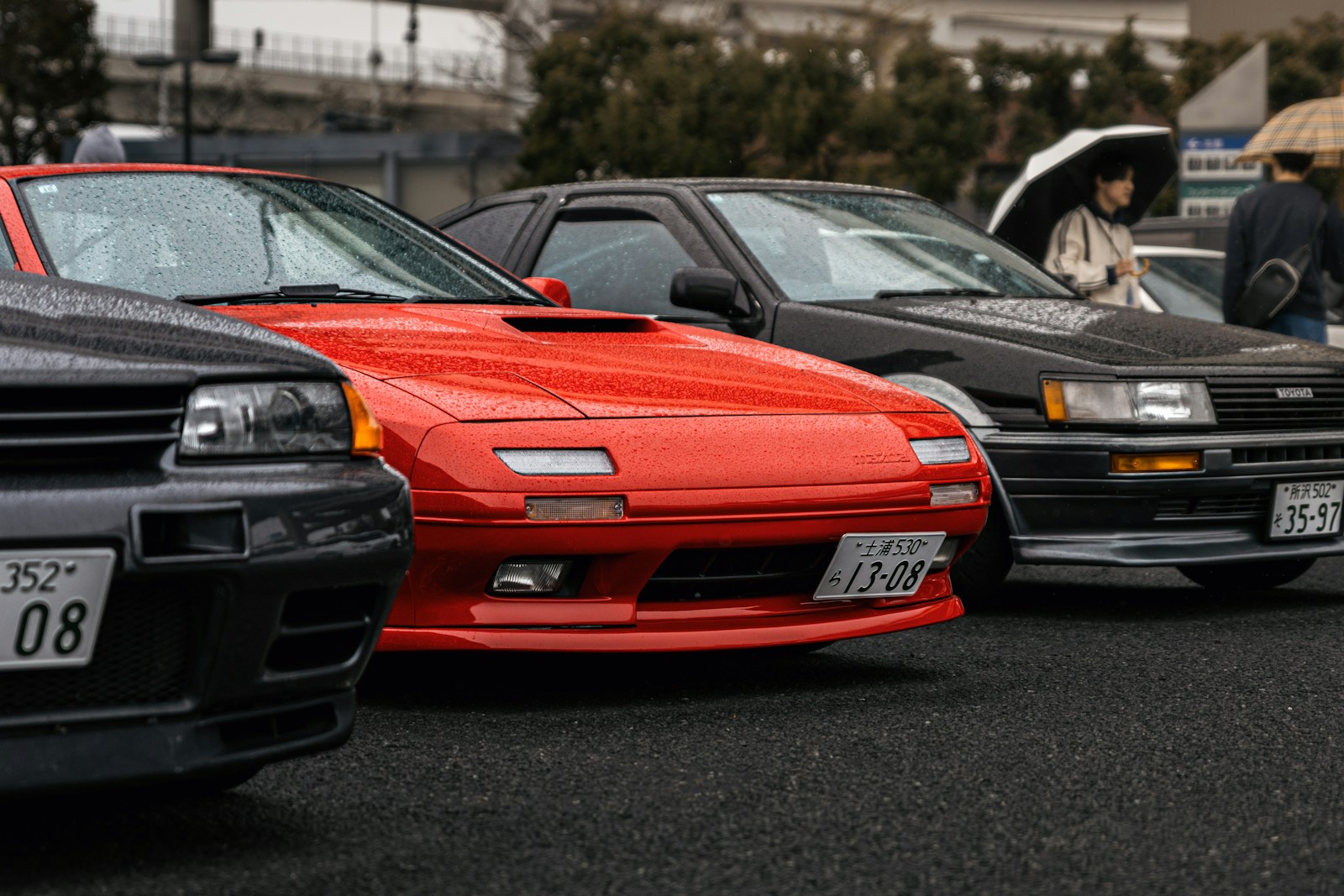

He’d been in the club long enough to know which jokes were affectionate and which ones were warnings. The group was small but loud—weekend meets in parking lots, coffee in hand, hoods popped, everybody talking about torque curves like they were weather reports. Manual transmissions weren’t just preferred; they were practically a membership requirement, spoken about the way some people talk about “real” music or “real” cooking.
So when he showed up one Saturday in a newer car—clean paint, tasteful wheels, subtle tint—he already had a tight feeling in his stomach. Not because of the car itself. Because of what you couldn’t see until you looked inside: the shifter wasn’t a shifter, just a little selector with PRND and some paddle shifters behind the wheel that everyone pretended didn’t count.
He didn’t roll in blasting music or trying to flex. He parked where he always parked, did the usual nods and hellos, and tried to keep it casual. It lasted maybe five minutes before someone asked, way too loudly, “Wait… is that an automatic?”
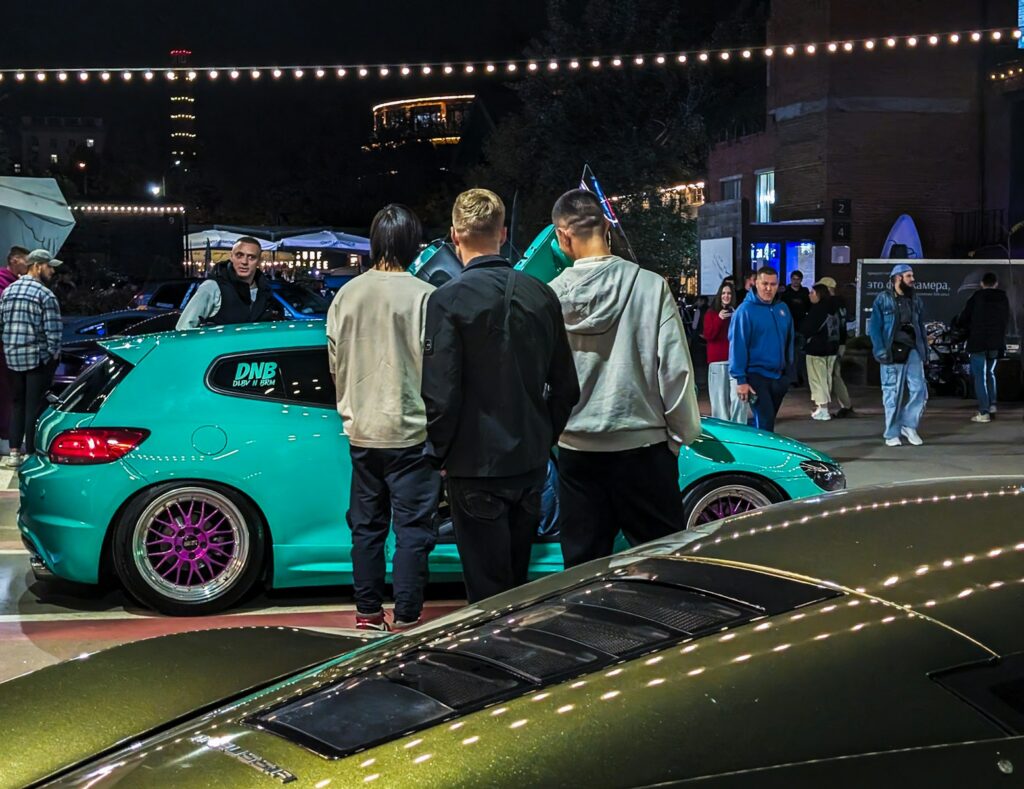
The club that treated “manual” like a personality trait
This wasn’t a casual “we prefer stick” crowd. They had rules written down—no burnouts leaving meets, no showing up with bald tires, no drama with other groups—and then a bunch of unwritten ones that mattered more. One of those was that driving a manual was proof you were “serious,” even if half the guys spent more time polishing their valve covers than driving.
He’d owned manuals before, too, which made the whole thing feel even more ridiculous. But he’d recently switched jobs, his commute turned into stop-and-go misery, and he wanted something he could live with day-to-day. He found a well-kept car he genuinely liked, and it happened to come with an automatic that was objectively faster than the manuals the club worshipped.
When he explained that—traffic, convenience, still a performance model, still the same platform—he could see the mood shift. People stopped asking normal questions and started asking gotcha questions. “So you just… let the car think for you?” one guy said, like he’d uncovered a moral failing.
The club’s founder, the type who used the word “purist” unironically, walked a slow circle around the car like he was inspecting something suspicious at the airport. He didn’t even look impressed by the condition, which was telling. He just said, “That’s not what we’re about,” and let the silence do the rest.
The moment it turned from teasing to exile
He tried to laugh it off, because that’s what you do when grown adults are acting twelve in front of a grocery store. But the jokes kept coming, sharper each time, and people started physically drifting away from him and toward the usual cluster around the “proper” cars. One guy asked if he was going to start bringing an SUV next, as if an automatic transmission was the gateway drug to domesticity.
It escalated in a way that felt less like a decision and more like a performance. The founder called everyone together, not formally, just loud enough that it became a little stage. “We’ve talked about keeping the club’s image consistent,” he said, glancing at the automatic like it was an oil stain on the pavement.
Then came the sentence that made it real: he was out. Not “take some time” or “maybe don’t bring it to meets,” but fully out—removed from the group chat, taken off the roster for upcoming events, and told he could still “hang around” as a guest if he wanted. It wasn’t just rejection; it was demotion, like they were doing him a favor by letting him watch.
He didn’t fight in the parking lot. He just got back in the car, left without revving or peeling out, and drove home with that weird mix of anger and embarrassment you get when people punish you for something that’s obviously petty. Later that night, he checked his phone and saw the club chat was gone, the invites gone, and a couple of privately sent messages that were basically, “No hard feelings, but rules are rules.”
Watching them struggle without him
After that, he did what most people do when a hobby group decides to make your life unnecessarily complicated: he moved on. He still went to meets sometimes, just different ones—more mixed crowds, less purity tests, more people actually driving their cars. He didn’t make a big speech about it, but he didn’t hide either.
Every so often he’d see the old club on the road or at events, and it was awkward in a low-grade, constant way. Guys who used to wave now pretended not to notice him. Others gave stiff, guilty nods like they’d gone along with the decision but didn’t feel great about it.
And the club itself? The “image” they were protecting wasn’t exactly thriving. A couple members had cars that were perpetually half-finished, always waiting on parts, always “almost ready,” showing up in someone else’s daily driver. Their cleanest cars were older, louder, and honestly looked rougher next to his newer, better-kept automatic.
He didn’t take joy in that, but he noticed it. The whole point of kicking him out had been optics and identity, and the irony was that their lineup looked more chaotic without the car they’d rejected. He was the one with the tidy, reliable car that could show up looking good every time.
The charity event invite that wasn’t really an apology
Then the message came, weeks later, from a number he recognized. Not the founder—the founder was too proud for that—but one of the guys who used to be friendly when nobody was watching. The club had signed up for a charity car show and fundraiser, the kind where people donate for rides or photos, and they needed a strong lineup.
The pitch was careful, like someone carrying a glass of water across a carpet. They’d been “thinking,” and his car would “represent the platform really well,” and it would be “great for the cause.” The words “automatic” and “sorry” were both missing, which was hard not to notice.
He asked the obvious question: if the car was good enough to represent them, why wasn’t he good enough to be in the club? The reply came back fast, too fast, like it had been rehearsed. “It’s not personal,” the guy wrote. “It’s just the club rules. This would be separate. Just helping out.”
Separate. Helping out. Like he was a spare part they could pull off the shelf when they needed it, then put back when the event was over.
They wanted the car, not the owner
He didn’t answer right away, and that silence seemed to make them bolder. Another message came, this time with specifics: they wanted to borrow the car, not have him bring it. They had a member who could “drive it over,” they’d keep it clean, they’d put the club banner behind it for photos, and they’d “make sure it was parked up front.”
That’s when the whole thing curdled from annoying to insulting. They weren’t just asking him to show up; they wanted him absent while his car did the job. It was basically an invitation to let the club use his property to polish their image while still treating him like he didn’t belong.
He pushed back, politely at first, saying if he supported the charity he’d consider attending himself. The response wasn’t gratitude; it was negotiation. They didn’t want him there because the presence of the “kicked-out guy” would make the story messy, and the last thing a club like that wants is a messy story standing next to their banner.
It got even weirder when the founder finally chimed in, not to apologize, but to “clear the air.” He wrote something about “respecting standards” and “keeping the group aligned,” then immediately followed it with how “this isn’t about you” and how the event “needs a strong showing.” The logic was crystal clear: his car was an asset, and he was a liability.
By then, he wasn’t even mad in a hot way anymore. It was colder than that, the kind of anger that comes with realizing exactly where you sit in someone else’s hierarchy. They’d rather swallow their pride and ask for his car than admit the transmission rule was silly, and they’d rather keep him outside than risk looking inconsistent.
He told them no. Not with a dramatic mic drop, not with a paragraph of insults—just a simple refusal and a note that he hoped the charity event went well. The messages after that were a mix of passive-aggressive disappointment and sudden silence, like someone had turned off a radio mid-song.
And the uncomfortable part is that nothing really resolved. The club didn’t implode, nobody had an epiphany, and no apology arrived later with a changed heart attached. They just went back to being themselves—protecting “standards,” policing identity, and quietly resenting the fact that the best-looking car in their orbit belonged to the guy they decided didn’t count anymore.
More from Steel Horse Rides: