

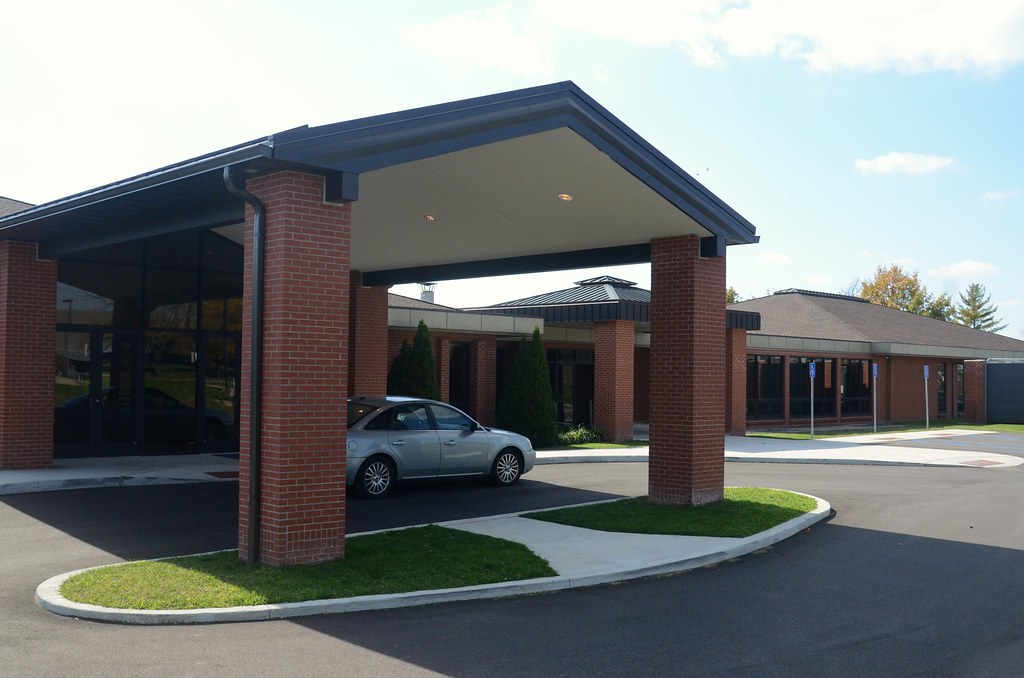
It started the way a lot of church-Sunday dramas start: with somebody trying to do the right thing and getting rewarded with a headache. After the late service let out, the parking lot was its usual slow-motion traffic jam—minivans inching around each other, people lingering in clusters, kids weaving between bumpers like the laws of physics didn’t apply to them.
She’d parked in a side row because she’d gotten there early and didn’t feel like fighting for a closer spot. When she came back out, she noticed it before she even reached the driver’s door: a fresh smear across the rear quarter panel, the paint scuffed down to primer in one ugly arc, with a little dent that caught the light. It wasn’t catastrophic, but it was the kind of damage that instantly turns your stomach because you know someone did it and just… left.
She did the normal loop around the car like maybe the explanation would be hiding on the other side. No note under the wiper. No “Hey sister, I’m so sorry” message waiting on her phone. Just a bright, unmistakable scrape and the feeling that she’d been singled out by the universe in the most petty way possible.
The parking lot prayer circle nobody asked for
Inside, the church staff were already shifting into post-service mode—stacking chairs, packing up the kids’ check-in station, locking classrooms. She found one of the ushers she recognized and explained what happened, trying to keep her voice even because it felt ridiculous to be upset in a place where people came to confess sins and ask for healing. The usher frowned sympathetically and said they’d “see what they could do,” which sounded a lot like “we’re about to do nothing.”
Someone suggested she speak to one of the pastors, and within minutes the situation attracted a small orbit of church people. The kind who hear “problem” and float over with soft eyes and big concern. They walked out with her to look at the damage, nodding like they were inspecting a storm-damaged roof.
And then the advice started, gently but relentlessly. “Extend grace.” “We’re all imperfect.” “It could’ve been an accident and they’re scared.” One older woman actually patted her arm and said, “Don’t let the enemy steal your peace over a car,” which is a sentence that makes sense only in church parking lots.
She wasn’t demanding a public execution. She just wanted someone to take responsibility, because repairs cost money and her insurance deductible didn’t care about forgiveness. Still, the more she asked if there were cameras or if anyone had seen something, the more she was met with the kind of sympathetic smiles people use when they want you to stop talking.
The camera situation that was always “complicated”
The building did have cameras, technically. The foyer had a couple, and there was one facing the main entrance where people drop off kids. The problem was that her car had been parked in the side row—the overflow area—where the “security” was basically vibes. A staff member offered to check the footage anyway, but it was immediately framed as a favor, like she was asking them to comb through hours of tape for fun.
When they came back, the answer was the same kind of non-answer she’d been getting all morning. The angle didn’t show her row clearly. The glare made it hard to see. They couldn’t really tell who was driving what. There was lots of shrugging and “unfortunately.”
What stuck with her wasn’t even the lack of useful footage—it was how quickly the tone shifted from “that’s awful” to “let’s not make this a thing.” One person joked that the parking lot was “a battlefield for Jesus,” which got a few laughs, and it was like everyone agreed that humor was the off-ramp out of accountability.
Before she left, a deacon stopped her near the hallway that led to the offices. He told her they’d pray about it and that sometimes “the Lord reveals what needs revealing.” It sounded comforting in that moment, mostly because it implied somebody, somewhere, still cared.
Grace, but make it mandatory
Over the next week, she did what people do now when real life doesn’t cooperate: she asked around. She texted a couple friends from church, posted in the women’s group chat if anyone had seen a car with fresh damage, and mentioned it to a few people during Wednesday night activities. She kept it polite, careful not to sound accusatory, because she already knew the fastest way to get labeled “divisive” was to care too much about your own stuff.
The response was consistent, almost rehearsed. Everyone had the same soft phrasing: “I’m sure it wasn’t intentional.” “Maybe they didn’t notice.” “You know how tight it gets after second service.” Somebody told her she was “letting bitterness in,” which was wild considering she hadn’t even identified a person to be bitter at.
It wasn’t that anyone was being openly mean. It was more like the church had a social immune system, and it was treating her desire for answers like an infection. People offered prayer. People offered casseroles. One person offered to “help her write a forgiveness letter,” as if the emotional work should be hers before the financial work could be anyone else’s.
And the whole time, the scrape on her car sat there like a blinking cursor. Every time she walked out to her driveway, it reminded her she’d been told to eat the cost because being upset was spiritually inconvenient.
Then the deacon’s SUV showed up with a familiar smear
The shift happened on a Sunday that felt normal until it absolutely didn’t. She pulled into the lot and parked, and as she walked toward the entrance she passed a black SUV she recognized—one of the deacons’ vehicles, always spotless, always parked in the same general area like an unspoken privilege. Something on its rear bumper caught her eye, and she slowed down without meaning to.
There was a scuff mark on the SUV, low and stretched, like it had rubbed against something while turning too tight. And inside that scuff was a streak of color that didn’t belong on black paint. It was the same pale, silvery-blue shade as her car.
She didn’t immediately march into the sanctuary and point like a cartoon detective. She did the thing people do when they’re trying not to be crazy: she looked again from a different angle. She checked the height. She tried to tell herself it could be anything—shopping cart paint, a random scrape from some other car, coincidence. But the pattern and placement were so similar to her damage that her stomach did that slow drop again.
After service, while people milled around with coffee and donuts, she lingered near the SUV like she’d forgotten something. The deacon came out laughing with a couple men, keys in hand, and she noticed he walked with the easy confidence of someone who never worries about consequences. When he unlocked the door, the smear was right there in the sunlight, impossible to ignore now that she’d seen it.
The confrontation that stayed polite until it didn’t
She approached him carefully, because this wasn’t just any random church guy. He was a deacon—the kind who helped lead communion, who prayed over people at the altar, who got called “Brother” with extra respect. She started with simple facts: her car had been hit last Sunday, no note left, and she’d noticed a mark on his SUV that looked like it might be related.
His face did something quick, almost too quick to catch. Surprise, then irritation, then a smile that didn’t reach his eyes. He said he had no idea what she was talking about, that he hadn’t hit anyone, and anyway his SUV had probably gotten scraped “in a million places.” The men with him got quiet, and one of them suddenly found the parking lot pavement fascinating.
She asked if he’d be willing to look at her car with her and compare. Not a police report, not a lawsuit—just a look. He hesitated, then said, “Sister, I don’t appreciate the accusation,” and the word accusation landed like a door slam.
That’s when the grace chorus returned, but now it was coming with sharper edges. A couple church women drifted closer, sensing conflict. Someone murmured that it was “inappropriate” to confront a deacon in the lot. Another person said, very calmly, that if she had concerns she should go through “proper channels,” which sounded a lot like “not here, not now, and preferably never.”
She insisted she wasn’t trying to embarrass him. She just wanted the truth and a plan to fix her car. The deacon repeated that he hadn’t done anything, but he also didn’t offer to help, didn’t suggest swapping insurance, didn’t even pretend to be curious about whether his vehicle might have been involved.
And then, in the most surreal turn, someone actually told her she needed to “extend grace” to him too. The same phrase that had been used to make her swallow the damage was now being used as a shield around the person who looked most likely to have caused it.
She walked away without resolution, but not without noticing how the crowd subtly rearranged itself. People who’d been warm to her moments earlier suddenly had somewhere else to be. The deacon got in his SUV and drove off with that silver-blue streak still on his bumper, like a little signature he didn’t know he’d left.
What stuck wasn’t just the possibility that he’d hit her car—it was the way the church instinctively protected the idea of him. No one had proof that would satisfy “proper channels,” but everyone had eyes, and eyes had seen the matching paint. By the next Sunday, the tension wasn’t whether her car would get fixed; it was how long she could stay in a place that preached accountability from the pulpit and practiced selective amnesia in the parking lot.