

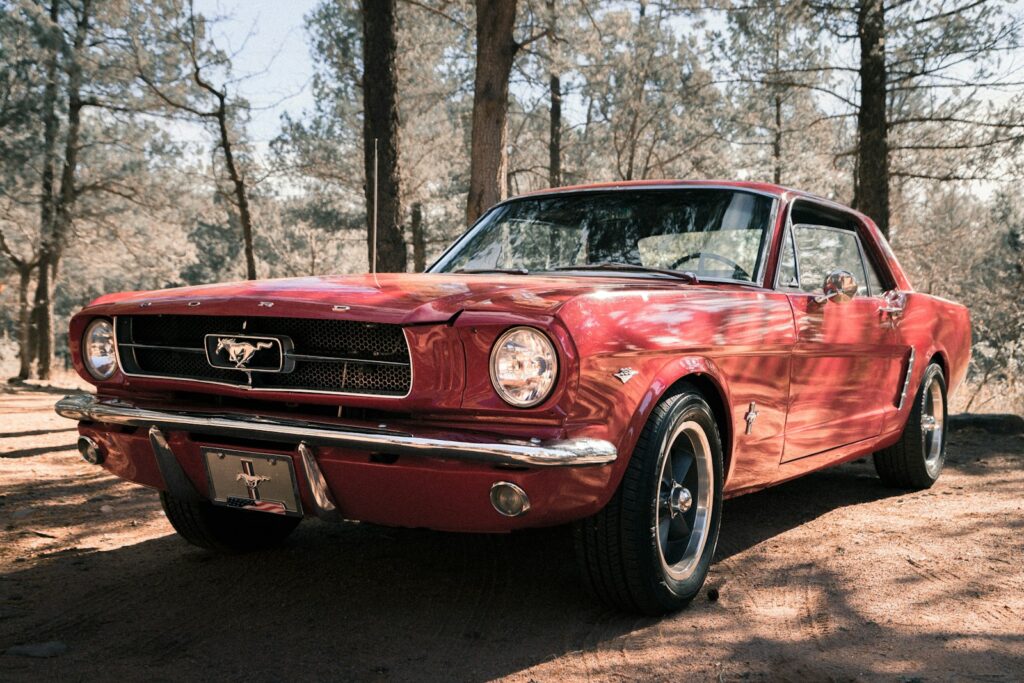
He’d had the car longer than he’d had most of his adult friendships. A late-60s vintage coupe in a color that looked black until the sun hit it, when it turned into this deep, ink-blue gloss. He didn’t baby it in the “never leaves the garage” way, but he did treat it like what it was: a finicky, expensive-to-fix piece of history that only behaved if you respected it.
So when his cousin Lena texted him out of nowhere—no “how’ve you been,” no small talk—just “OMG I had the best idea for wedding photos!!!”—he already felt that familiar tightening in his chest. Family asks weren’t really asks in his world. They were requests delivered like announcements, followed by guilt if you didn’t clap enthusiastically.
Lena was getting married in six weeks, and she was deep in that frantic, spreadsheet-and-pinterest stage where everything felt urgent and symbolic. She’d seen a photo online of a bride leaning against a vintage car with a bouquet, and she wanted that vibe, specifically with his car. Not a rental. Not a friend’s convertible. His.
The “It’ll Only Be for an Hour” Pitch
At first, it came dressed up as flattery. Lena told him the car was “literally iconic,” that it would make their wedding look “timeless,” and that it was “kind of meant to be” because he was family. She wasn’t asking to drive it—she just wanted it there, parked near the venue, for photos.
He didn’t say no right away, which was probably his first mistake. He asked the practical questions: where was the venue, who was taking the photos, would it be on grass or gravel, how close would guests be allowed. Lena answered in airy fragments—“It’s fine,” “They’ll be careful,” “We’ll be quick”—like details were an annoying buzzkill.
Then he asked about insurance, because of course he did. His policy covered him, and it covered certain things, but “a wedding party using the car as a prop while people in formalwear climb around it” wasn’t exactly a normal Tuesday. He said if she wanted it, he’d need a temporary event rider or proof her wedding insurance would cover any damage.
That’s when the vibe changed. Lena’s texts got shorter, sharper, and more offended, like he’d just asked her to put a price tag on love. She said they were “already spending so much,” and that asking her to pay for extra insurance was “kind of gross” when he was supposed to be supporting her big day.
What the Car Actually Means to Him
He tried, once, to explain why he was being “weird” about it. The car wasn’t just a cool prop; it was the thing he’d rebuilt with his dad before his dad passed, the thing he spent weekends tinkering with, the thing that cost real money every time something small went wrong. He’d replaced trim pieces that you can’t just buy at an auto store, waited months for parts, and learned the hard way that one careless scratch can turn into a full repaint if you want it to match.
Lena didn’t really respond to any of that. She came back with: “No one is going to scratch it,” as if saying it made it true. And she added that she’d “obviously” make sure people respected it, because she wasn’t a monster.
He told her it wasn’t about whether she was a monster. It was about risk, and about how weddings have a way of turning “just a couple pictures” into a whole chaotic production with excited friends, champagne, and someone’s uncle leaning too hard on a fender.
She reacted like he’d personally insulted her guest list. The next message was a wall of text about how stressed she was, how hard she’d worked, and how she “didn’t think he’d be this unsupportive.” The word “unsupportive” hit like a button she’d been saving for later.
The Insurance Fight Turns Into a Character Assassination
He didn’t back down, but he tried to make it easy: if she paid for the insurance rider, he’d bring the car, park it where the photographer wanted, and stand nearby so nobody got handsy. He even offered boundaries—no sitting on the hood, no drinks near it, no confetti, no dragging fabric across the paint.
Lena latched onto the boundaries like they were evidence of betrayal. She said it would “ruin the vibe” if he stood there “policing” them, and that weddings were supposed to be joyful, not treated like a museum exhibit. Then she flipped back to money, saying it was unfair to ask her to pay for insurance when he was “already paying for the car anyway.”
He pointed out—carefully—that she was essentially asking him to take on all the risk for her aesthetic. If something happened, he’d be stuck either paying out of pocket or filing a claim that could spike his premiums. The insurance rider wasn’t a punishment; it was just the grown-up part of doing something risky.
That’s when she went nuclear and turned it into a morality play. She told him family doesn’t “charge” family, that he was being selfish, and that she’d never do this to him. She tossed in a passive-aggressive “I guess I know where I stand,” like the car was a loyalty test he was failing in real time.
Other Relatives Start Calling, and the Story Morphs
Two days later, his aunt called. Not to ask how he was, not to talk through the misunderstanding, but to “check in” on why he was making things difficult for Lena. The phrasing was suspiciously pre-loaded, like the version of events she’d received had already been softened and re-shaped into something simpler: he has a car, Lena wants it, he’s refusing because he’s being stubborn.
He explained the insurance part, expecting that to sound reasonable to any adult who’s ever owned something breakable. His aunt made a noise like she’d tasted something sour and said, “It’s one day.” Then she asked if he really thought Lena’s friends would damage it, as if the only two options were blind trust or an accusation.
After that, it became a group chat situation. His phone lit up with cousins chiming in—some joking, some guilt-tripping, one sending a photo of a different vintage car at a wedding with the caption “See? People do this all the time.” No one wanted to talk about liability; they wanted him to stop being “difficult” so the problem could disappear.
What really got under his skin was how fast “pay for insurance” turned into “he’s making her pay to borrow it” in their retelling. He wasn’t charging a rental fee, wasn’t asking for gas money, wasn’t bargaining. He was asking her to cover the specific cost of protecting his car from the event she wanted to use it for, and somehow that had been translated into greed.
The Compromise Attempts That Somehow Made It Worse
He tried one more time to offer alternatives, because he could see the family pressure building like humidity before a storm. He suggested renting a similar car from a classic car company, which would come with the right coverage baked in. He even sent a link to a local place that did wedding packages, figuring she could get the look without turning his personal property into a battleground.
Lena rejected it immediately. Rentals were “too expensive,” and also, the rental cars weren’t “as perfect” as his, which felt like a compliment until you realized it was also leverage. She wanted his because it was convenient and because she’d already emotionally claimed it as part of her wedding story.
Then she tried the most slippery compromise of all: she said she’d “take responsibility” if something happened. Not with a policy, not with anything in writing, just vibes and verbal assurances. When he asked what “take responsibility” meant in actual dollars—because paint and chrome don’t accept apologies—she accused him of treating her like she was untrustworthy.
He finally gave the clean no. Not a “maybe,” not “we’ll see,” not “if you’re good.” Just no, he wasn’t comfortable doing it without proper coverage, and since she refused to pay for that, the answer was no. He kept it calm, but he stopped negotiating, because negotiations were turning into a slow-motion mugging.
The Fallout: A Wedding Countdown With a Villain Slot Filled
Lena responded with the kind of message that reads like it was written for maximum forwarding. She told him he was ruining her big day, that she couldn’t believe he cared more about a car than her happiness, and that she hoped he could “live with himself” when she looked back at her wedding photos and remembered what he took from her. It wasn’t just disappointment; it was a script where she got to be the wronged heroine.
After that, the family atmosphere around him changed in small, petty ways. He stopped getting included in little planning updates he used to get out of habit. Someone asked his mom, pointedly, whether he was “always like this” about money. Another relative made a joke at a dinner about him putting the car in his will “before any future wife,” and laughed a little too hard, like it was safer to turn it into comedy than admit they were pressuring him.
Meanwhile, Lena started hinting—loudly—that she might “borrow” another family member’s car, something less valuable, as if that proved she was being flexible. But she kept circling back to his, dropping comments about how “sad” it was they couldn’t have that classic look. It wasn’t enough for him to say no; she needed him to feel guilty every time she pictured her wedding album.
The last thing he heard, a week before the wedding, was that Lena had told people he’d promised the car and then backed out “last minute.” He stared at the message relaying that detail, realizing this had stopped being about photos a long time ago. It was about control, and the way some people treat boundaries like personal attacks—especially when there’s a wedding date on the calendar and they’ve decided the world is supposed to bend.
He still had the car, still had the keys, still had the ability to keep it safe by doing absolutely nothing. But the tension didn’t go away with the no; it just shifted into that sour, ongoing family resentment that lingers in side-eyes and “jokes” and selective invitations. And the wild part was that Lena didn’t even need his car to get married—she just needed someone to blame when she didn’t get everything she wanted, exactly how she wanted it.
More from Steel Horse Rides: