

He didn’t even make it through the first week after the funeral before someone turned his grief into a fight about paperwork. The dad had always been a truck guy—kept it clean, babied the engine, and treated it like a quiet second home. So when the will was read and it said the truck went to his oldest kid, it wasn’t some random asset; it was the one thing that felt like a direct handoff.
The stepmom didn’t argue at the reading. She nodded, dabbed at her eyes, and even said something like, “That’s what he would’ve wanted.” The kid—an adult, not a teenager—didn’t push anything right then, because who wants to be the person asking for a title while the casserole dishes are still being returned? They figured they’d wait a respectful beat, then handle the transfer like normal people.
Except “normal people” wasn’t what they were dealing with. A few days later, when the kid reached out to ask about the title and where the truck was parked, the stepmom’s whole vibe shifted. Suddenly it wasn’t “of course,” it was “why are you so obsessed with this?” and “can we not do this right now?”—as if the kid had brought up a petty argument instead of a legal instruction from a dead man.
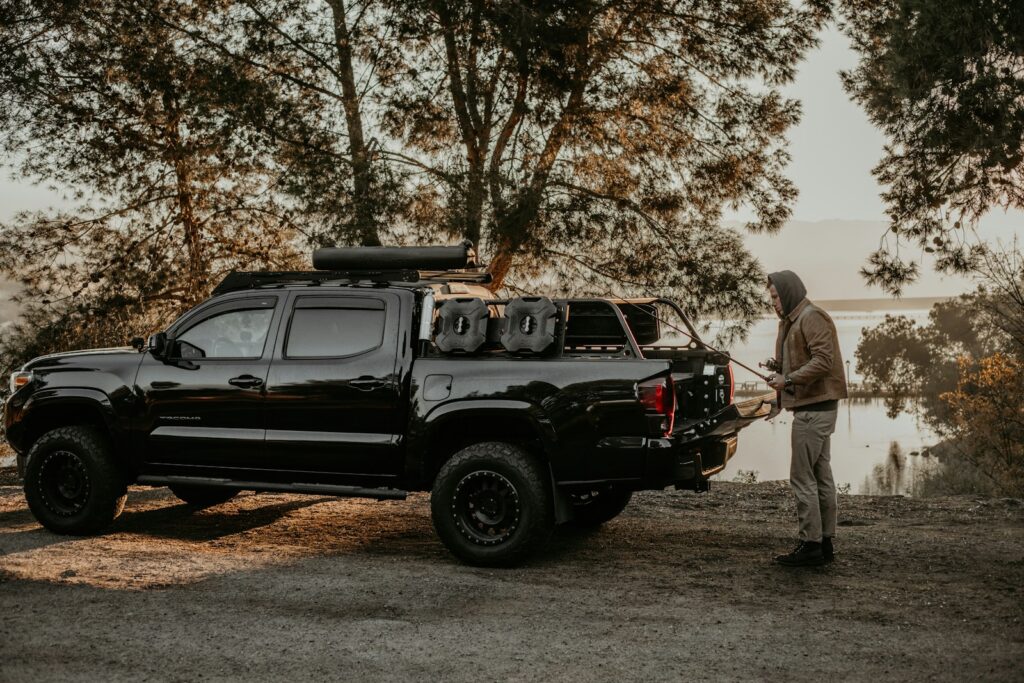
The will said one thing, the house said another
The truck was still at the dad’s house, which the stepmom stayed in. It was sitting in the driveway like a prop: washed, covered, and always just out of reach. The kid asked if they could swing by, grab the keys, and start the title transfer, and the stepmom told them she’d “look for everything” and get back to them.
That first week became two weeks. Every time the kid followed up, the stepmom had a new delay: she couldn’t find the folder, she was overwhelmed, she had to talk to her attorney, she was “pretty sure” the title was in the safe deposit box. Meanwhile, she kept driving the truck like nothing had changed, running errands and hauling stuff, casually using the thing she’d already acknowledged wasn’t hers.
It wasn’t like the kid was asking to rip it out of her hands in the middle of grieving. They offered to do the DMV legwork, pay the fees, even wait until a specific date if she needed time. They just wanted the title so they could insure it properly and avoid the nightmare scenario where something happened—an accident, a ticket, anything—and it was still legally in the dad’s name or tied up with the estate.
The stepmom’s responses got colder. She started replying hours later, then days later, then not at all. When the kid finally said, “This is in the will. I need the title,” the stepmom sent back a message that felt less like grief and more like a warning: “Stop harassing me.”
“It’s just a vehicle,” said the person hiding the title
That line—“just a vehicle”—became her favorite weapon. Every time the kid tried to talk about the truck, the stepmom framed it like they were being greedy, impatient, materialistic. She’d say things like, “I can’t believe you’re doing this over a truck,” ignoring the part where she was the one turning it into a standoff.
And the kid could feel what was happening in real time: the story was being rewritten. In her version, she was a grieving widow trying to keep it together, and the stepkid was a pest circling the driveway like a vulture. She’d answer a straightforward question with something emotional and accusatory, like the kid had personally attacked her by asking for documents.
The awkward part was that the kid wasn’t some stranger. They had a complicated relationship with the stepmom, but it wasn’t a war zone before this. They’d been polite at holidays, tolerated each other, even exchanged the occasional birthday text, which made the sudden switch feel extra disorienting—like the dad’s death had flipped a hidden switch.
Eventually, the kid asked to meet in person, hoping it would be harder for her to dodge when they were standing right there. The stepmom agreed… then changed the time, then suggested meeting at a coffee shop “for safety.” That word landed like a slap, because “safety” wasn’t about anything the kid had done; it was about the story she wanted to tell.
Family group chats and the slow leak of a smear campaign
The first sign the stepmom had been talking came from an aunt who wasn’t usually involved in drama. She called the kid and, in that careful tone people use when they’re trying not to accuse you of something, asked if everything was okay. Then she dropped it: the stepmom had said the kid was “showing up” at the house, “demanding” the truck, and “refusing to let her grieve.”
The kid was stunned because they hadn’t shown up at the house at all. They’d been texting and calling, yes, but always during normal hours and never with threats. The only “demand” was asking for the title to the thing the will explicitly left them.
But once a narrative like that starts rolling, it doesn’t need evidence—it just needs repetition. A cousin stopped responding to messages. An uncle made a snide remark about “priorities” at a family gathering. Someone suggested the kid should “let her keep it a little while” as if the will had included a grace period based on vibes.
The stepmom leaned into the performance. She’d post vague, sad updates about “boundaries” and “people showing their true colors,” without naming names. It was just specific enough that anyone who’d already heard her version could connect the dots, and just vague enough that she could deny it was about the kid if confronted.
The moment it stopped being emotional and became legal
The kid tried one more time to handle it quietly. They texted something simple: they weren’t trying to hurt her, they just needed the title, and if she couldn’t find it they’d need to go through the estate attorney. The stepmom responded with a screenshot of their previous messages, circled in red like evidence, followed by: “Do not contact me again.”
That’s when the kid realized she wasn’t “overwhelmed.” She was stonewalling, and she was collecting receipts to paint them as unstable. The truck was leverage—maybe sentimental, maybe financial, maybe just control—but she wasn’t going to hand it over because the will asked nicely.
The kid contacted the attorney handling the estate and asked what the actual process was. The answer was basically: the will isn’t a suggestion, and the title doesn’t magically cease to exist because someone “can’t find it.” If the stepmom truly didn’t have it, there were ways to request a replacement, and if she did have it and refused to turn it over, that was a different kind of problem.
When the attorney’s office reached out, the stepmom suddenly found the energy to respond. She claimed the kid was “threatening” her with legal action. She told relatives she was being “dragged to court” while she was still mourning, leaving out the part where she’d been sitting on the paperwork for weeks and telling the kid to stop “harassing” her when they asked for it.
A truck in the driveway, a wedge in the family
As things escalated, the kid’s grief started curdling into something else—anger, sure, but also this hollow disappointment. It wasn’t only about the truck anymore. It was about watching their dad’s final wishes get treated like an inconvenience, and watching family members decide who they believed based on who cried harder in public.
Relatives started offering “solutions” that weren’t solutions. One suggested the kid just take a cash payout instead, as if the dad had left money earmarked for buying off conflict. Another suggested shared use, like the truck was a timeshare and not a legally transferred vehicle.
The stepmom kept driving it, which became its own kind of taunt. Every time someone spotted the truck at the grocery store or in front of her friend’s house, the kid heard about it. It was like she wanted everyone to see she still had it, still controlled it, and could keep it indefinitely as long as she kept everyone focused on the kid’s “behavior” instead of her refusal to follow the will.
The kid didn’t want a screaming match on the lawn or a family split down the middle, but they also didn’t want to let this slide and set the precedent that the loudest person gets to rewrite a will. And that’s where the story left off: a truck sitting in a driveway like a trophy, a title that may or may not be “lost,” and a stepmom who’d successfully made the kid look like the villain for asking for the one thing their dad explicitly left them—while the rest of the family argued about whether standing up for yourself counts as harassment when the other person keeps saying “it’s just a vehicle.”
More from Steel Horse Rides: