

By the time the first real snow hit, he already knew what his daughter was going to ask for. She’d been dropping hints all fall—lingering a little too long when a Wrangler rolled by, pointing out “that adorable green one” in the grocery store parking lot, sending him screenshots of lifted Jeeps with Christmas lights wrapped around the grille like they were holiday décor and not two tons of vehicle.
She was sixteen, freshly licensed, and obsessed with the idea of having “a cute Jeep” the way some kids fixate on prom outfits. Her dad wasn’t anti-Jeep, exactly. He was anti-anything that mixed a brand-new driver, winter roads, and a confidence level that came entirely from TikTok clips of people fishtailing in empty lots like it was a sport.
The problem wasn’t the Jeep. The problem was that every time he tried to talk about winter driving—following distance, braking, black ice—she’d glaze over like he’d switched to speaking in Excel. And the one hard line he’d drawn, the one non-negotiable, was this: if she wanted any kind of vehicle in a snowy place, she had to learn how to drive it safely in snow.
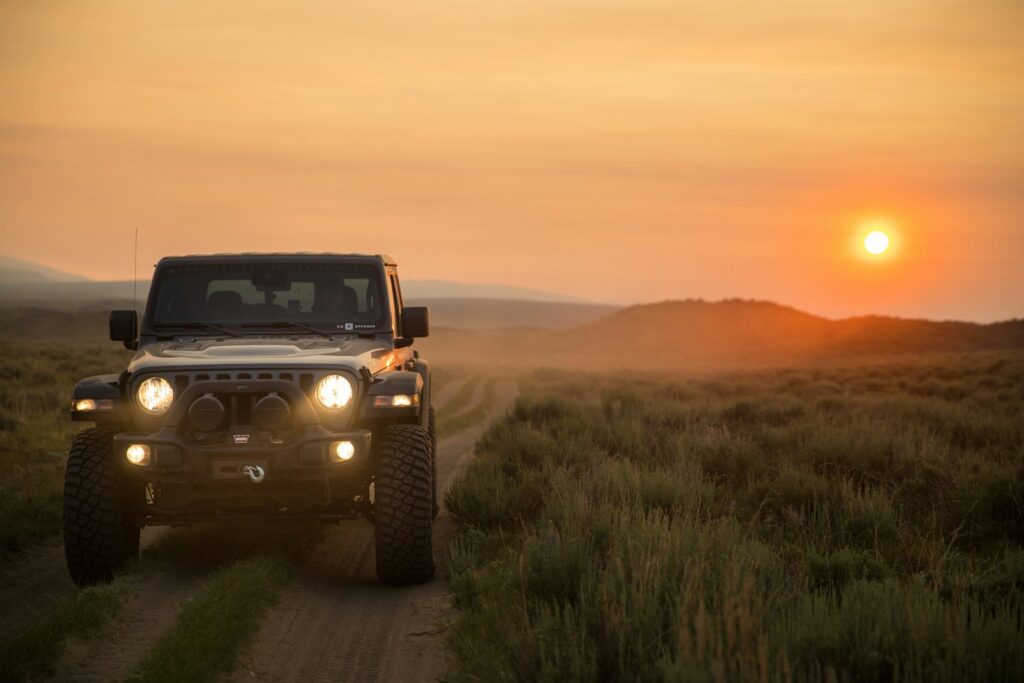
The Jeep Vision Board vs. Real Winter Roads
She had a whole mental mood board built around this Jeep fantasy. It wasn’t “I need four-wheel drive for safety,” it was “they look rugged but also cute,” like the car itself was an accessory she could style. She talked about taking the top off in summer, tossing a blanket in the back, driving with her friends to get coffee like she was in a coming-of-age movie.
Her dad kept trying to wedge reality into the conversation without turning it into a lecture. He’d ask questions instead: did she know what 4WD actually did, when to use it, and when not to? Did she understand that a Jeep sitting higher didn’t mean it could stop faster, and that most winter accidents weren’t from people “getting stuck,” but from people not stopping in time?
That’s when she’d roll her eyes and say the same line that made his eyelid twitch: “Dad, I’m not stupid. I know how to drive.” It wasn’t even mean, just dismissive, like he was trying to teach her how to tie shoes. The confidence wasn’t earned; it was the kind that comes from never having had a real problem yet.
He reminded her she’d only driven in clear weather, on familiar roads, mostly daytime, and usually with him in the passenger seat. She countered by saying her friend’s brother drives a Jeep and “it’s literally fine,” as if the existence of one unharmed teenage driver proved winter physics was negotiable.
The Deal He Offered (And Why She Hated It)
He didn’t shut her down right away, which is what she expected. Instead, he proposed a deal that sounded reasonable enough to an adult and insulting enough to a teenager: she could have input on the car, including a Jeep, if she completed a winter driving course and did a few supervised practice sessions in a safe lot after the first snowfall.
He framed it like a stepping stone, not a punishment. He even offered to pay for the course himself and make it a father-daughter thing—hot chocolate afterward, no yelling, no “gotcha” moments. The goal was to give her muscle memory for skids and braking before she learned those lessons the expensive way.
She acted like he’d suggested military boot camp. “Why would I pay someone to tell me how to drive when I already passed the test?” she snapped, and the volume in her voice made it clear it wasn’t about logic. It was about pride, and maybe about not wanting to be seen as someone who needed help.
When he tried to explain that the driving test doesn’t cover real winter conditions, she accused him of “just not wanting me to get a Jeep.” That accusation landed because it flipped the story from safety into control. Now, in her head, it wasn’t Dad being cautious—it was Dad sabotaging something she wanted.
The First Snowfall and the Parking Lot Demonstration
The first decent snow came on a Saturday, the kind that makes everything look peaceful until you realize the roads are hiding polished ice underneath. Her dad took it as a perfect opportunity. He said they could go to the empty high school parking lot and do a few controlled starts and stops, just to feel what the car does.
She agreed in that tight, annoyed way teenagers agree when they think they’re about to prove you wrong. The whole drive over, she stared out the window and tapped her nails on her phone case, the universal sign for “I’m being forced into something beneath me.” He kept his tone light, but he was already bracing for the moment she’d get too confident.
In the lot, he had her accelerate to maybe fifteen, then brake firmly. The car slid longer than she expected—nothing dramatic, just that sickening extra glide where your brain realizes the tires don’t care about your intentions. She laughed, but it wasn’t a fun laugh. It was the laugh someone makes when their body felt fear and their mouth is trying to pretend it didn’t.
He asked her what she noticed, and she shrugged like it was no big deal. Then he had her try a gentle turn at a similar speed, and the front end drifted wider than she planned. Her hands jerked on the wheel, and he saw it: the instinct to overcorrect, the exact reflex that turns a small slide into a big one.
He told her to stop and switch seats. Not as a punishment—just to reset. She slammed the door harder than necessary and muttered, “This is so extra,” like he was being theatrical instead of careful.
“But Jeeps Are Made for This”
On the drive home, she pivoted to her favorite argument: Jeeps are built for snow. She said it like it was a cheat code, like buying a certain car would erase the need for skill. Her dad tried to explain, again, that four-wheel drive helps you go, not stop, and that SUVs and trucks end up in ditches all the time because people mistake traction for invincibility.
That’s when she started listing features like they were protective charms. Higher clearance. Bigger tires. “Better grip.” She’d picked up just enough vocabulary to feel informed, without understanding how little any of it matters when you’re coming in too fast to a light that’s been polished by everyone else’s tires.
Her dad asked her, calmly, if she’d be willing to learn how to use those features properly. He said if she wanted a Jeep, she needed to know when 4WD should be engaged, what to do if it starts to slide, how to recover, and why you don’t “test it” on the road with friends in the car.
She bristled at the word “friends,” because it made it sound like she’d be reckless on purpose. “I’m not gonna be stupid,” she insisted, which was the exact phrase she used every time he described a scenario that hadn’t happened yet. The disagreement wasn’t really about what she’d do; it was about her dad refusing to assume she’d automatically do it right.
The Blow-Up: Control, Independence, and the Price Tag
The actual fight happened a few days later, when she found a used Jeep listing and brought it to him like a court exhibit. She’d done the whole presentation—mileage, color, “it’s a good deal,” and, crucially, pictures where the Jeep looked more like a personality than a machine. She pointed out it even had those round headlights she liked, the ones she said made it look “friendly.”
He didn’t even comment on the listing at first. He asked, “Are you willing to do the winter driving course?” The air in the kitchen changed immediately. She stared at him like he’d swapped the rules mid-game, even though it had been the same condition the whole time.
She said no, because it was “a waste of money” and “I don’t need some guy yelling at me in a parking lot.” He said the money didn’t matter; her attitude did. He told her that refusing the course made it clear she wasn’t taking winter driving seriously, and that if she wasn’t willing to learn, she wasn’t ready for a vehicle she wanted mostly because it looked cute.
That “cute” line set her off. She accused him of belittling her, of making her sound shallow. Then she went for the deeper wound: “You just want to control everything I do. You don’t trust me.” And he, exhausted, admitted the part she didn’t want to hear—that trust isn’t a vibe, it’s built, and she hadn’t given him anything except eye rolls and overconfidence.
She stormed to her room, and he heard drawers slam like punctuation. Later, her mom tried to mediate, but it just turned into another version of the same argument: the daughter saying she’s responsible, the dad saying responsibility includes training, and everyone talking past each other because the fight wasn’t just about a car anymore.
The tension hung around in small, ugly ways. She stopped bringing up the Jeep directly, but she’d leave her phone open to photos of them like silent pressure. He stopped making jokes at dinner because he didn’t want to be the guy who “ruined everything,” but he also couldn’t shake the image of her sliding through an intersection with a car full of friends and a confidence that had never been stress-tested.
Nothing got resolved cleanly. The Jeep stayed hypothetical, the course stayed refused, and the daughter’s anger settled into a chilly kind of distance that felt worse than yelling. The dad didn’t cave, but he also didn’t feel triumphant—just stuck watching his kid mistake caution for disrespect, knowing the real battle wasn’t about whether a Jeep looked cute, but whether she could accept that wanting something doesn’t make you ready for it.
More from Steel Horse Rides: