

He thought the truck was safe because, in his mind, it wasn’t just a vehicle. It was the project. The thing that had kept him and his dad in the same driveway for whole weekends, hands black with grease, talking about everything and nothing while the radio hummed in the background.
It was an old pickup—late 70s or early 80s, the kind with a bench seat and a dash that looked like it had survived three different decades of cigarettes and summer heat. His father had found it half-dead behind a coworker’s barn and dragged it home like a stray. The son was in his early twenties then, still close enough to home that “come help me for an hour” could turn into “you’re still here at midnight.”
Years later, the son walked into the garage expecting to see that familiar squared-off nose under the dusty tarp. Instead, there was an empty slab of concrete and a couple of dark oil shadows that made it obvious something had been parked there for a long time—and wasn’t anymore.
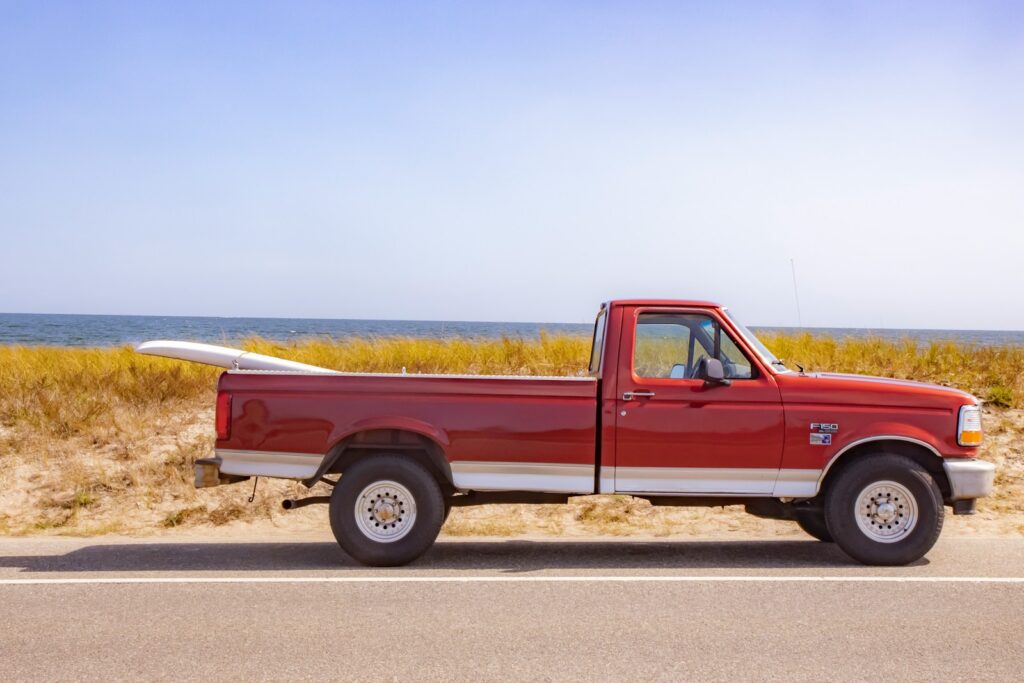
The truck that became their whole routine
They’d called it “our truck” in that casual way families do when something belongs to everyone and no one at the same time. The father paid the guy for it, sure, and the title lived in the father’s desk, but the son did the kind of labor you can’t fake: pulling the bed off, sanding rust until his forearms burned, learning to gap a door so it didn’t sag. He wasn’t just watching; he was building competence from scratch while his dad acted like a gruff, impatient teacher who secretly loved having an audience.
There were small rituals that became part of it. Saturday mornings meant donuts in a greasy paper bag, the same two coffee cups, the same argument about whether the new carburetor actually needed to be brand-name. His dad would swear, the son would laugh, and then they’d work in a steady rhythm that made the whole world feel manageable.
Some of the parts were birthday gifts or Christmas “you’ll use this” presents. A set of wrenches the son bought after saving up from his job. A seat cover they picked together at a swap meet because the original vinyl was shredded like old bark. Even if the truck legally belonged to the father, it was stuffed with the son’s time, money, and a kind of sentimental investment that’s hard to explain without sounding corny.
When it finally ran again, it wasn’t perfect, but it was theirs. The son drove it to work a few times, careful and proud, like he was transporting something fragile. The father would stand in the driveway watching it rumble away, pretending it was no big deal while clearly soaking in the moment.
The day it disappeared
The son didn’t notice right away because he wasn’t living at home anymore. He still stopped by regularly—Sunday dinner, quick visits to pick up mail that still somehow went there, the usual adult-kid half-in, half-out routine. The garage was just part of the background, a constant he didn’t think to check.
Then one afternoon he swung by unannounced, the way you do when you’re in the neighborhood, and the garage door was up. No truck. No tarp. Just empty space and a few boxes shoved to the side like the room had been rearranged to look normal.
He asked, lightly at first, like he was sure there was an obvious explanation. “Where’s the truck?” His dad didn’t even look up from what he was doing—some household chore, something deliberately ordinary. “Sold it,” he said, like he was talking about an old lawn mower.
The son actually laughed, because his brain didn’t accept it. Sold it how? To who? When? His dad shrugged and kept moving, and that’s when the son felt the little click of panic under his ribs—the feeling that something important had already happened and he wasn’t part of it.
“I didn’t think you’d care this much”
Once the son realized his father wasn’t joking, he started asking questions fast. How much did you sell it for? Where is it now? Why didn’t you tell me? His dad gave him a trimmed-down version of events: someone had offered a good price, the truck was “just sitting,” and it made sense to get rid of it.
The son reminded him that it wasn’t just sitting. The son drove it. They talked about keeping it in the family. They talked about handing it down one day, like it was a piece of history instead of sheet metal. The father’s response wasn’t an apology so much as a baffled frown, like he couldn’t understand why this was being made complicated.
That’s when the dad said the line that landed like a slap: “You’re acting like a child. It’s just some old truck.” He said it with that familiar parental tone, the one that’s meant to shut a conversation down by framing emotion as immaturity. And because it was coming from the same guy who had spent years obsessing over this “old truck,” it felt especially insulting.
The son’s face went hot. He wasn’t just upset about losing the vehicle; he was upset about being dismissed like his feelings were a tantrum. He tried to explain that it was about the time they spent, the money he put in, and the fact that his dad didn’t even give him a chance to buy it himself.
The money math and the sentimental math
His dad pivoted to practicality. The father had paid for the original truck and a lot of the big-ticket parts, and he started listing them off like receipts: engine work, paint supplies, the new tires. The unspoken message was clear—ownership, in the father’s mind, was whoever wrote the biggest checks.
The son didn’t deny that his dad spent money. He just pointed out the stuff that never shows up in a total: hundreds of hours, the weekend plans he’d skipped, the tools he bought, the parts he purchased, the sweat that made the truck more than a thing. The father’s face tightened the way it does when someone feels accused, even if the accusation is just “you hurt me.”
Then came the detail that made the whole situation feel uglier: the father had already taken the cash and deposited it. The sale wasn’t something he was considering; it was done, finalized, and made deliberately hard to undo. The son asked for some portion of the money, not even necessarily half—just acknowledgment that his contribution mattered.
His dad acted like that suggestion was ridiculous. “I’m not paying you for helping,” he said, framing it like the son was trying to charge for father-son time. The son snapped back that it didn’t feel like father-son time anymore if the father could erase him from the decision that easily.
The fallout nobody wants to name
The argument didn’t end cleanly. It turned into that kind of tense, looping fight where every sentence is about the current issue, but every tone is about older stuff—control, respect, who gets taken seriously. The father kept returning to “it’s my truck,” and the son kept returning to “it was our project,” and neither phrase could coexist in the same room.
Afterward, the son left early, skipping whatever family plan had been happening. His dad didn’t chase him down the driveway. He didn’t call later with a softer explanation. The silence that followed felt intentional, like a test of who would break first.
In the days after, the son kept thinking about small details that stung. The tarp folded up and put away without him. The buyer showing up, shaking hands with his dad, loading up something the son had rebuilt bolt by bolt. His dad making those arrangements and never once thinking, “I should tell him.”
The most bitter part wasn’t even the truck being gone—it was the new story the father seemed to be telling himself. In that story, he sold a leftover project for a good price, and his son was overreacting because he was sentimental and young. In the son’s story, his dad had sold proof of their bond and then mocked him for caring about it.
Now the son avoids the garage when he visits, because the empty space feels like a missing tooth. His dad still talks like he expects things to go back to normal once the “drama” blows over, while the son keeps hearing that phrase—“acting like a child”—every time he thinks about picking up a wrench. And the worst tension is the one neither of them says out loud: if his father could sell something they built together that easily, what else could he treat as disposable when it stops being convenient?
More from Steel Horse Rides: