

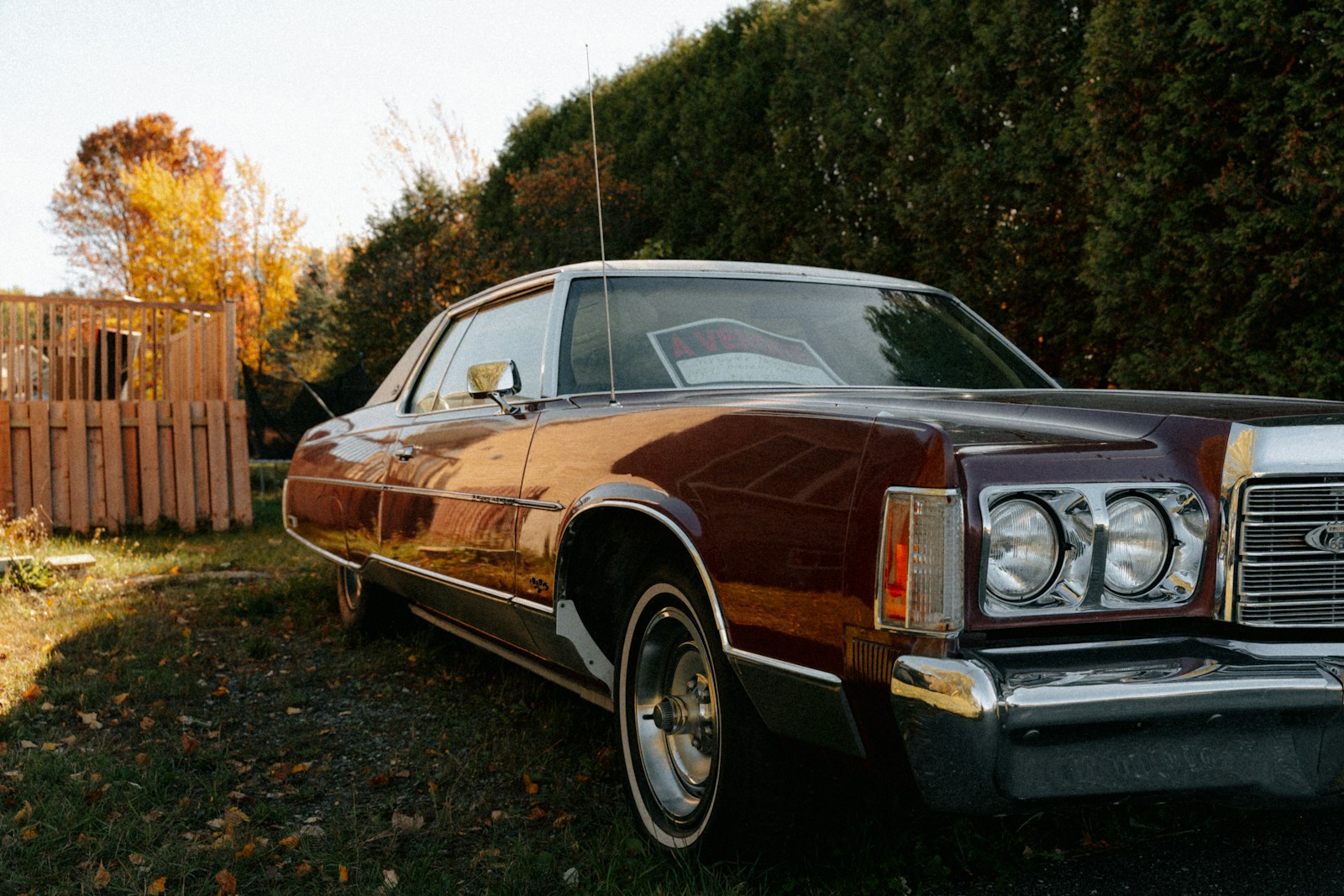
He hadn’t driven it that morning with any big ceremony in mind. It was just the same routine: keys off the hook, a quick glance at the dash, the familiar little rattle when the engine turned over. The car was older, a little stubborn in cold weather, and the upholstery had that sun-warmed smell that newer cars never seem to have.
It was also the last thing his father had left him that still felt like it belonged to real life. Not a framed photo or a watch that sat in a drawer, but something he used—something that moved through the world the way his dad used to. And lately, that had become a problem for his fiancé, the woman he’d been planning a wedding with, the woman who’d started referring to the car as “the ghost vehicle” like it was a joke they were both supposed to laugh at.
The fight didn’t start as a fight, which was almost the worst part. It began in that tone people use when they’re trying to sound reasonable, when they’ve already decided what the right answer is and they’re just walking you toward it. She waited until they were both calm, after dinner, after the dishes, and she dropped it like a practical suggestion: maybe it was time to sell the car his late father left him, because keeping it was keeping him too connected to a life before her.
The Car Wasn’t Fancy, But It Was His Dad
He’d inherited the car about two years earlier, not as part of some dramatic will-reading scene but in the quiet cleanup that happens after a parent dies. His father had been the type to take care of his stuff—oil changes on time, receipts in the glove compartment, the maintenance schedule highlighted. The car wasn’t rare or expensive; it just had a personality, like it had learned the rhythm of his dad’s habits.
When he started dating his fiancé, he was upfront about it being important to him. He talked about learning to drive in that car, about road trips where his dad would sing along to the same three classic rock songs and refuse to admit he didn’t know the lyrics. She’d seemed sympathetic then, the way people are when they’re still in the “getting to know you” phase and grief feels like a story you can nod at rather than a thing you have to live beside.
For a while, the car was just part of the background of their relationship. She’d ride in it occasionally, complain about the lack of modern features, tease him about how he could “finally upgrade” once they got married. He’d laugh it off because it felt harmless, the same way a comment about an old couch feels harmless until you realize someone’s been pricing replacements.
Little Comments Turned Into A Pattern
As the engagement got closer, her comments sharpened. She started calling the car “your dad shrine,” not with full cruelty, but with a little edge that made him pause. If he mentioned taking it for a drive to clear his head, she’d ask why he couldn’t just go to the gym like a normal person.
The car also became a stand-in for other things she didn’t like—his occasional visits to his mom’s house, the way he kept an old voicemail from his dad saved on his phone, the fact that he still spent Father’s Day feeling weird and quiet. She didn’t pick fights directly about grief, because that would sound bad, but she framed everything as “moving forward.” In her version of the future, there was a clean break between his past and their life together, like love was supposed to overwrite everything else.
He tried to meet her halfway in ways that didn’t feel like betrayal. He talked about maybe getting the interior cleaned, maybe fixing the minor dent on the passenger door, maybe eventually buying something newer while keeping the car stored. Every compromise still involved the car existing somewhere, and that seemed to be the part she couldn’t stand.
The Night She Finally Said It Out Loud
The blow-up happened after a low-stakes conversation about wedding expenses. They were going over numbers, talking about catering, and she mentioned how much easier everything would be if he sold “that car” and put the money toward their future. He told her, again, the car wasn’t worth that much—certainly not enough to change their wedding budget in any meaningful way.
That’s when she pivoted from money to meaning. She said it wasn’t about the cash; it was about what the car represented. According to her, keeping it was him keeping one foot planted in a life that didn’t include her, like the car was proof he wasn’t fully committed.
He asked her what that even meant. He reminded her that his father died; it wasn’t like he was clinging to an ex-girlfriend or a party lifestyle. The car was a connection to a parent he loved, and he didn’t understand why that should threaten her.
She didn’t yell, at least not at first. She stayed eerily calm and said the line that stuck: that the car kept him “too connected” to before, and she wanted a marriage where they were each other’s main focus. Then she added, almost like she was being generous, that she wasn’t asking him to forget his dad, just to stop “living in it.”
It Got Weirdly Personal, Weirdly Fast
He said no, and he expected sulking, maybe a cold shoulder. What he didn’t expect was how quickly her disappointment turned into a kind of scorekeeping. She started bringing it up at random moments—when he’d park in the driveway, when she saw him cleaning the dashboard, even when they passed a newer version of the same model on the road.
She asked him why he needed “an object” to feel close to his father. He told her it wasn’t about needing it; it was about wanting it, and not wanting to be forced to give it up. That answer seemed to annoy her more, because it was harder to argue with without sounding controlling.
Then she went for the angle that made the room go cold. She suggested, carefully, that maybe he was using his father’s death as a reason to hold onto the past. She implied that keeping the car was a form of stagnation, that he’d never “really” moved on. He could feel the conversation slipping from “I want you to be happy” into “I want you to behave the way I prefer.”
He tried to reset it by asking what she actually wanted. Was it the car itself—the old paint, the fact that it didn’t match her aesthetic, the embarrassment of pulling up somewhere in it? Or was it the idea that he had a private emotional life she couldn’t access? She didn’t answer directly, but she kept circling back to the same point: she didn’t like how much it mattered to him.
The Pressure Became A Test Of Loyalty
After that night, selling the car stopped being a suggestion and became a loyalty test. If he refused, it meant he “wasn’t ready” to be a husband. If he hesitated, she’d soften her voice and say she just wanted to feel like he chose her first.
He pointed out that love doesn’t work like a single-file line. He could choose her and still keep something from his father. But she treated that like a dodge, like he was refusing to prioritize their marriage, as if marriage was supposed to be a kind of emotional monopoly.
She even tried a more practical trap: she offered to help him shop for a “grown-up” car, framed as something fun they could do together. He realized quickly the “fun” only existed if the old car disappeared. When he said he could buy another car without selling the one he had, she looked at him like he’d missed the entire point on purpose.
The tension spread into other parts of their life. He started feeling guarded about mentioning his dad at all, because he could almost see her bracing for it. And she started acting like his grief was something she had to compete with, a rival she couldn’t name without sounding heartless.
A Fight That Was Really About Control
The last conversation he described wasn’t explosive—it was worse, quieter and more exact. She told him she was worried about marrying someone who “held onto things.” She said she didn’t want to live in a home where the past had so much space in the garage, in the driveway, in their daily routines.
He asked her if she’d feel the same if it were a family heirloom from her side, something tied to a person she’d lost. She avoided answering and instead said this was different because his attachment seemed “deeper.” That phrasing hit him like a slap, because it sounded like she’d decided his grief was excessive and therefore negotiable.
He told her the car wasn’t the issue; her need to erase it was. He said he could compromise on wedding details, budgets, even where they lived, but he couldn’t marry someone who framed his love for his dad as a problem to fix. She accused him of twisting her words, of making her sound like a villain when she was “just trying to build a life.”
And that’s where the story stalled out—not with a breakup, not with a grand resolution, but with the kind of silence that changes how a relationship feels in your body. He kept the keys in his pocket, and she started sleeping facing the other side of the bed. The car stayed in the driveway, unchanged, but it suddenly felt like more than a car: it was proof he still had boundaries, and proof she didn’t like where they were.
What lingered wasn’t just the question of whether he’d sell it. It was the realization that she’d looked at a symbol of his father—something tender, imperfect, and deeply human—and treated it like clutter from an old chapter she wanted deleted. The wedding date was still on the calendar, the venue deposit still paid, but now every quiet moment carried the same unsettling thought: if she needed him to sever this connection to feel secure, what else would she ask him to cut away once she had the ring?