

It started the way a lot of car-friend drama starts: two guys, one garage, and a shared obsession that slowly turned into a weird competition nobody agreed to out loud. One of them had been building his car for years—late nights, scraped knuckles, research rabbit holes, and the kind of careful budgeting that means eating boring lunches for months so you can afford the next upgrade.
The other guy was his friend, the type who loved the idea of having a “built” car more than the process of building one. He’d show up, talk big about “the plan,” take photos of other people’s engine bays, and float around meets like he was collecting inspiration. For a while, it worked fine—because inspiration is normal, and car people borrow ideas from each other constantly.
Then the friend didn’t just borrow an idea. He copied the entire build, down to the small stuff, and when the original builder wouldn’t hand over every part number and vendor link like a personal concierge, the friend accused him of gatekeeping like it was some moral crime.
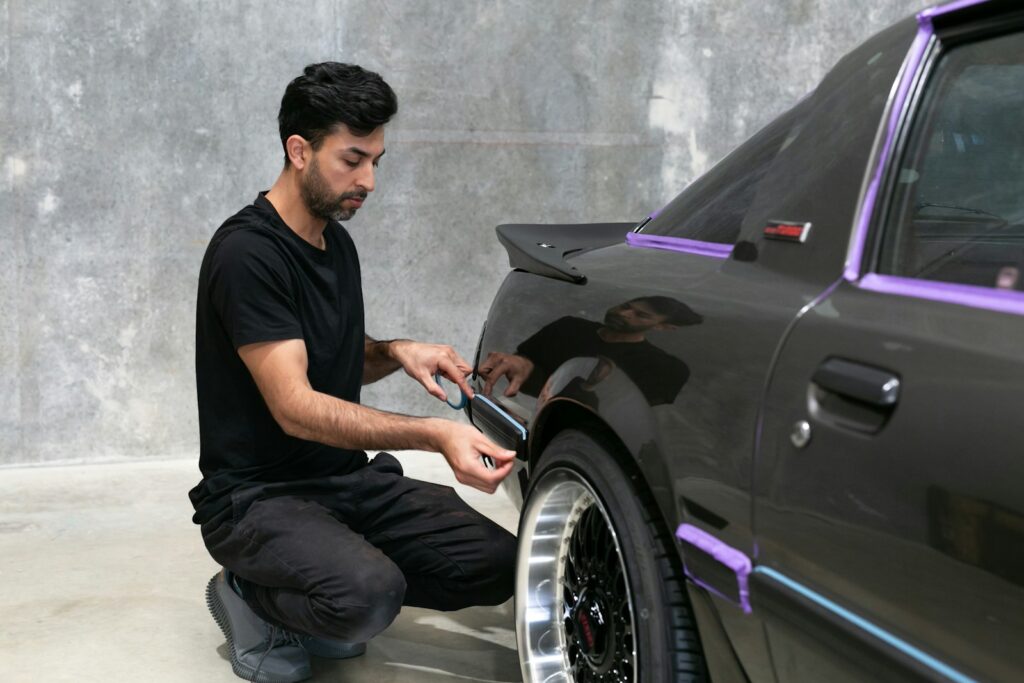
The build that took years, not weekends
The original builder wasn’t rich and wasn’t chasing clout. He just had a specific vision: a clean, OEM-plus-looking street car that could hold its own at track days without turning into a rattling, miserable project. That meant thoughtful choices—supporting mods before power, reliability parts before shiny stuff, and a consistent aesthetic that didn’t look like a catalog exploded under the hood.
He spent months reading forums, watching teardown videos, messaging a couple of niche vendors, and slowly assembling a parts list that actually worked together. When he found something that solved a problem—like a specific heat shield, a bracket that didn’t crack, or an intake that didn’t throw weird trims—he kept notes. Not because he was trying to be mysterious, but because that’s what you do when you’ve been burned by cheap parts before.
His friend watched all of it happen in real time. He’d ask questions, sometimes genuinely, sometimes like he was trying to speedrun the experience: “What turbo is that again?” “Where’d you get that oil cooler setup?” “Who tuned it?” The builder answered plenty, but he also didn’t treat every hangout like tech support.
When “inspired by” turned into a shopping list
The shift happened after a meet where the builder’s car got a lot of attention. Not wild, not flashy—just the kind of clean, cohesive build that makes other owners lean in and ask the right questions. His friend was there too, and the builder noticed how he hovered during conversations, jumping in to answer things vaguely, like he was part of the project.
A couple of weeks later, the friend showed up with photos on his phone. He’d bought the same wheels in the same finish. Same tire size. Same suspension brand. Same exhaust layout. He even copied the small cosmetic details the builder had chosen specifically because they were subtle—little things you only notice if you’ve stared at the car for hours.
The builder tried to be chill about it. Plenty of people run similar setups, and nobody owns a wheel spec. But the friend wasn’t just matching a style; he was matching decisions, one-for-one, like the builder’s car was a blueprint he could trace until his own looked identical.
Then came the first “Can you send me your full parts list?” text. Not “What did you do for X?” but the whole list—everything, in order, with links if possible. The builder gave a light answer, something like, “It’s a mix, depends what you’re doing, happy to talk through goals,” trying to steer it into an actual conversation.
The part-number interrogation
The friend didn’t take the hint. He kept asking, but the tone changed from curious to entitled, like the builder was withholding something he was owed. He’d send screenshots of parts pages and ask, “Is this the exact one?” He’d ask for torque specs, install notes, even the name of a specific employee at a shop the builder trusted.
The builder answered what he could, especially when it was a genuine safety or fitment question. But he stopped short of handing over a complete spreadsheet of everything he’d learned the hard way—especially the vendor choices that came from trial and error. Some of those vendors had limited stock, some were smaller operations, and some were the kind of niche source you find after buying the wrong thing twice.
That’s when the friend started doing this thing where he’d ask in front of other people. They’d be at a meet, and he’d loudly go, “Hey, what’s the part number for that bracket again? Tell them, they’re asking.” It put the builder on the spot, like refusing would make him look petty, and agreeing would make him feel like he was handing over his entire homework packet to someone who didn’t do the assignment.
The builder finally told him, calmly, that he wasn’t going to act as a personal parts concierge. He said he’d share general guidance, but he wasn’t going to spend his evenings digging through receipts and old emails so his friend could clone the car faster. He figured that would be the end of it, maybe with some awkwardness, but manageable.
“Gatekeeping” becomes the weapon
Instead, the friend got offended in a very specific way—like the builder had violated an unspoken rule of the hobby. He started using the word “gatekeeping” the way people use “toxic” in a fight: not to describe a real behavior, but to shut down any pushback. According to him, refusing to hand over everything was the same as trying to keep people out.
The builder pointed out the obvious difference. He wasn’t hiding information from the community; he was drawing a boundary with one person who was treating him like a free subscription service. It wasn’t that he wanted to be the only one with those parts—it was that he didn’t want to spend hours packaging up years of work for someone who’d already shown he wasn’t really interested in learning, just replicating.
The friend didn’t back off. He started acting like he’d been wronged, bringing it up in group chats with vague statements like, “Some people don’t want to help others succeed,” without naming names, but absolutely naming names. The builder would log in and see the friend dropping little jabs, implying the builder thought he was special or was trying to “own” a style.
Then the weirdest move: the friend posted photos of his car as he installed parts, and the captions sounded like he was narrating a journey. He’d talk about “choosing” components that were identical to the builder’s, even when the builder knew those “choices” came straight from watching him. When someone asked why the setup looked so familiar, the friend would laugh it off and say stuff like, “Good taste is good taste,” like it was all coincidence.
The moment it got personal
The real blow-up happened at a garage night when a few people were hanging out. The friend showed up and started walking around the builder’s car, pointing at components and asking questions like he was doing a guided tour. Not maliciously, exactly—more like he assumed he had access because they were friends.
At one point he crouched by a specific piece the builder had customized—something small but meaningful, the kind of mod you do because you’re picky and you care. The friend asked for the exact part number and where it was sourced, and when the builder hesitated, the friend hit him with, “Dude, don’t gatekeep. It’s embarrassing.” Loud enough for everyone to hear.
That word hung in the air like it was supposed to end the conversation. Instead it made the builder snap—not screaming, but firm in a way that stopped the room. He said, in front of everyone, that it wasn’t gatekeeping to not hand over every detail when someone was copying his build step-for-step and then acting like it was their own idea.
The friend’s face changed, and suddenly it wasn’t about parts anymore. He accused the builder of being insecure, of thinking he “owned” the platform, of needing to be the “main character” at meets. It was a clean little reversal: the guy copying became the victim, and the guy setting boundaries became the villain.
After that, the night fizzled. People avoided eye contact, did the awkward “well, I should head out” thing, and the builder found himself standing in his own garage feeling like he’d somehow lost control of his own project. The next day the friend sent a long message about how “the car community is about sharing,” and how the builder was “changing” and “forgetting where he came from,” like he’d built his car out of borrowed charity.
The builder didn’t respond right away, and that silence became its own statement. The friend kept building, still mirroring the setup, but now with a sharper edge—like every identical part was proof he didn’t need the builder, even though he was still chasing the same exact blueprint. The weirdest part was that the conflict never really resolved; it just settled into the group like a bad smell, leaving the builder with the uneasy realization that the friend hadn’t wanted help, he’d wanted access—and the moment access stopped being automatic, the accusations started flying.
More from Steel Horse Rides: