

The first sign something was wrong wasn’t the flames. It was the way the air changed when he opened the back door—sharp and chemical, like melted plastic and hot metal, the kind of smell your brain files under not normal before you’ve even finished the thought.
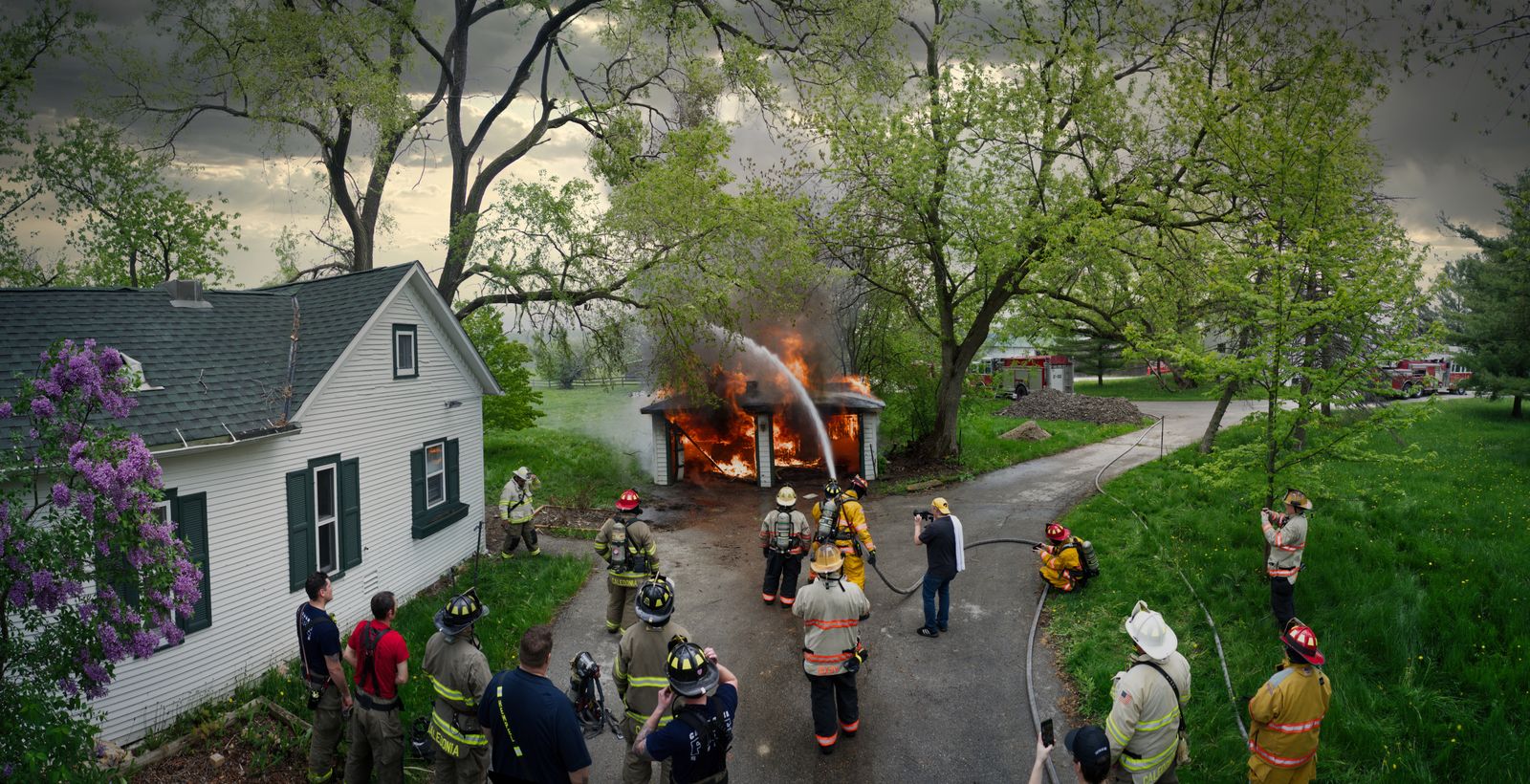
He stepped onto the porch and saw the garage doing that slow, ugly thing fires do at the beginning: smoke curling out from the seam above the door, gray at first, then darker, pulsing like it had a heartbeat. Somewhere inside, something popped—loud enough to make his stomach drop—and he bolted back into the house, yelling for his wife to grab the kids and get out.
They made it to the driveway barefoot and half-dressed, his wife clutching their youngest with one arm and her phone in the other. He dialed 911 with fingers that didn’t feel like his, and as he gave the address, he could hear his own voice doing that weird calm-panicked thing, like he was trying to sound normal while his life was actively catching fire.
The Garage Wasn’t Just a Garage
It mattered that the garage wasn’t just where they stored lawn chairs and Christmas bins. It was his project space, his sanctuary, and—this is important—the place where he kept a classic car he’d been restoring for years, a 1967 Mustang he’d bought in sad, rusted pieces and slowly brought back to something that actually looked like a car again.
His family knew about the Mustang. They knew how many weekends had disappeared into sanding, priming, hunting down obscure parts, and rewatching the same repair video until he could recite it. They also knew the money, because you can’t hide that kind of spending forever, even if you call every receipt “supplies.”
So when he looked at the garage and thought about the car, it wasn’t pure materialism. It was grief preloading itself, like his brain was already mourning all those hours and the idea of “someday” being incinerated. But he stayed with his wife and kids on the driveway, because the whole point of being a grown-up is knowing what to hold onto and what to let go.
The First Calls Came Fast—and Wrong
While they waited for the fire department, he did what everyone does now: he started calling people, partly for help, partly because it felt impossible to stand there silently while the garage smoked. His wife called her sister because that’s who watches the kids when things go sideways. He called his dad, because his dad lived ten minutes away and had a key to the house.
His dad picked up on the second ring, and he didn’t even finish saying “the garage is on fire” before his dad asked, “The Mustang’s in there, right?” Not “Are you okay?” Not “Is everyone out?” Just straight to the car, like it was the main character and the humans were background scenery.
He corrected him immediately—everyone was out, yes, they were fine, yes, the kids were with their mom—and his dad made a noise like he’d been holding his breath. Then came the next question, softer, almost pleading: “Can you get it out?”
Smoke, Sirens, and the Pressure to “Just Do Something”
The thing about being the person in the emergency is that everyone around you starts suggesting actions like they’re brainstorming a weekend plan. A neighbor yelled over the fence asking if he needed a hose. Another neighbor wandered closer, filming with their phone like it was a weather event. His wife stood tight and pale, eyes flicking between the kids and the garage door, trying to keep her voice steady.
And then there was his dad, still on the phone, talking through options as if the garage wasn’t actively filling with toxic smoke. “If it’s just smoke, you can probably pop the side door, roll it out.” “Do you know where the keys are?” “If you push it into the driveway, the fire department can handle the rest.”
He looked at the garage’s side door, the one that led into his workbench area. He knew exactly what was in there: cans of paint, solvents, oily rags he’d meant to dispose of properly, a battery charger he’d left plugged in. Even if the flames weren’t visible yet, it was a bad math problem with a timer attached.
His wife said, low enough that only he could hear, “You’re not going in there.” It wasn’t a request. It was the kind of sentence that comes from someone who’s imagining explaining to their children why Dad didn’t come back out.
The Firefighters Had Priorities—So Did the Family
The sirens arrived like a wave, and for a second he felt relief so strong it almost made him dizzy. The fire engine pulled up, firefighters jumped out, and the whole scene shifted from chaotic to controlled. One of them immediately asked if anyone was inside the house or garage, and he answered, “No, everyone’s out,” with the desperation of someone trying to be believed.
They told him to back up, farther than he wanted to, because standing near a burning garage is a great way to become part of the problem. He watched them force the garage door and blast water into a place that had been his pride and routine, the kind of private mess you never expect strangers to see. His wife kept one hand on the kids’ shoulders like a physical anchor, as if they might float away from the stress.
Then his mom called. He answered with the phone wedged between his shoulder and ear, still watching the firefighters. He got through “the garage caught—” and she cut him off with, “Oh my God, the car.” She didn’t ask about his wife. She didn’t ask about the kids. She asked about the car like it was a pet.
He said, “We’re all outside, we’re fine,” and his mom said, “Okay, okay,” like that was the boring detail, and then immediately circled back: “But the Mustang, honey—did it make it?”
What He Heard Was a Ranking System
Later, he’d replay those calls in his head, not because he was trying to be dramatic, but because the order of operations stuck in his throat. It wasn’t that his parents cared about the car more than his family in some literal, cartoon-villain way. It was that in the moment—the one moment when instinct shows your priorities—his wife and kids weren’t the first thing they reached for.
When his sister-in-law arrived to take the kids, his wife finally exhaled properly. Her hands were shaking, and she kept rubbing her thumb against her phone case, the way people do when they’re trying to keep themselves from spiraling. He noticed she didn’t speak much after the second call, like she was saving her words for later when she could actually aim them.
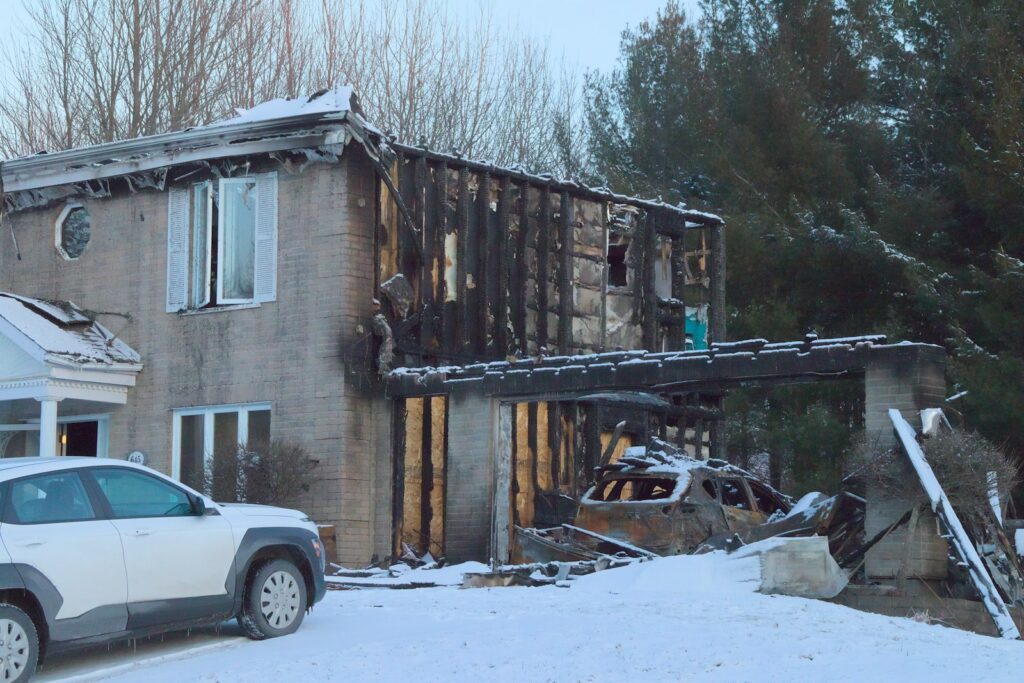
The firefighters got the blaze under control, but not before the garage interior took serious damage. The roof didn’t collapse, but the walls were scorched, the workbench area was wrecked, and the air inside looked like a fog machine had been running for an hour. The Mustang was still there, partly covered, and from the outside it looked intact, but the heat had warped things and melted plastic components; the smoke alone did the kind of damage you can smell on your clothes days later.
His dad showed up while firefighters were still packing hoses, and the first thing he did wasn’t hug him or check on his daughter-in-law. He walked toward the garage opening with that hungry look people get when they want to assess property damage with their own eyes. A firefighter told him to step back, and his dad acted offended, like safety rules were a personal inconvenience.
His wife finally spoke, calm and lethal: “You didn’t ask if your grandkids were okay.” His dad blinked like he genuinely hadn’t noticed the omission, then tried to laugh it off with, “Of course they’re okay, they’re right there.” It landed badly, the way jokes do when they’re used as a trapdoor out of accountability.
That night, once the kids were asleep somewhere else and the house was quiet in a way it shouldn’t be, the argument arrived on schedule. He tried to explain to his wife that his parents were panicking, that people fixate on objects when they’re scared, that it didn’t mean they didn’t care. She listened, then asked him why their panic found the car faster than it found their grandchildren.
And he didn’t have an answer that felt clean. He had a list of messy ones—habit, entitlement, a long family history of treating his hobbies like the household’s center of gravity—and none of them softened the fact that when smoke poured out of the garage, the people who raised him called to check the status of a machine before they checked the status of the humans he’d built a life with.
In the days after, the insurance forms and repair estimates piled up, and his parents kept asking about parts and restoration timelines, as if the only real tragedy was a project interrupted. His wife didn’t forbid contact or make dramatic demands; she just went colder around them, the way someone does when they’ve learned exactly where they fall on the priority list. The garage would eventually be rebuilt and the car might someday run again, but the weirdest damage was the thing no contractor could patch: the moment his family realized that, in a crisis, they weren’t the first thing his parents reached for—and now everyone had to live with hearing that out loud.
More from Steel Horse Rides: