

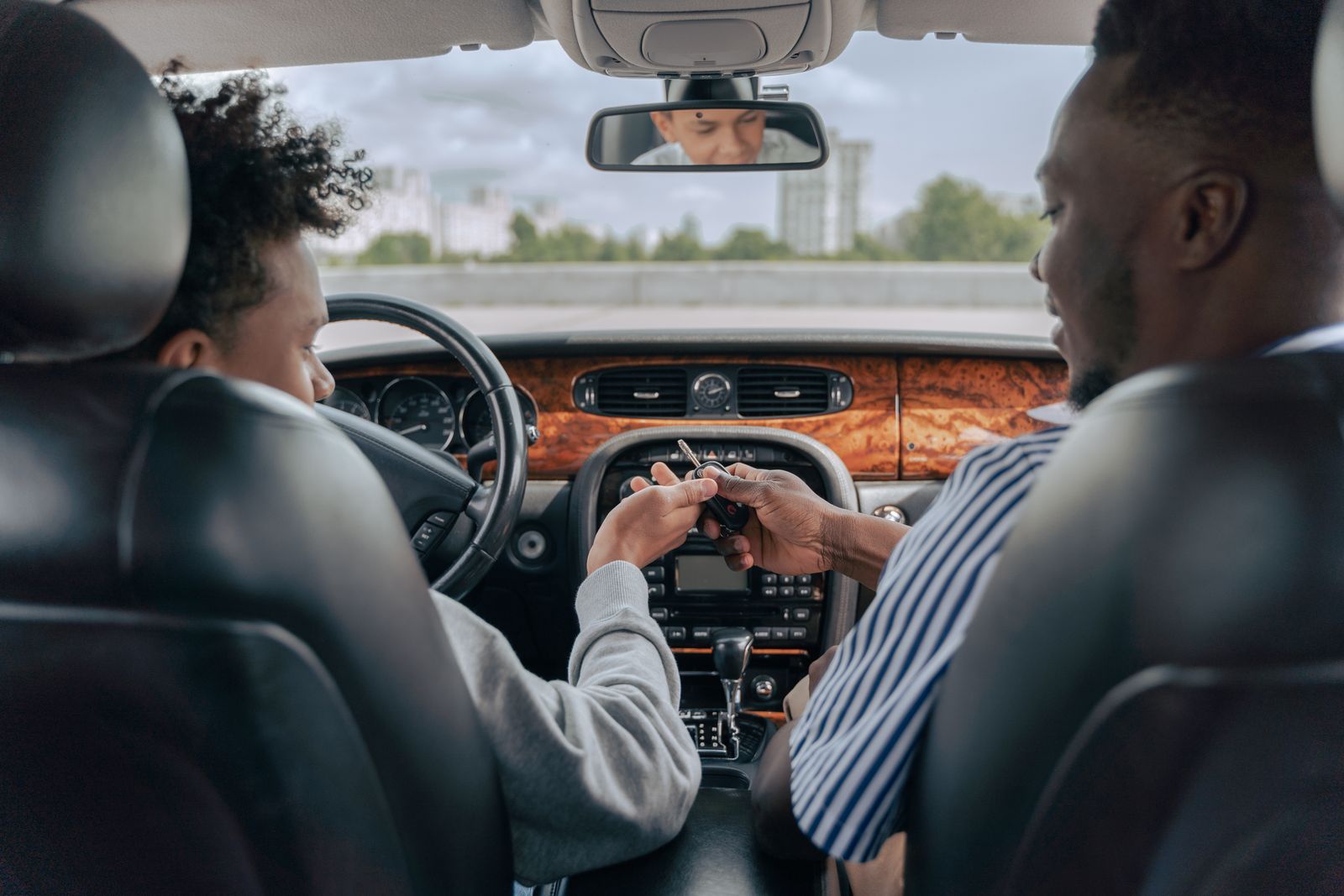
It started with a driveway moment that was supposed to be wholesome. The parent—mid-40s, practical, still driving a ten-year-old sedan with a dented rear bumper—stood there with a coffee and watched their teenager pull up in a car that looked like it belonged in a glossy ad.
Not a beater with a “first car” vibe. This thing had crisp paint, newer headlights, a clean interior, and that subtle newer-car smell you can’t fake with air fresheners. The kid hopped out grinning, already tossing out details like they were reading off a spec sheet: “It’s got heated seats. And CarPlay. And the backup camera is like, HD.”
The parent didn’t even have a backup camera. Their own car still had an AUX cord that only worked if you held it at a certain angle. And before they could fully process what was happening, the rest of the family was congratulating the teen like they’d just won a scholarship, while quietly side-eyeing the parent like they should be clapping harder.
The “Good Deal” That Didn’t Feel Like a Deal
The backstory was, on paper, reasonable. The teen had been saving from a part-time job—weekend shifts, summer hours, the whole responsible-kid routine—and the parent had agreed to match whatever the kid saved, up to a cap. It was a classic deal: kid learns budgeting, parent helps with a safe car, everyone wins.
But then a relative got involved. An uncle had “a friend who flips cars,” and suddenly the conversation shifted from “something reliable under $6k” to “you have to see this one, it’s basically a steal.” The parent assumed “steal” meant ugly but functional, maybe a retired fleet car with high miles and a solid engine.
Instead, what showed up was a newer model than the parent’s, in better shape than the parent’s, with features the parent had never bothered to buy for themselves. When the parent asked—carefully—how it ended up being so nice within the budget, they got a vague answer about “connections” and “timing” and “the guy just wanted it gone.”
That’s when the parent made the first mistake: they didn’t hide the discomfort well enough. It wasn’t a tantrum, but their face apparently did something that the kid noticed. The teen’s smile tightened, the family’s congratulations got louder, and the parent could feel the conversation turning into one of those group scenes where you’re being judged in real time.
Upgrades, Add-Ons, and the Expanding Definition of “Help”
The first ask came fast. A week after the purchase, the teen started talking about “small upgrades” like it was just the natural next step of owning a car. They wanted nicer rims because the stock ones were “kinda basic,” and they wanted the windows tinted because “everyone does it” and because the sun “hits different” on their commute to school.
The parent said no problem to the boring stuff: insurance contribution, a dash cam, a full inspection, and new tires if they were needed. They even offered to pay for a defensive driving course, which the teen didn’t seem excited about but agreed to. The parent’s line was simple: safety and maintenance, yes; aesthetics and flexing, no.
That’s when the request list started coming with emotional packaging. The teen didn’t say, “I want nicer rims.” They said, “It’ll help with resale,” or “It’ll make it safer because people will see me better,” or “I’ll be more confident driving if it feels like mine.” Everything was framed like a rational investment, even though it all added up to “make it cooler.”
The parent held the line. They reminded the kid of the deal: matching for the purchase, not an ongoing upgrade subscription. The teen got quiet in that way teenagers do when they’re not yelling but still punishing you, and the vibe in the house shifted from excited-first-car energy to cold-shoulder resentment.
The Family Starts Keeping Score
The real conflict didn’t come from the teen alone—it came from the chorus of adults who suddenly had opinions. The uncle who’d arranged the “friend” deal started dropping comments at family dinners about how “it’s important to let kids express themselves,” as if tinted windows were self-actualization. A grandparent chimed in with, “Kids remember who supported them,” which landed like a threat disguised as a proverb.
At some point, the parent realized the story had been rewritten without them. In the family version, the parent wasn’t the person who helped make the purchase happen. They were the one holding the kid back from “finishing” the car, like the teen was forced to drive around in some embarrassing junker instead of a nicer vehicle than the parent’s own.
Then came the jealousy accusation, delivered in that smug, half-joking way that’s meant to be brushed off but still sticks. Someone said, “You’re just mad their car is nicer than yours,” and the table laughed like it was harmless. The parent laughed too, but it didn’t reach their eyes, and everyone could tell.
The teen latched onto that framing immediately because it was easier than hearing “no.” Instead of negotiating, they started narrating the situation as if it was obvious: the parent was threatened, the parent was petty, the parent couldn’t stand the kid having something better. The parent tried to explain it was about financial boundaries, but every explanation sounded defensive, which only fed the storyline.
The Awkward Moment That Lit the Fuse
The tipping point happened in a parking lot, not at home. The parent and teen were leaving a store when the teen spotted another student’s car with aftermarket rims and dark tint. The teen pointed like it was proof of injustice, saying, “See? That’s exactly what I mean. Mine looks unfinished.”
The parent, exhausted, said something like, “Your car doesn’t need to be ‘finished.’ It needs to be driven safely.” They weren’t trying to be cruel, but it came out sharp, and the teen went stiff. On the drive home, the teen stared out the window and started doing that quiet-cry thing where they refuse to let you see tears, but you can hear the breathing change.
By the time they got home, the teen had already texted someone. The parent could tell because the family group chat lit up within the hour, and suddenly the parent was being asked why they were “punishing” the kid. One relative even suggested the parent “make it fair” by upgrading their own car if it bothered them so much.
That line—upgrade your own car—was almost comical, because the entire reason the parent still drove what they drove was budget discipline. They’d been the one skipping luxuries for years. And now the family was acting like they were stingy out of spite instead of trying to keep a teenager from turning every milestone into an endless shopping list.
Refusing to Pay Becomes the New Problem
The teen tried a new tactic: offering to “pay some” if the parent would cover the rest. They proposed splitting the tint, then the rims, then a nicer stereo even though the car already had a perfectly fine one. Every conversation became a negotiation, like the teen had learned that persistence is the same thing as entitlement if you dress it up politely enough.
The parent didn’t budge, and the family got louder. They started saying the parent was “making it weird” and “turning it into a competition,” which was maddening because the parent hadn’t brought up competition at all. The only person comparing cars out loud was everyone else, constantly pointing out that the teen’s car was newer, cleaner, and “a big deal.”
The parent did what practical adults do when they feel cornered: they tried to put structure around it. They offered a clear rule—maintenance and safety costs would be supported, cosmetic upgrades would not—and suggested the teen save up if it mattered that much. The teen responded by acting like the parent had moved the goalposts, even though the goalposts had been there the whole time.
And that’s where the jealousy accusation became a weapon. Any time the parent said no, someone implied it was because the parent couldn’t stand looking at the kid’s nicer car next to their own. It didn’t matter that the parent had literally helped buy the car. The story had shifted, and now the parent was cast as the jealous one for refusing to keep paying.
The ugliest part wasn’t the money—it was the way everyone seemed to prefer the simpler narrative over the truth. “Jealous parent” is an easy character to boo. “Parent trying to teach financial limits while relatives undermine them and a teen tests boundaries” is messier, and messier doesn’t fit into a quick group-chat jab.
By the end of it, the driveway didn’t feel like a proud milestone anymore. It felt like a scoreboard the parent never agreed to play on, where every shiny feature on the kid’s car was somehow evidence against them. And the tension that lingered wasn’t about rims or tint—it was the quiet realization that the family would rather accuse the parent of envy than admit the kid had started expecting “help” to mean “pay for whatever makes me look good.”