

It started the way a lot of car nightmares start: with a noise that didn’t belong. A faint rattle turned into a grind, the check-engine light flickered on like it had opinions, and the owner—someone who relied on the car for commuting and grocery runs and everything else life quietly demands—finally gave in and booked an appointment at a neighborhood mechanic with a decent-looking waiting room and a wall of “certifications.”
The shop wasn’t the cheapest, but it had that reassuring vibe of competence. The service writer talked fast, used lots of confident phrases, and did that thing where they look at the computer more than they look at you, as if the machine is where the truth lives. After a quick inspection, they came back with a list of problems that sounded both urgent and expensive.
The number that landed on the estimate made the owner’s stomach drop: $4,800. It wasn’t just one repair, either—it was a stack of “while we’re in there” items, the kind that are hard to argue with if you don’t have the vocabulary. The owner didn’t want to be the person who says, “Are you sure?” and gets treated like a nuisance, so they nodded, swallowed the panic, and authorized the work.
The upsell snowball
The shop called later that day with the kind of update that doesn’t feel like an update. They’d “found more issues,” and suddenly the estimate wasn’t just an estimate—it was presented like a medical diagnosis with no second opinion. The mechanic explained that if they didn’t replace certain parts now, the owner would be “back in a month” with a bigger bill and a bigger problem.
They listed parts and labor in a way that made it hard to separate what was necessary from what was convenient. Some of it sounded plausible: worn components, leaks, aging hoses. Some of it sounded like a catch-all: a “tune-up,” “cleaning,” “preventative replacement,” and a couple items that felt weirdly non-specific when the owner asked what, exactly, had failed.
Still, the owner was already committed, already imagining being stranded on the highway. They approved it because the alternative felt like gambling with a vehicle they couldn’t afford to lose. When the call finally came—“it’s ready”—the owner showed up, signed the invoice, and left with that uneasy feeling of paying tuition for a class you didn’t understand.
The car comes back… and so does the doubt
For a few days, it seemed fine. The noise was quieter, the idle smoother, and the owner tried to force the relief to stick. Then the check-engine light popped back on, casual as ever, like it had never left.
The car started acting up in familiar ways. A hesitation when accelerating, a roughness at stoplights, the sense that the whole thing was still one bad commute away from a tow truck. The owner called the original shop, expecting a quick “bring it in, we’ll take a look.”
Instead, they got defensiveness. The person on the phone suggested it could be “something else,” said diagnostic time wasn’t free, and asked if the owner had been using the right gas. That last part stuck—because it shifted the blame in a way that felt strategic, like the problem couldn’t possibly be the work they’d just charged thousands for.
The owner did bring it back, once. The shop cleared the code, said it was “probably just a sensor,” and sent them on their way without the confident tone from the first visit. The light came back again two days later, and that’s when the owner started doing what they hadn’t done before: asking around.
The second shop and the uncomfortable silence
A friend recommended a smaller garage across town, the kind of place with two bays and a dog that naps by the office door. The owner explained everything—what was replaced, what was billed, what kept happening—and handed over the fat invoice like it was evidence.
The second mechanic didn’t roll their eyes or launch into a speech. They just read the paperwork, asked a couple clarifying questions, and said, “Let’s take a look.” There was no immediate accusation, no “you got scammed” announcement. It was worse than that: calm competence.
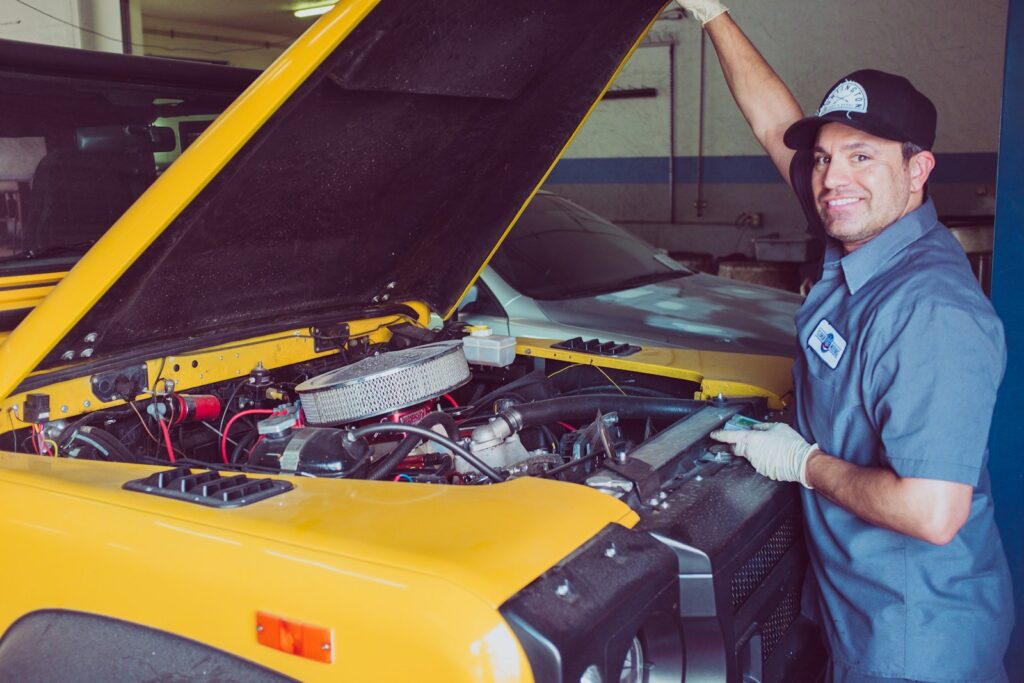
When they popped the hood, the mechanic got quiet in that way people do when they’re trying to decide how to say something without starting a fire. They pointed to a component the invoice claimed was brand new—then ran a finger over a layer of grime and oxidation that didn’t match “installed last week.” They checked another part on the list, then another, and the expression on their face shifted from curiosity to something closer to disbelief.
The owner hovered near the fender, watching the inspection turn into a slow-motion unraveling. The mechanic finally asked, “Do you mind if I take a few pictures?” Not for social media, not for drama—just documentation, the way you document a dent after a hit-and-run.
“These are the old parts”
Here’s the detail that made the whole story stick: the second shop found the “replaced” parts still under the hood. Not “similar parts,” not “maybe the wrong brand,” but the same tired-looking components the invoice described as newly installed—complete with aged clamps, brittle connectors, and markings that didn’t line up with the part numbers listed on the receipt.
One of the items billed as replaced was something the mechanic said should’ve looked obviously fresh. New versions of it typically have clean metal, intact labels, and fasteners that don’t look like they’ve survived five winters. This one looked like it had been there since the car came off the lot.
The second mechanic didn’t even sound angry, which somehow made it hit harder. They explained it the way you’d explain a math problem that doesn’t add up: if those parts had been swapped, there would be tool marks in certain places, new gaskets, fresh sealant, or at least evidence of disturbance. Instead, everything looked untouched, like someone had built a whole invoice around a repair that never happened.
They also found what likely caused the recurring issue—a specific failure that hadn’t been addressed at all. It was the kind of fix that wouldn’t have been cheap, but it also wouldn’t have required half the “preventative” work billed on the first invoice. The owner sat there, absorbing the idea that they’d paid $4,800 and the car still had the same old parts staring back at them.
The confrontation, the paperwork, and the dance of denial
The owner went back to the first shop with the invoice and the photos. Not screaming, not threatening—just asking for an explanation. That’s where the story got messy in a very human way, because the shop didn’t react like people who’d made a simple mistake.
At first, they tried to slow the conversation down with jargon. They said some parts “look old even when they’re new,” which didn’t make sense when the second mechanic had already pointed out specific identifiers. Then they pivoted to, “We replaced what needed replacing,” which sounded carefully worded, like they were trying to avoid saying, “Yes, that part is new,” while still letting the owner assume it was.
The owner asked for the old parts back—because most people know that’s a basic move when you’re suspicious. The shop said they’d already disposed of them, which might be normal in some situations, except it was deeply inconvenient given the timing and the amount of money involved. When the owner pointed out that the “old parts” seemed to still be in the engine bay, the service writer’s tone sharpened.
It turned into a kind of circular argument: the owner saying, “This doesn’t match what I paid for,” the shop saying, “Our technicians performed the work,” and nobody offering a concrete, verifiable explanation. The owner asked for itemized labor notes—actual technician documentation, not just a list of charges—and the shop said they didn’t provide that level of detail. Somewhere in the middle of it, the owner realized they weren’t negotiating a refund; they were negotiating reality.
The last update in the story wasn’t a neat wrap-up. The owner talked about calling corporate—only the shop wasn’t part of a big chain. They mentioned small claims court, consumer protection offices, even disputing charges, but each option came with its own headache: time off work, the burden of proof, the slow grind of paperwork. The car still needed the real repair, and now the owner was paying twice—once to fix the problem, and once to find out they hadn’t been fixed in the first place.
What made the whole thing linger wasn’t just the money, although $4,800 is the kind of number that changes how you sleep. It was the feeling of being talked around, of watching someone maintain eye contact while insisting the evidence under the hood didn’t mean what it obviously meant. The owner left stuck between two awful tasks—getting the car roadworthy and trying to claw back thousands from a shop that seemed fully prepared to deny, deflect, and wait them out.
More from Steel Horse Rides: