
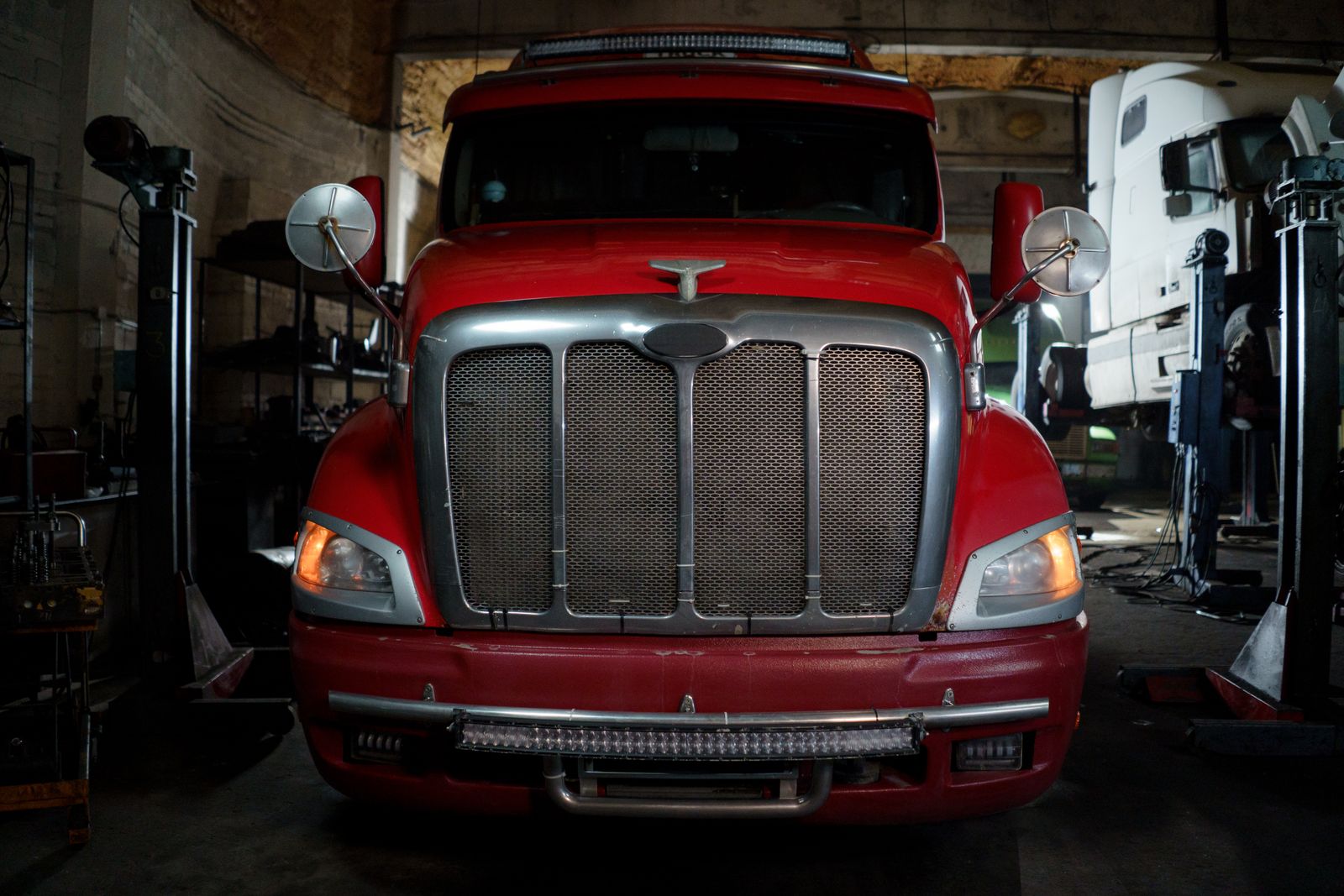

It started the way a lot of neighbor drama starts: with a sound that’s technically legal but emotionally offensive. The guy with the diesel truck wasn’t doing burnouts at 2 a.m. or rolling coal down the street like a cartoon villain. He was just leaving for work early, letting his older diesel idle for a minute, and driving off like a normal person who happens to own a loud, smelly machine.
His neighbor—mid-30s, meticulous yard, the kind of person who power-washes a driveway for fun—had been watching this routine with the intensity of someone tracking a war crime. At first it was little things: a tight smile when they passed at the mailbox, a window blind snapping shut when the truck fired up. Then came the note, stuck under a wiper like a parking ticket, written in aggressive cursive about “fumes,” “children,” and “basic respect.”
The truck owner didn’t ignore it, exactly. He just didn’t treat it like an emergency. He checked for leaks, made sure the exhaust wasn’t doing anything weird, and kept his mornings the same—start up, let it settle, roll out. That should’ve been the end of it, but the neighbor wasn’t looking for a solution. He was looking for a referee.

The Morning the Police Showed Up
A week later, right after the diesel turned over and the familiar rattly idle filled the quiet street, a patrol car eased up behind the truck like it was about to conduct a felony stop. The driver’s side door opened and an officer walked up, not hostile, but clearly bracing for some kind of nonsense. The truck owner stepped out, still holding his coffee, already doing that mental math of “what did I forget to renew?”
The officer said they’d gotten a complaint about a “strong odor” and “aggressive exhaust” from the vehicle. Not unsafe driving, not a noise violation in progress, just… aggressive. The truck owner actually laughed, not because he was trying to be a jerk, but because it sounded like someone had accused the truck of having a bad attitude.
The officer looked mildly embarrassed, like he’d been sent to investigate a toaster that “felt threatening.” He asked if the truck had been modified, if it was rolling coal, if there was anything visibly wrong. The owner explained it was an older diesel, stock exhaust, and that it was cold out—meaning it smoked a bit on startup, which is not exactly a secret feature of diesel engines.
They did the whole polite dance: the officer took a look, sniffed the air like he was judging a wine, and admitted there wasn’t much to cite. He did ask the owner to maybe shorten the idle time if possible, not as a command, more like a “please help me close this call.” The owner said sure, he’d try, because he wasn’t trying to be at war with the entire cul-de-sac.
“Smells Aggressive” Becomes the New Neighborhood Phrase
By the time the truck owner got home that evening, the neighbor was waiting outside like he’d been summoned by the sound of authority. He didn’t approach with a “Hey, sorry about that.” He approached with a smug little tilt of the chin, like he’d just won a court case on television.
He asked, “So did they tell you anything?” the way people ask if the principal finally punished the kid they complained about. The truck owner kept it simple: the officer didn’t find anything illegal and suggested cutting down on idling. The neighbor nodded slowly, as if receiving confirmation that his instincts about “aggression” had been validated by science.
That’s when he said it out loud, the phrase that would stick in the truck owner’s head for days: “It’s not just loud, it smells aggressive.” Like diesel fumes were a personality trait. Like exhaust could be confrontational, like it was leaning over the fence and starting fights with the hydrangeas.
The truck owner didn’t take the bait. He just told him, calmly, that it was a diesel truck, it was within legal limits, and he’d already been respectful. The neighbor’s face tightened, not angry exactly, more like irritated that the universe wasn’t handing him a win.
The Cold War Week
For the next few days, the street had that weird tension where nothing is happening but everything feels loaded. The truck owner started turning the truck on and pulling out faster, partly to be considerate and partly because he didn’t want another patrol car arriving to evaluate the “vibe” of his exhaust. He also started parking a little differently, not to escalate, but because he didn’t want to accidentally give the neighbor a new angle to complain from.
The neighbor, meanwhile, got busy doing the passive-aggressive classics. If the truck owner walked outside, the neighbor would suddenly need to inspect his own trash cans. If the truck owner was washing the truck, the neighbor would loudly close windows as if sealing the house against a chemical attack.
Nothing was overt enough to confront, which is the whole point of that style of conflict. It keeps everything deniable, while still making sure the other person feels watched. The truck owner vented about it to a friend, mostly because he couldn’t get over the idea of law enforcement being summoned for a smell described like a mood.
Still, he figured it would die down. People get their complaint in, they feel heard, they move on. Except this neighbor wasn’t moving on—he was storing up confidence for his next move.
The Couch Problem and the Sudden Change of Tone
Exactly one week after the police visit, the neighbor showed up at the truck owner’s door on a Saturday afternoon. Different energy entirely: friendly posture, lighter voice, hands in pockets like they were pals. The truck owner opened the door already suspicious, because the neighborhood had not exactly been doing “buddy” lately.
The neighbor launched into it fast, like he could outrun the awkwardness if he spoke quickly enough. He and his partner had found a couch they wanted, but it wouldn’t fit in their car. He’d noticed the truck, obviously, and he was wondering—just wondering—if he could borrow it for a couple hours to pick up the couch across town.
There was a pause that felt like it lasted a full commercial break. The truck owner didn’t respond right away because he was honestly trying to confirm he’d heard correctly. This was the same guy who’d called the cops because the truck’s exhaust “smelled aggressive,” now asking to take the keys and drive it like it was a community resource.
The neighbor tried to smooth it over with a quick add-on: he’d “take it easy,” he’d “be careful,” and he’d “fill it up” afterward. It wasn’t an apology, though. It was more like he assumed the complaint had been a separate event, unrelated to the truck’s actual existence as a favor machine.
What He Said, What He Didn’t, and Why It Stayed Weird
The truck owner didn’t yell. He didn’t do a speech. He just asked, “You want to borrow the truck you called the police on?” Not accusatory in volume, just flat in a way that forced the neighbor to hear himself.
The neighbor’s face did this quick flicker—annoyance first, then a forced laugh. He tried to frame it like a joke, like, “Yeah, well, I mean, it’s a good truck, right?” He even added something about how the smell “wasn’t as bad lately,” like the owner’s efforts to keep peace had been a service he’d earned.
That’s when the truck owner gave him the cleanest “no” possible. No lecture, no escalation, just: he wasn’t comfortable loaning out his vehicle, especially to someone who’d already shown he’d rather involve the authorities than talk to him like a person. The neighbor’s friendly mask slipped a half inch, and the disappointment came out sharp, like the owner had failed a social test the neighbor had invented.
He didn’t storm off, but he didn’t leave gracefully either. He muttered something about “neighbors helping neighbors” and walked back across the lawn with that stiff, offended posture people get when they think they’re being treated unfairly. A few minutes later, the truck owner heard him on the phone—loud enough to carry—complaining to someone about how “some people” don’t know how to be decent.
The unresolved part wasn’t whether the truck owner did the right thing. It was the fact that the neighbor still believed he was the reasonable one, the victim of an aggressive-smelling machine and an uncooperative human attached to it. After that, every time the truck started up in the morning, it wasn’t just diesel in the air—it was the reminder that the neighbor had tried to punish him for owning something, then expected to benefit from it, and somehow felt wronged when the answer was no.
More from Steel Horse Rides: