

It started the way neighborhood dramas usually do: with a friendly wave over a fence and a little too much confidence. The car was old, sure, but it was still getting its owner—let’s call her Jenna—from work to the grocery store and back without any major theatrics. The biggest issue was a rough idle and a smell that wasn’t quite “burning,” but wasn’t exactly “fine” either.
Her neighbor, Mark, noticed the hood up one Saturday and strolled over like he’d been waiting for his moment. Mid-40s, garage always open, tools hung neatly on pegboards like a showroom. He had that particular vibe of someone who loves being the guy who can fix things, especially if there’s an audience.
Mark didn’t just offer a suggestion. He offered a favor. “Bring it into my driveway,” he told her, like it was nothing, like she was doing him a kindness by letting him play mechanic. Jenna hesitated—she wasn’t helpless, just not car-savvy—and he waved it off with a grin and a “C’mon, I’ve got you.”
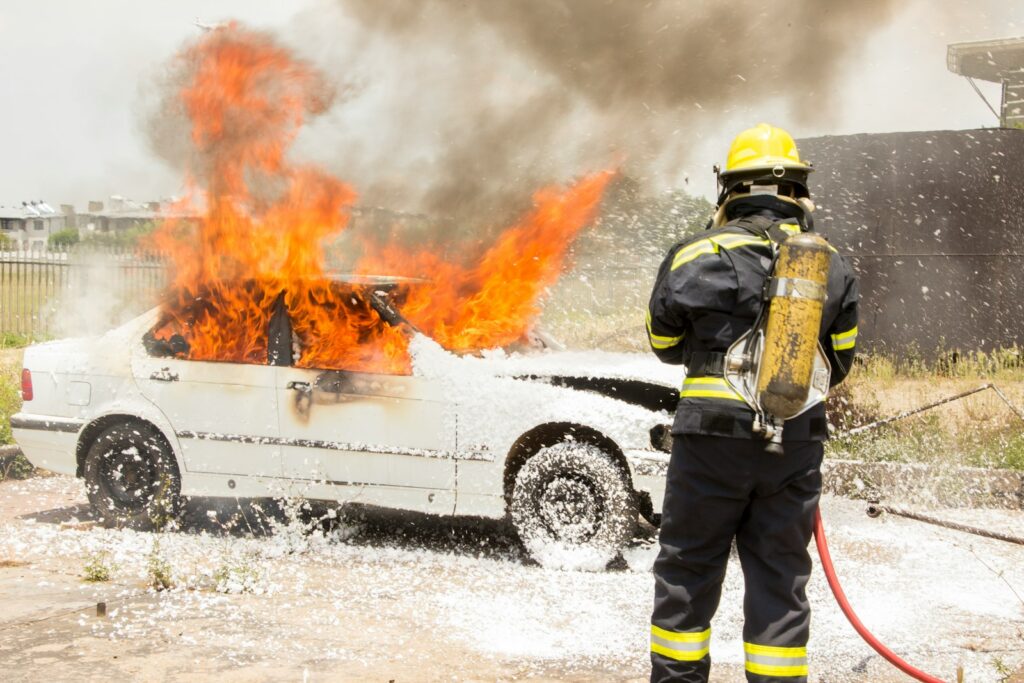
The Favor That Wasn’t Really a Favor
Jenna’s car was a late-90s sedan with sun-faded paint and the kind of interior that tells the story of a thousand commutes. She’d kept up with basics—oil changes, brakes, tires when she could afford them—but it wasn’t the type of car you bragged about. It was the type you defended, with a laugh, as “still running, so it’s fine.”
Mark, on the other hand, treated the whole situation like a mini-project. He asked a lot of questions Jenna couldn’t answer—when was the last tune-up, had it ever overheated, was the battery new—and he didn’t hide his judgment when she shrugged. He’d nod slowly like he was diagnosing her as much as the car.
Still, Jenna was relieved. She didn’t have a regular mechanic, and the local shop had quoted her more than she wanted to spend just to “take a look.” Mark said he could check the plugs, clean the throttle body, maybe swap a hose if it looked cracked, and she could toss him a six-pack later. It sounded neighborly, uncomplicated, and cheap.
Driveway Surgery
By late morning, her car was in Mark’s driveway with the hood up and Mark performing like he was on a home repair show. He had a little portable speaker going, a rag tucked into his back pocket, and that steady stream of talk where he explains everything but doesn’t actually teach you anything. Jenna stood off to the side, trying to look interested without hovering.
The first red flag was how quickly it turned from “quick check” to “I might as well pull this off.” Mark started disconnecting things Jenna didn’t recognize, narrating as he went. He mentioned the fuel line at one point, in the casual way you mention a shoelace, and Jenna’s stomach tightened because “fuel line” felt like a word you should say more carefully.
He also kept asking her to find items in her car—paper towels, an old towel, a bottle of water—like he hadn’t stocked his own garage for exactly this kind of moment. When Jenna offered to stop and just take it to a shop, Mark laughed like she’d insulted him. “It’s fine,” he said, wiping his hands. “These old cars are simple. That’s why they’re still around.”
A couple hours in, he told her to start it. Jenna slid into the driver’s seat, turned the key, and the engine caught with a sputter that sounded worse than before. Mark waved a hand, face buried under the hood, telling her to rev it a little. Jenna did, and that’s when the smell got sharper—like hot plastic and gas trying to pretend it wasn’t gas.
The Moment It Turned Ugly
Jenna switched it off immediately and said she smelled something off. Mark dismissed her with a “Yeah, yeah, that’s just residue burning off,” which didn’t mean anything, but he said it like it did. He leaned in again, fiddling with something near the engine bay, and told her to try once more.
The second start was the one that changed the whole day. The engine turned over, caught, and then there was a quick, wrong sound—like a hiss mixed with a cough. Jenna saw Mark’s face change for half a second, the kind of split-second panic people can’t hide, even when they’re trying to stay in control.
Then a small flame flickered up from somewhere near the back of the engine bay. Not a dramatic fireball, not movie-style, just a very real little tongue of fire that immediately made Jenna’s brain go cold. Mark yanked back like he’d been stung and shouted for her to turn it off, like she hadn’t already slammed the key back.
He grabbed a rag—an actual cloth rag, as if that was going to negotiate with fire—and slapped at it. The flame grew, and the smell turned into that unmistakable chemical burn that hits the back of your throat. Jenna bolted toward her front door yelling for someone to call 911 while Mark barked something about “get the hose, get the hose.”
Fire, Smoke, and a Very Fast Shift in Blame
Between Mark’s garden hose and a neighbor who ran over with a small extinguisher from his truck, the fire didn’t take the entire car. But it did enough damage that “fixing the idle” was no longer the conversation. The hood was scorched, some wiring looked melted, and the engine bay had that charred, greasy aftermath that makes everything feel ruined even if it technically isn’t totalled.
Jenna was standing on the sidewalk in socks, shaking and watching smoke curl up like a slow accusation. Mark, meanwhile, was pacing in his driveway with his hands on his head, furious in a way that didn’t match the situation. The immediate relief of “no one got hurt” lasted about thirty seconds before he started talking like he’d been personally attacked.
At first, Mark kept saying “I don’t know what the hell happened.” Then, almost seamlessly, it became “This is what happens with these old cars.” And then it landed where it was always going: “You can’t expect someone to work on a piece of junk and have it be safe.”
Jenna stared at him because the car didn’t teleport into his driveway. He’d invited it in. He’d insisted he could handle it. He’d told her to start it twice, standing right there, elbow-deep in whatever he’d just loosened or reattached.
Mark’s version of events hardened fast. He wasn’t the guy whose hands were under the hood when the flame started; he was the helpful neighbor who’d taken a risk on an unreliable machine. He started listing everything “wrong” with Jenna’s car like he’d known all along, like he’d been warning her for years, like she’d pressured him into it.
The Awkward Aftermath No One Can Undo
Once the fire department had checked things and left, the driveway looked like a small disaster scene: wet pavement, dark streaks, bits of soot. Jenna’s car sat there like a wounded animal that had embarrassed both of them. She asked Mark, carefully, what he’d actually done under the hood, and he got weirdly vague, like the details were suddenly none of her business.
Then came the money conversation, the one no one wants to have after someone has said “favor” out loud. Jenna mentioned that her insurance might ask what happened and that she’d need to tell them Mark had been working on it. Mark’s face tightened and he immediately started talking about liability, about how he wasn’t a professional, about how he’d only helped because she asked—except she hadn’t asked; he’d offered.
He told her she should be grateful he didn’t get hurt. He told her he could’ve been burned. He told her, more than once, that the car was “a death trap” and that she’d been irresponsible to keep driving it. None of this explained why it ran well enough to get to his driveway, or why the fire started right after his “quick fix.”
Over the next day or two, Mark’s story apparently kept evolving depending on who was listening. To one neighbor, it was “old fuel lines” that blew. To another, it was “electrical wiring” that shorted because the car was ancient. Jenna heard through a friend on the block that Mark was saying he “saved her from a bigger fire,” which was a wild way to frame something that wouldn’t have happened if he hadn’t been under the hood playing expert.
Jenna, stuck with a half-burnt car and a new layer of anxiety every time she walked outside, did what people do when the social situation gets poisoned: she pulled back. No more chatting at the mailbox. No more polite waves. Just a stiff nod if they happened to be outside at the same time, both of them pretending they weren’t replaying the moment the flame appeared.
The unresolved tension wasn’t just about the car or the insurance claim or whether Mark actually caused the fire. It was the way he’d offered help like it was a gift, then acted like Jenna had handed him a loaded problem on purpose when it went wrong. And now every time Jenna looked at that scorched hood, she wasn’t just seeing damage—she was seeing how fast a “favor” can turn into a blame game when someone’s ego is the only thing that really got bruised.
More from Steel Horse Rides: