


It started with a tarp that never moved.
On a quiet suburban street where everyone had opinions about lawns and trash cans, there was a classic car parked tight against a single-car garage, fully covered in a fitted gray cover. The owner—Matt, mid-30s, the kind of guy who waved at everyone but didn’t linger—kept it clean, kept it strapped down, and kept it out of sight like it was a secret he didn’t want to explain.
The neighbor across the way, Ron, hated it on principle. Ron was retired, always outside, always “noticing things,” and he treated the street like it was his personal clipboard. The covered car became his favorite item to notice, mostly because it gave him something to interpret as a problem.
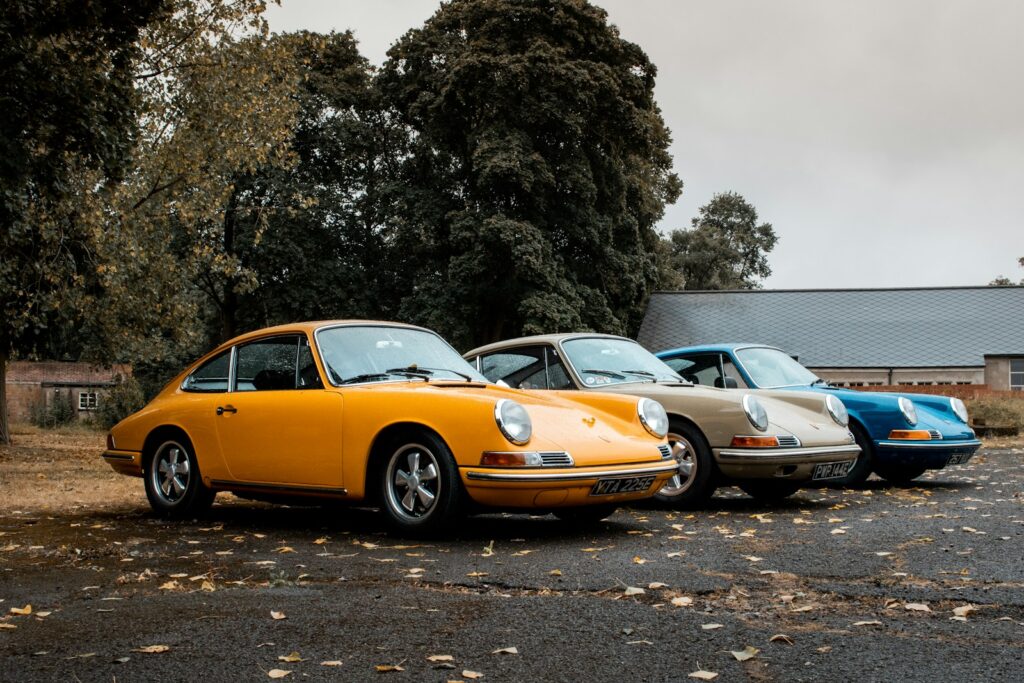
The Car That Looked Like Nothing
Matt wasn’t flipping junkers or running a backyard shop. He’d inherited the car from his uncle—a late-60s fastback that had sat in a barn for years—and he was restoring it slowly, the way people do when money and time come in uneven bursts. Some weeks it didn’t move at all; other weeks he’d pull the cover back, work for hours, then put it away like he was tucking it in.
From the street, though, it just looked like a lump. The cover was always on, which meant anyone who didn’t already know what it was could imagine anything under there: an abandoned project, a rusted wreck, an eyesore. Ron’s imagination didn’t need help, but the cover gave him room to build a whole narrative.
He started with little comments—catching Matt at the mailbox and saying stuff like, “You know, cars can’t just sit,” or, “Town’s been cracking down on abandoned vehicles.” Matt would shrug it off, because he wasn’t breaking any rules and he didn’t want to turn “guy with the classic car” into a street-level feud.
But Ron wasn’t looking for reassurance. He was looking for control, and the covered car was the one thing he couldn’t police with a glare.
The Report That Came Out of Nowhere
One Tuesday morning, Matt walked out and found an orange sticker slapped onto the cover. Not on a window or a bumper—right on the fabric, like somebody wanted it to be seen from space. It was a “notice of abandoned vehicle” warning, the kind that starts with a formality and ends with a tow date.
Matt’s first reaction wasn’t panic so much as disbelief. The car was on his property, not leaking anything, not blocking anything, and he had current registration tucked into a folder inside the house. But there was the sticker anyway, flapping slightly in the breeze like an accusation.
He called the number on the notice and got a tired-sounding city employee who explained that someone had reported an abandoned car “stored outside” and “not moved in months.” Matt tried to keep his voice level while he explained it was covered to protect it, not hide it, and that it was a restoration in progress. The employee told him to email proof of registration and a photo showing the VIN, and the case would likely be closed after an inspection.
What got under Matt’s skin wasn’t the inconvenience—it was the pettiness. Reports like that don’t file themselves. Somebody had watched that car sit quietly and decided to weaponize bureaucracy over it.
The Neighbor Plays Innocent
Matt didn’t have to guess long. That evening, Ron was outside watering the same strip of grass he watered every night, making a point of being visible. When Matt walked over holding the peeled-off sticker in his hand, Ron’s face did that little thing where it pretends to be surprised but doesn’t commit.
Ron claimed he “didn’t know anything about it,” then immediately followed it with a lecture about “property values” and “how it looks” and “people thinking this is some kind of storage yard.” It wasn’t denial so much as plausible deniability, like he was auditioning for the role of Concerned Citizen. Matt asked him flat-out if he reported it, and Ron responded with, “I’m not the only one who notices.”
That phrasing mattered, because it wasn’t just an accusation—it was a warning. Ron wanted Matt to feel watched, like the whole street was a jury and Ron was simply delivering the verdict. Matt walked away angry enough to make stupid decisions, which is exactly what Ron seemed to want.
Instead, Matt did the practical thing. He took photos of everything, dug up the registration, and scheduled the inspection. But now every time he walked past that tarp, it didn’t feel like protection anymore—it felt like a target.
The Son Who Wasn’t Part of the Feud
Two days later, while Matt was in the driveway with the cover half off—checking a battery tender and wiping dust from chrome he hadn’t gotten to show anyone yet—a car pulled up. Out stepped Ron’s son, Tyler, early 20s, clean-cut, polite in a way that felt almost out of place next to his dad’s vibe. Matt had seen him around on holidays, maybe helping carry bags into Ron’s house, but they’d never really talked.
Tyler didn’t start with, “My dad said…” He started with the car. He stood a few feet back, hands in his pockets, and said, almost quietly, “That’s a ’68, right?” Matt paused because the question wasn’t casual; it was specific. Then Tyler pointed at a detail Matt hadn’t expected anyone to notice: the trim line, the shape of the rear quarter panel, the way the taillights sat.
Matt asked how he knew. Tyler hesitated, looked embarrassed, then admitted he’d been watching Matt work on it for months—through the sliver of gap between the cover and the ground, from the sidewalk, from his dad’s front window. Not in a creepy, stalking way, he insisted, more like… he’d never seen someone bring a car back to life in real time, and he couldn’t stop looking.
Then he said the part that made Matt’s stomach drop: Tyler wanted to buy it. Not “someday,” not “if you ever sell,” but now. He said he had savings, he’d been looking for a project, and he’d rather buy something with a story than scroll listings full of hidden rust. He talked like he’d been rehearsing it.
The Awkward Ask and the Unspoken Deal
Matt didn’t know what to do with that. On one hand, Tyler was clearly sincere, and his excitement was the first time this whole restoration felt like something other than a solitary grind. On the other hand, Matt couldn’t ignore the timing: the report had just happened, and now Ron’s son was here making an offer like a door had conveniently opened.
Matt asked the question he didn’t want to ask: did your dad put you up to this? Tyler looked genuinely offended and said no, absolutely not. He said his dad didn’t even know he was coming over, and he lowered his voice like he didn’t want the conversation to drift across the street. Then he added, a little too quickly, that his dad “doesn’t get it” and thinks old cars are “junk people throw money at.”
Matt told him he wasn’t selling, at least not now. He kept it neutral—said the car was sentimental, that he’d promised himself he’d finish it, that he wasn’t ready to talk numbers. Tyler nodded, but his eyes stayed on the car with this mix of admiration and frustration, like he’d walked up to a candy store only to find the door locked.
Before Tyler left, he said something that stuck: “I’ve seen you do so much already. I know you’re close.” Matt didn’t correct him—because the truth was, he wasn’t close at all. Tyler only knew what he’d been allowed to see, which meant he’d built a whole version of the restoration in his head, same as Ron had built a whole version of the “abandoned” car.
The Inspection, the Paperwork, and the Neighborhood Stare
The city inspector came the next day. Matt pulled the cover fully off for the first time in a while, partly to show compliance and partly to make a point. Underneath was a car that looked like work: sanded patches, primer in progress, wheels that didn’t match, the interior stripped down with labeled bags of bolts in the trunk.
The inspector was brisk and unimpressed in the way inspectors are. He checked the VIN, glanced at the registration, asked if it ran, and Matt answered honestly: not yet, but soon. The inspector shrugged, marked something on a clipboard, and said it wasn’t abandoned—it was clearly being maintained—and that the case would be closed.
While this was happening, Ron was outside again, arms crossed, watching like he expected the inspector to do him a favor. When the inspector left without issuing anything, Ron’s posture stiffened. He didn’t come over, didn’t say anything, just stared at the uncovered car like he was trying to decide whether it looked better or worse when it was real.
Matt put the cover back on afterward, but it didn’t feel like going back to normal. Now he knew for a fact that Ron was willing to call the city on him, and now he also knew Tyler had been quietly tracking every step of the restoration like it was a show he didn’t want canceled.
The weirdest part was how the two motivations tangled together: Ron wanted the car gone because it offended his sense of order, while Tyler wanted it because it lit up something in him his dad didn’t understand. And Matt was stuck in the middle, realizing the car wasn’t just a project anymore—it was a pressure point. Even with the city case closed, the cover sat there like a dare, and every time Matt heard a car slow down outside, he couldn’t tell if it was Ron looking for another angle or Tyler looking for another glimpse.
More from Steel Horse Rides: