

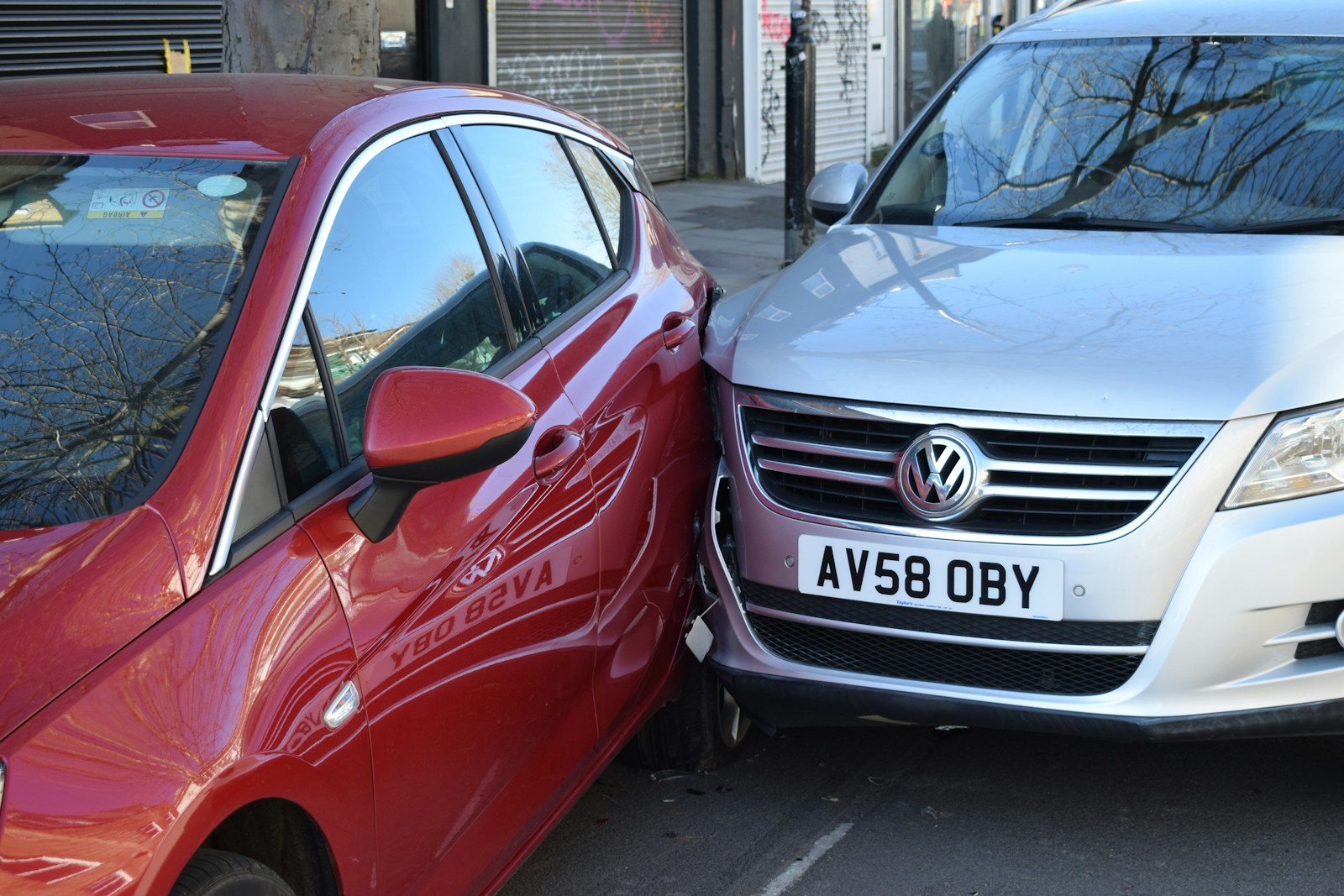
He didn’t even notice it at first. It was one of those normal, forgettable weekday evenings: park the car in the usual spot along the curb, grab the groceries, shuffle inside, promise himself he’d deal with the laundry later. The car was just… there, like always, until the next morning when he walked out with his coffee and saw the angle of the bumper looked wrong.
Not wildly wrong. Just wrong enough that your brain does a little recalculation—like, “Did I park that crooked?” Then he got closer and saw the scrape: a pale streak of paint transfer, a shallow dent at the corner, and the plastic trim slightly popped out of place. It had that fresh, ugly look that makes your stomach drop because you immediately know it wasn’t you.
There was a note tucked under the wiper blade, too. No apology, no explanation, just a name—“Jen”—and a phone number written in hurried blocky digits on a torn piece of junk mail. The note should’ve been a relief, the whole point of leaving something behind. But the handwriting was so rushed it felt like someone trying to look responsible without actually being responsible.
The “responsible” note that didn’t feel responsible
He called the number right there on the sidewalk, staring at the damaged corner of his car like it might rearrange itself back into normal if he looked hard enough. It rang twice and went straight to a generic voicemail with an automated voice reading the number back. No name. No “Hi, you’ve reached Jen.” Just a digital shrug.
He tried again a few minutes later while he took pictures from every angle, making sure to catch the paint streak, the dent, and the note in the same frame. Same thing: rings, then voicemail. He texted, too—something simple and polite, like “Hi, this is about the note you left on my car, please call me.” The message didn’t fail, but it also didn’t show as delivered.
That’s the moment the note stopped feeling like a gesture and started feeling like a dodge. People who actually want to fix a mess usually make it easy to reach them. This number felt like somebody buying time, hoping he’d shrug it off, or—more likely—hoping it would look good if anyone saw them leave something behind.
Walking the block and collecting little pieces of the truth
He did what everyone does when they’re trying not to spiral: he started looking for something concrete. He walked up and down the street checking the other parked cars, half expecting to find a matching dent or a smear of his car’s color on someone else’s bumper. He didn’t see anything obvious, which was irritating in a specific way—like the damage had been delivered by a ghost.
Then he started looking at the curb itself, because the scuff on his bumper was low, like a car clipped it while turning too tight. The street was narrow, lined with SUVs that made every pass a squeeze. If someone swiped him, it probably happened slow, with plenty of time to stop, get out, and assess the situation.
He knocked on a couple doors with that awkward apologetic energy of someone asking for a favor before they’ve even properly introduced themselves. Most people shrugged. One woman said she heard a “thunk” late afternoon but didn’t look out the window. Another guy said he was at work and couldn’t help but added, almost as an afterthought, “Hey, check with Mike on the corner—he’s got cameras.”
The neighbor with the camera and the clip nobody expects
Mike was the kind of neighbor you only realize is useful when something goes wrong. He wasn’t nosy in the way that feels predatory; he was more like the neighborhood’s unofficial security system, the guy who liked having a doorbell cam, a driveway cam, and a little camera pointed at the street “just in case.” When the car owner explained the scrape and the note, Mike didn’t even act surprised. He just said, “Hang on,” and pulled up footage on his phone.
The video was grainy in that familiar consumer-camera way, but the important parts were clear. A compact SUV eased down the street and hesitated near the parked car. It pulled slightly toward the curb, then there was a small jolt—subtle enough you might miss it if you weren’t looking for it, but the parked car rocked just a fraction.
And then the part that made the whole thing feel personal: the driver stopped, put it in park, and got out. They walked to the back corner of the parked car, crouched down, and ran a hand over the scrape like they were checking how bad it was. They leaned in, looked around, and then—after a beat—walked back to their vehicle and left.
Mike scrubbed back and replayed it. “See?” he said, tapping the screen. “They knew. They absolutely knew.” It wasn’t the collision that made it infuriating; it was the inspection, the little moment of consideration, the decision you could almost see happening in real time.
The fake number and the strange theater of “doing the right thing”
Now the note made a different kind of sense. The driver hadn’t left nothing—they’d left something that would look like something if anyone asked. A number that went nowhere. A name that might not even be real. The performance of accountability without the cost of actual accountability.
They paused the video at the best angle, and there it was: the SUV’s rear plate visible for a second as it pulled away. Not a crystal-clear, perfectly lit license plate like in TV shows, but enough that Mike could squint and read it out loud. They wrote it down carefully, double-checking each character as if one wrong letter would erase the entire possibility of consequences.
The owner tried the number again anyway, because part of him still wanted the easy version of this story where it was a mistake and “Jen” was just busy. Nothing. He texted one more time, less polite now, saying he had camera footage and a plate number and would be filing a report. Still nothing—no call, no angry reply, no “Please don’t.” Just silence.
That silence did something to his mood. It took him from irritated to focused, like his brain clicked over from “maybe this will resolve itself” to “this person is betting I won’t follow through.” The damage wasn’t catastrophic, but body work is never cheap, and the principle of it started to feel like the real bill.
Filing the report and the weird limbo after you do everything right
He called his insurance and then the non-emergency line, because that’s what you’re supposed to do, even though it feels vaguely dramatic to involve police over a dent. The officer who came out wasn’t shocked by any of it. Fake numbers, “wrong digits,” notes that lead nowhere—apparently it’s common enough to have its own tired tone of voice attached.
He showed the officer the note, the photos, and Mike’s footage. The officer watched the clip twice, pausing at the crouch-and-check moment and then again at the license plate. “That’s good,” the officer said, like he meant “good enough,” which is not the same thing as “this will definitely be handled.”
The owner’s insurance rep asked for everything, too: the photos, the video file, the plate number, the time stamp. They explained the next steps in that careful, neutral way that makes you feel like you’re being processed through a system, not helped by a person. He could sense what was coming: they’d try to track down the other driver, but that didn’t mean the other driver would cooperate, and none of it would move quickly.
Meanwhile, his car sat there with its scraped bumper like a daily reminder. Every time he walked past it, he thought about the driver getting out, looking at the damage, and deciding to leave a fake number anyway. It wasn’t a panicked hit-and-run at midnight; it was broad daylight with time for a better choice.
The most maddening part was how small the difference would’ve been. If the driver had left a real number, it would’ve been an annoying phone call and an insurance exchange and maybe a gritted-teeth apology. Instead, they’d tried to be slippery, and now there was footage of them doing the exact thing people claim they “didn’t realize” happened.
As the days dragged on, the tension didn’t come from not knowing who did it anymore. He had a plate number, a video, and a note that might as well have been a joke. The tension came from waiting to see whether any of that would actually matter—whether the person who crouched down to check the damage would suddenly get brave enough to answer a phone, or whether they’d keep betting that a little dent wasn’t worth anyone’s time until the consequences finally landed on their doorstep.