

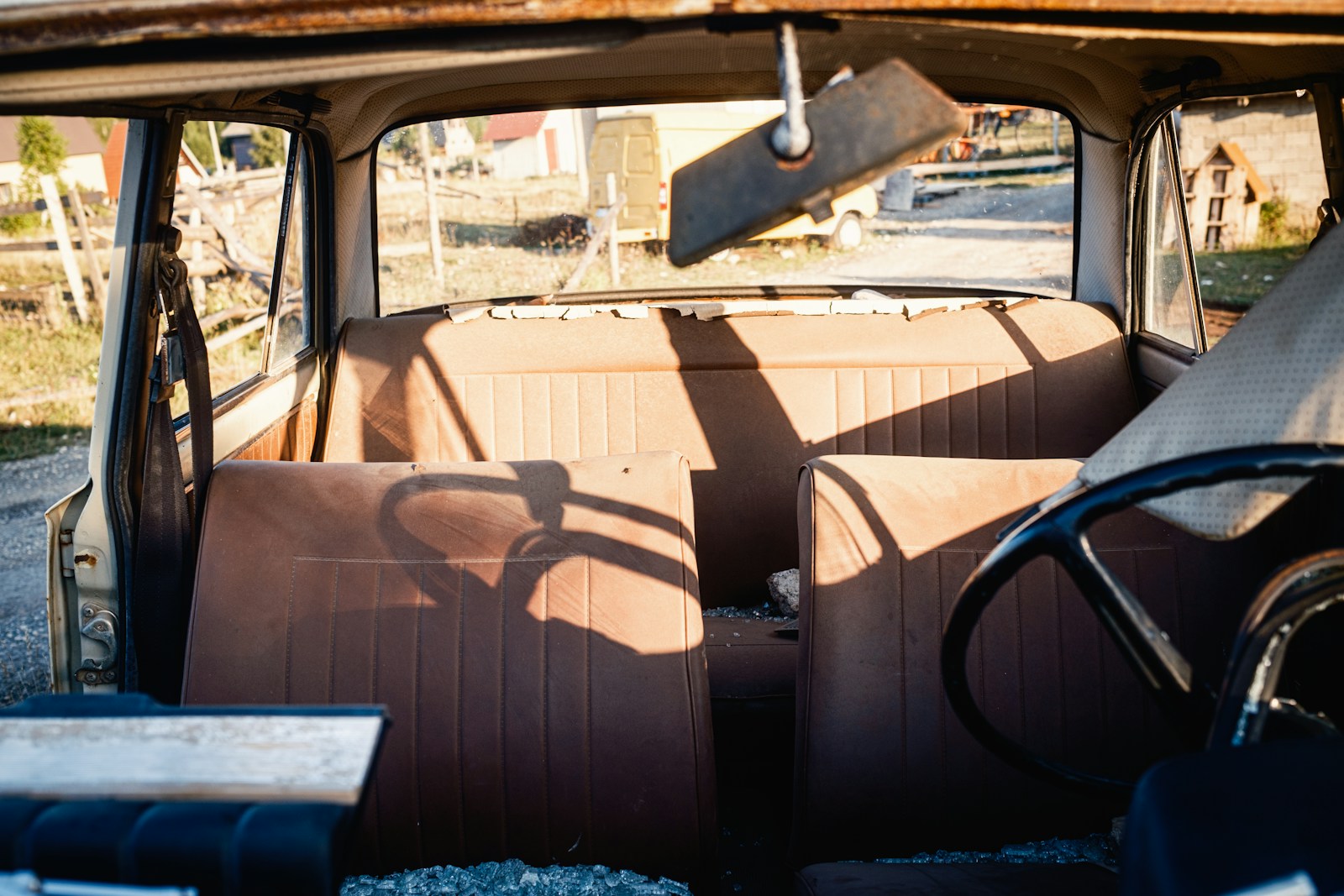
When they finally got the call that the car had been found, it should’ve been the moment everything snapped back into place. Instead, it was the start of a new problem that somehow felt worse than the theft. The owner had spent nearly two weeks doing the usual stolen-vehicle routine: police report number memorized, insurance claim opened, rides begged from friends, and that low-grade dread every time a tow truck rumbled past.
The car wasn’t some flashy collector’s thing, but it was their daily life on four wheels. Commute, groceries, family errands, late-night pharmacy runs—everything got harder overnight. They’d already started bracing for the “sorry, we never find these” speech, or the insurance company’s careful language about “market value” that always seems to land lower than you expect.
Then it turned up. Not in one piece emotionally, though—more like a familiar face you recognize from across a room, only when they get closer you realize they’ve been through something ugly. The insurance company looked at it and said it wasn’t damaged enough to total. The owner looked at it and thought: there is no way I’m getting back behind that wheel.
The call that sounded like good news
The recovery call came from the police, not insurance, which already set the tone. The officer was businesslike: vehicle located, it’ll be towed to an impound yard, bring ID, bring paperwork, be prepared to pay fees unless insurance covers it. The owner was relieved in that shaky way that feels like your body has been holding its breath without telling you.
At the impound lot, the relief didn’t last past the gate. The car was there, technically, but it looked like it had been lived in—hard. The windows were filmed with grime from the inside, the exterior had new scrapes along the passenger side, and the tires looked like they’d kissed more than one curb at speed.
The first thing they noticed wasn’t even the big visible damage. It was the smell when the door opened: old smoke, sweat, fast food gone sour, and something chemical underneath. It was the kind of stink that doesn’t just air out with a sunny day and some open windows.
What “recovered” actually looked like
It wasn’t the dramatic movie version of a chopped-up shell on blocks. It was worse in a more personal way—like someone had used the car as a temporary apartment and didn’t care what they ruined. The owner found trash packed into door pockets and cupholders, and the center console was sticky like something had spilled and dried and then spilled again.
There were fingerprints and smudges all over the touchscreen, and the seats had spots that didn’t match anything the owner had ever spilled. The steering wheel looked shinier than it should’ve, worn down in patches as if someone drove it constantly with grimy hands. Under the seats, there were random items—cheap lighters, an empty blister pack, a half-crushed energy drink can—stuff that made the owner’s stomach tighten because it implied the rest of the story.
The glove box was pried at weird angles, like someone had tried to force it. The trunk didn’t open smoothly, and when it did, it made a scraping sound that hadn’t been there before. Nothing in the car felt neutral anymore; every surface felt like a question the owner didn’t want answered.
But the biggest thing wasn’t even the mess. It was the sense that the car had been driven hard and careless, and the owner couldn’t prove what kind of damage that causes until something fails on the highway. They kept thinking about brakes, suspension, alignment, the transmission—stuff you can’t eyeball in an impound lot while a guy in a reflective vest waits for you to finish.
Insurance sees numbers; the owner sees risk
The insurance adjuster didn’t meet them at the lot. Everything happened through photos, an estimate, and a couple phone calls that felt like they were designed to end the conversation as quickly as possible. The adjuster’s logic was simple: the visible damage and the repair estimate didn’t meet the threshold for a total loss.
From the insurer’s point of view, it was a math problem. A few body panels, some interior detailing, maybe an ignition component depending on how it was stolen, and the rest was “cosmetic.” The car’s value—especially if it wasn’t new—meant it would take a lot to justify totaling it.
The owner kept trying to explain that this didn’t feel like a normal fender-bender. They weren’t just worried about resale value; they were worried about what happened in the vehicle while it was gone and what was done to it mechanically. They said the car felt “unsafe” now, and the adjuster kept circling back to the same point: unsafe how, exactly, and where’s the documented damage?
That question—where’s the documented damage—became the brick wall. The owner didn’t have a way to document “someone drove this like they didn’t care if it lived.” They could document the filth, the smell, the scratches, the torn trim. They couldn’t document the anxiety of merging into traffic wondering if the car’s been run hot, jumped curbs, slammed into potholes, or driven with warning lights ignored.
The inspection dance and the slow drip of extra costs
Insurance offered the standard path: tow it to a preferred shop, get an estimate, approve repairs, and move on. That sounded fine until the owner realized what “repairs” didn’t include. A standard estimate might replace a busted door handle, repaint a panel, and clean the interior—but it wouldn’t necessarily include the kind of deep inspection the owner wanted to feel safe.
They asked about comprehensive mechanical checks: suspension inspection, brake system evaluation, diagnostic scans, alignment checks, a serious interior remediation if there were biohazard concerns. The adjuster’s answers got careful. Some of it might be covered if a shop could tie it to the theft and show it was necessary, but insurance wasn’t going to pre-approve a “full teardown because vibes.”
Meanwhile, the impound fees ticked up. The owner felt trapped: if they left the car there, it got more expensive; if they released it, they had to deal with it. They were also told, in that polite bureaucratic way, that insurance could reimburse certain fees but not always everything, depending on the timeline and policy language.
When they finally got the car moved to a shop, the shop’s reaction didn’t soothe them. The technicians didn’t dramatically gasp, but they did the quiet version of concern: a longer look under the hood, a “we’ll see what we find,” a reminder that the estimate could change after disassembly. The owner clung to that—maybe the real damage would reveal itself and force insurance’s hand.
The real fight: “drive it” versus “I can’t”
The most infuriating part was how the conversation kept sliding into the owner’s feelings, like that made it less legitimate. The insurer didn’t say “you’re being dramatic,” but the subtext was there: the car is repairable, therefore it should be fine. The owner felt like they were being asked to ignore their own safety bar because the spreadsheet didn’t agree.
Friends and family didn’t make it easier. Some people treated it like a gross inconvenience—get it detailed, put an air freshener in it, call it a day. Others were more blunt: if the car isn’t totaled, what choice do you have? That question landed like a threat, because the owner’s answer was basically, “I don’t know, but I can’t just pretend this is normal.”
And it wasn’t only fear of mechanical failure. There was a creepy intimacy to driving a space that had been taken and used by strangers. Every time they sat in the driver’s seat during a quick check, they pictured unknown hands on the wheel, unknown people in the passenger seat, unknown things spilled into the fabric. It’s hard to explain to someone who only sees a vehicle and not a violation.
The owner started asking about diminished value, about buying the car back as a salvage if it were totaled, about any option that didn’t end with them stuck financing a car they didn’t trust. But those paths are slow and technical, and insurance processes love slow and technical. The longer it dragged, the more it felt like a waiting game where the owner was the only one paying in stress.
By the time the shop came back with the first estimate, it was… underwhelming. Enough to fix what was obvious, not enough to blow past a total-loss threshold. Insurance sounded almost cheerful about it, like they were delivering good news: we can get you back on the road.
The owner didn’t feel lucky. They felt cornered, staring at a vehicle that technically belonged to them but didn’t feel like theirs anymore, and a system that kept translating their dread into “not a covered loss.” The car was recovered, sure—yet the part that mattered, the sense of safety and control, was still missing, and nobody on the other end of the claim seemed to understand why that should count as damage.