


It started the way a lot of parent-teen standoffs start: a kid standing in the kitchen with his phone out, scrolling through photos of someone else’s truck like it was a vision board. The teen—sixteen, newly licensed, and riding that first wave of “I can finally drive” adrenaline—wanted a lift kit. Not later, not as a long-term goal. Now.
His mom wasn’t trying to be the villain. She’d just watched him do the math on a tank of gas the week before like it was advanced calculus, then “forget” his wallet at home when it was time to pay for a fast-food run with friends. In her head, the order of operations was pretty clear: insurance, gas, maintenance, then fun upgrades. In his head, a truck that didn’t look the way he wanted it to look was basically a social tragedy.
The fight didn’t really ignite until the grandparents got involved. They heard he’d been told no and decided that this wasn’t about money or responsibility at all—this was about “crushing his personality.” Suddenly, a normal budgeting conversation became a family referendum on whether Mom was stifling her kid’s identity.
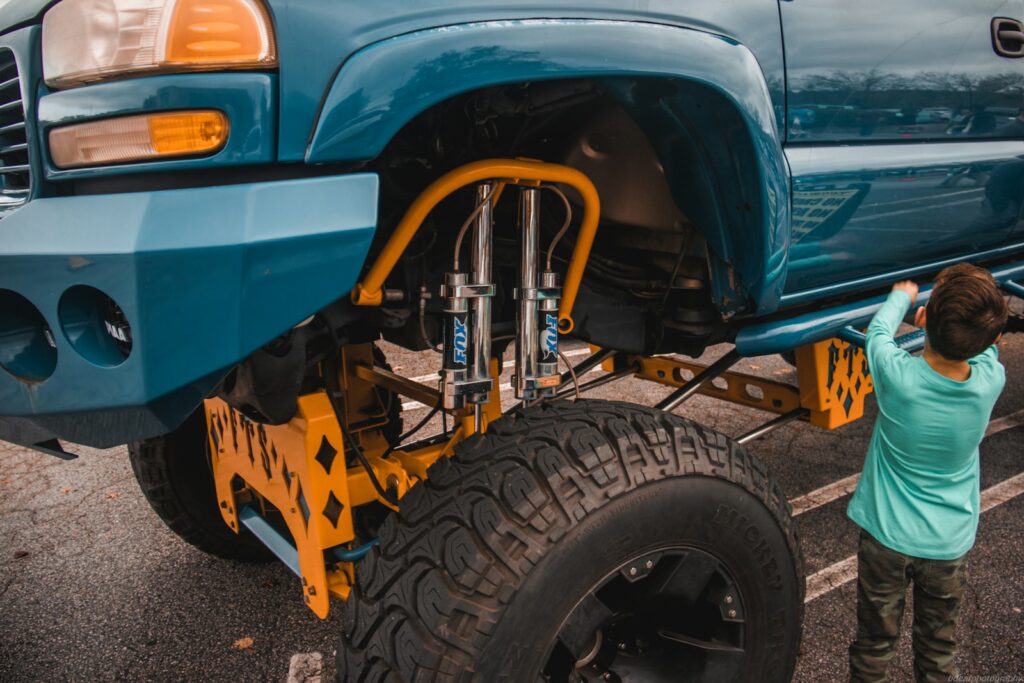
The Lift Kit Dream Arrives Fully Formed
The teen’s request wasn’t subtle. He’d been watching videos—before-and-after shots, install tutorials, slow-motion “stance” shots in parking lots—until he could talk about inches of lift like he’d invented the concept. He had screenshots of kits ranging from “kinda reasonable” to “this costs more than my first car should,” plus a whole list of other stuff that magically became necessary once the lift happened.
Mom asked the obvious questions: How much is it, who’s paying, and have you priced out what it does to tires, alignment, and gas mileage? He answered the first one with a proud number he’d clearly been rehearsing, glossed over the second with a vague “I’ll figure it out,” and reacted to the third like she’d just tried to ruin Christmas. In his mind, she was nitpicking and missing the point.
She wasn’t even against modifications in principle. She’d been trying to teach him how money actually works in a household, because “figure it out” is not a payment plan. But he kept circling back to the same argument: he needed it because it was part of who he was.
The Budget Reality Check Hits a Nerve
The truck itself was already a big deal. It wasn’t some brand-new, tricked-out thing—more like an older pickup that ran well enough and looked fine, the kind of vehicle parents buy because it’s sturdy and they can afford the insurance. Mom had made it clear that driving was a privilege he’d earn by handling the boring parts, like gas and routine upkeep.
That’s where the lift kit conversation got messy. He couldn’t consistently pay for fuel, and he definitely wasn’t saving. Some weeks he’d ask for “just twenty bucks” because he “didn’t realize” how fast the needle dropped, and other weeks he’d somehow have money for energy drinks, a hoodie, and whatever his friends were doing Friday night.
When she said no to the lift kit, she didn’t say it gently. She said it the way a parent says no when they’re trying to prevent a long, expensive chain reaction: you can’t afford the basic operating costs, so you’re not bolting on extra expenses. He heard the no as a judgment about his taste, his hobbies, and his place in the world.
He stomped around for the rest of the day, doing that teenager thing where every cabinet closes too hard. By dinner he’d shifted from sulking to prosecuting, listing all the ways she “never” supported him. It wasn’t just about the truck anymore; it was about power.
The Grandparents Get the Sanitized Version
Like a lot of teens in a standoff, he went looking for a more sympathetic audience. He called his grandparents, and he didn’t say, “I want an expensive modification and I can’t keep gas in the tank.” He said, “Mom won’t let me do anything to my truck,” which sounds a lot like a parent being controlling for no reason.
The grandparents, already primed to see their grandson as a sweet kid being held back, latched onto the emotional angle. The grandmother in particular took the “personality” line and ran with it, talking about how kids need outlets and how “this is his thing.” The grandfather added the classic grandparent seasoning: back in his day, boys worked on cars, and it kept them out of trouble.
They didn’t call Mom to ask what was really going on. They called to tell her, bluntly, that she was being unfair and “cold.” It wasn’t a question; it was a verdict.
Mom tried to explain it, and that’s when the conversation took a turn from tense to personal. The grandparents weren’t debating dollars and cents; they were debating what kind of mother she was. She could practically hear her teenager smiling in the background of the phone call, enjoying the fact that he’d recruited backup.
Family Dinner Turns Into a Trial
The next escalation came fast, because family dynamics love an audience. There was a visit—maybe planned, maybe conveniently timed—and the lift kit issue walked through the door with them. The teen didn’t even pretend it was over; he brought it up within minutes, like he was presenting his case to the court.
Grandma framed it as a harmless dream: “He’s such a good kid, and this would make him happy.” Grandpa framed it as a rite of passage: “Let the boy build something.” They weren’t hearing “expensive equipment that affects safety and maintenance.” They were hearing “a boy with a passion,” and Mom was the obstacle.
Mom, sitting there with the receipts in her head—gas money requests, skipped chores, the way he treated his part-time job like it was optional—could feel herself getting sharper. She asked, point-blank, if they were offering to pay for it. The air went weird for half a beat, because everyone knew that was the real question.
Grandma hedged. Grandpa joked about how “it doesn’t cost that much,” which is the kind of thing people say when they haven’t priced a lift kit plus labor plus alignment plus the tires you suddenly “need.” The teen seized on it and started talking numbers again, insisting he’d “save,” like saving is a switch you flip once you get permission.
Mom held her line and said no, not until he could reliably cover gas and show he could handle the responsibility of owning a vehicle. She added that she wasn’t interested in making the truck less safe or more expensive to run when he was still learning to drive. That’s when Grandma dropped the phrase that stuck: “You’re crushing his personality.”
The teen looked wounded in that very practiced way teenagers do when adults argue about them in front of them. He got quiet, stared at his plate, and let the adults keep talking as if he weren’t there. Mom, meanwhile, felt like she was being painted as the kind of parent who says no because she doesn’t want her kid to shine.
The Real Issue Isn’t the Lift Kit
After the grandparents left, Mom tried to revisit the conversation privately with her son, hoping the volume could drop now that there wasn’t a live studio audience. Instead, he came in defensive, repeating the “personality” line like it was evidence. He wasn’t arguing about budgeting anymore; he was arguing about identity, belonging, and being seen.
Mom pointed out something he didn’t want to hear: personality isn’t something you buy, and a lift kit doesn’t make you responsible. She reminded him she wasn’t stopping him from learning about trucks, doing small repairs, washing it, detailing it, or even saving toward upgrades. She was stopping him from adding a big, expensive modification when he couldn’t yet handle the basic costs of driving.
He accused her of moving the goalposts, because “reliably paying for gas” felt vague compared to “buy the lift kit.” She countered with specifics—how many times she’d covered fuel, how often he ran empty, how much insurance cost—and he got angry because numbers don’t care about feelings. The more she talked in practical terms, the more he acted like she was refusing to understand his “thing.”
Meanwhile, the grandparents kept texting, not about gas or safety, but about happiness. They suggested she “compromise,” which in practice sounded like: let him do the fun part now, and hope he figures out the responsibility part later. And Mom could feel the parenting ground shifting under her feet, because it’s hard to enforce a boundary when other adults keep narrating it as cruelty.
By the end of the week, nothing was resolved. The teen was still sulking and dropping passive-aggressive comments anytime he saw a lifted truck in a parking lot. The grandparents were still implying Mom was controlling, and Mom was still sitting with that uniquely exhausting feeling of being the only adult in the room willing to say, “We can’t afford to pretend money isn’t real.”
What made it linger wasn’t the lift kit itself—it was the new storyline the family had created around it. The teen wasn’t just being told no; he was being told that no meant his own mother didn’t get him. And Mom wasn’t just managing a budget; she was trying to parent inside a tug-of-war where “support” had been redefined as “say yes,” and every practical concern sounded, to everyone else, like an attack on who her kid thought he was.