

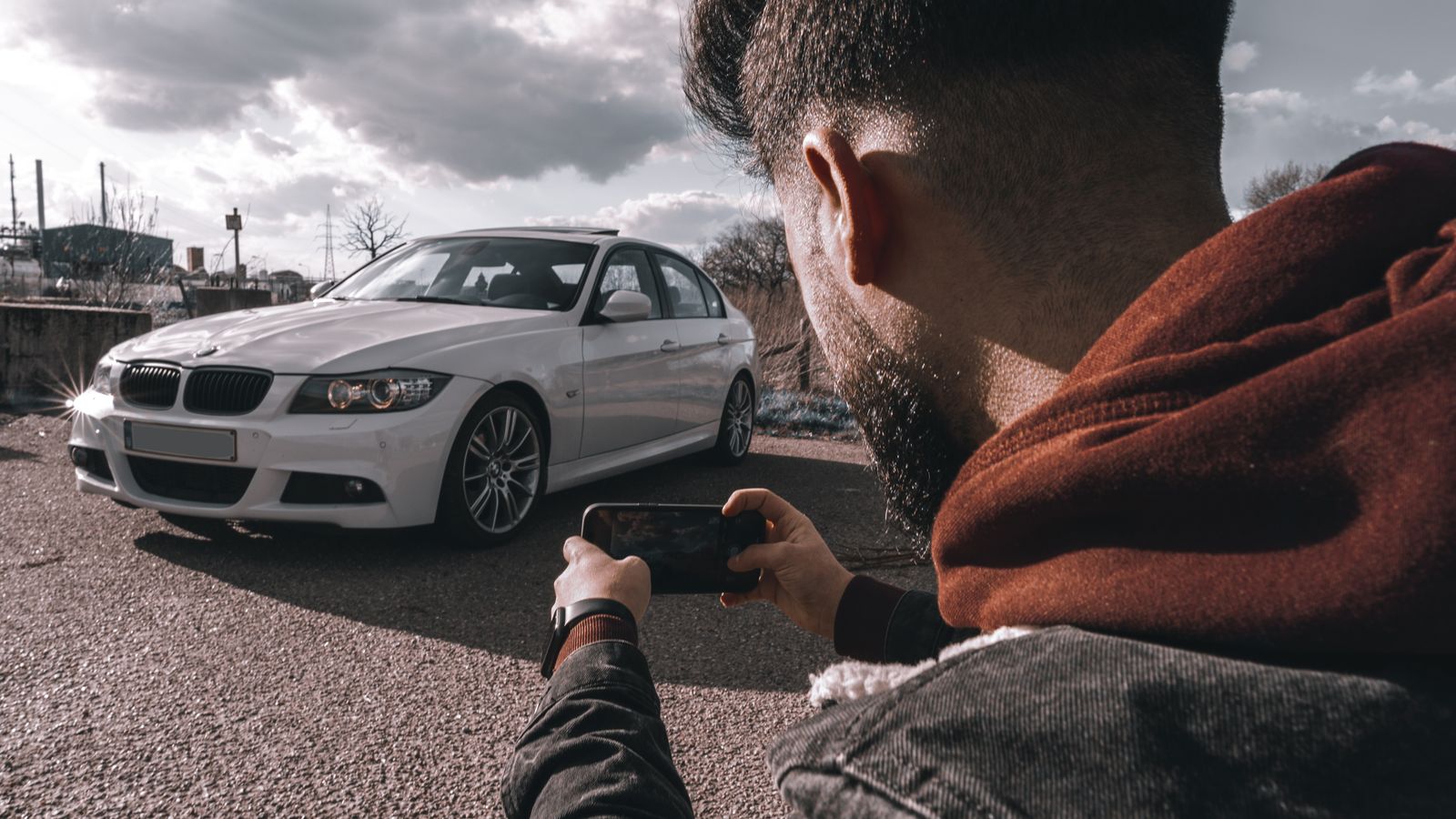
He’d wanted the car since he was a teenager, the kind of dream that sticks around through college, through job changes, through the boring adult stuff that’s supposed to replace it. It wasn’t some rare million-dollar collector piece, but it was unmistakable: low stance, aggressive front end, and an exhaust note that didn’t so much “purr” as announce itself to the entire block.
When he finally bought it—used, carefully vetted, paid for with a mix of savings and too many nights doing spreadsheet math—he expected some friction. His wife was practical to the bone, the kind of person who’d rather spend money on a new washer than something that burns premium gas and begs for attention. Still, he figured she’d roll her eyes, maybe tease him, and then it would settle into the background of their lives.
Instead, she hated it. Not in a “that’s not my taste” way, but in a “please don’t make me be seen in that” way. And the worst part was that she didn’t even have to see it for her friends to start orbiting it like it was the most interesting thing their social circle had produced all year.
The car that made her sink in her seat
The first big argument happened the same week he brought it home. He took her for a drive—partly because he wanted to share it, partly because he thought a ride would soften her. She lasted maybe three minutes before she started fiddling with the seatbelt and staring straight ahead like a hostage negotiating for time.
At the first stoplight, a couple of teenagers in a beat-up sedan leaned out to stare, and one of them gave a thumbs-up. He grinned, because of course he did. His wife didn’t even look at them; she just said, flat and quiet, “This is so embarrassing.”
He asked what she meant, and she didn’t sugarcoat it. The car was too loud, too flashy, too “midlife crisis,” even though he wasn’t even forty. She said it made people look at them, and she didn’t want to be the woman in the passenger seat of “that guy’s car.”
He tried to defend it like it was a personality trait. It’s a hobby, it’s a dream, he’s not hurting anyone, it’s his money too. She shot back that it wasn’t just his dream if it affected her daily life, especially if he expected her to ride in it to dinner or to her friends’ get-togethers.
A compromise that didn’t feel like one
They landed in that familiar married limbo where nobody wins, everybody keeps score. He agreed not to take the car to certain places if she was coming—family events, nicer restaurants, anything where parking was tight and the vibe was “quiet.” She agreed not to comment on it every time he started it, which was harder for her than she expected.
But the car wasn’t subtle, even sitting still. When he washed it in the driveway, neighbors slowed down. When he backed out early on weekends, the exhaust echoed off the houses and made curtains twitch. His wife started timing errands around when she knew he’d be gone, like the car was a weather pattern.
Her real breaking point came at a small birthday dinner for one of her friends. He offered to take his normal, boring car, but it had a check engine light he’d been ignoring, and he didn’t want to deal with it. He took the dream car instead, promising he’d park far away and keep the revs low.
He did park far away. The “keeping it quiet” part didn’t go great, because even the gentlest start sounded like a growl in the restaurant lot. His wife walked in ahead of him, shoulders tense, like she was trying to create distance with body language.
The first photo request
Inside, everything was fine at first. Drinks, small talk, that rotating circle of people half-listening and laughing a beat late. Then one of her friends—she was the kind who always had her nails done and her phone out—said she’d seen them pull in.
“Is that your car?” she asked him, eyes wide in a way that wasn’t judgmental at all. Before he could answer, she was already asking what it was, what year, how fast it goes, the usual rapid-fire questions from someone who knows just enough to be dangerous.
His wife’s face did this tiny flicker, like she’d braced for mockery and got the opposite. Another friend leaned in and asked if they could go look at it after dinner “just for a second.” His wife laughed—tight, polite—and said, “It’s loud,” like a warning label.
After dinner, they all walked out as a group, and instead of heading to their own cars, the friends drifted toward his like it was the main attraction. Someone asked if it was okay to take a picture with it. Then another person asked. Then suddenly they were arranging themselves around the hood, adjusting angles, telling him to stand by the driver’s side like he was part of the display.
Embarrassment, but make it selective
He didn’t miss the irony, and neither did his wife. Ten minutes earlier she’d been acting like the car was a social crime, and now her friends were posing in front of it with big smiles. One of them said, “This is such a vibe,” which made his wife’s mouth tighten like she’d swallowed something sour.
On the drive home, she was quiet in that specific way that signals a delayed reaction. He didn’t poke at it right away; he let the silence fill the cabin, punctuated by the car’s low rumble. Finally she said, “They’re going to think we’re those people.”
He asked, genuinely, what “those people” meant. The car people, the attention people, the “look at me” couple. He pointed out that she didn’t seem to mind her friends using the car as a prop for their own attention, which made her snap, “That’s different.”
Different how? She didn’t have a clean answer. She just didn’t want the car to represent them, except now it was representing them whether she liked it or not, because her friends had seen it and liked it and had pictures to prove it.
When the car became a social accessory
The next time they met up, it wasn’t even subtle. A friend texted his wife ahead of time asking if they were “bringing the cool car.” Not asking if he was comfortable with it, not asking if it was convenient—like it was a purse you grabbed on the way out.
His wife relayed the message with a weird mix of embarrassment and irritation, like she was annoyed at her friends but also annoyed at him for owning something that created this situation. He said he didn’t mind bringing it, because of course he didn’t. The entire point of a dream car is enjoying it, and being asked to show it off is basically validation wrapped in a request.
But then the requests escalated from casual to needy. One friend wanted a photo for her dating profile “as a joke.” Another wanted to shoot a quick reel for her social media, with the car in the background and music over it. Someone asked if they could sit in it “just to see what it feels like,” and when he hesitated, they acted like he was being uptight.
His wife started doing this thing where she’d pre-apologize for him. “He’s weird about the car,” she’d say with a laugh, or “Don’t mind him, he’s protective.” She’d say it like she was smoothing things over, but it came out like he was the problem for having boundaries about something expensive that could be scratched by a belt buckle in half a second.
He finally pushed back one night after a friend placed her drink on the roof while she adjusted her purse. He stopped her fast, voice sharper than he meant, and she rolled her eyes and said, “Relax, it’s just a car.” His wife jumped in immediately—too quickly—and told him not to be rude.
That’s when it turned from “my wife hates my car” to “my wife hates my car unless it benefits her socially.” Because he wasn’t imagining it: she still didn’t want to ride in it to certain places, still complained about the noise, still asked him to park it around the corner when her parents visited. But when her friends wanted to play Fast & Fancy for an Instagram story, suddenly the car wasn’t embarrassing—it was useful.
By the time the next gathering rolled around, he could feel the fight waiting in the driveway. The car sat there gleaming, the symbol of something he’d earned and something she resented, and now also something her friends felt entitled to. He hadn’t sold it, and she hadn’t softened, and the weirdest part was that the loud, embarrassing dream car wasn’t even the loudest thing anymore—the real noise was the unspoken question hanging between them: if she’s ashamed of it, why is she so willing to let everyone else borrow the shine?