


He thought the car was safe because it wasn’t just a car. It was his late father’s—an aging but well-kept coupe that still smelled faintly like the leather conditioner his dad used and had a dent in the passenger door from a grocery cart incident his father used to laugh about. It lived in their garage under a cover, like a quiet museum piece that also happened to start on the first turn of the key.
His wife, though, had been looking at that covered shape like it was a pile of cash with wheels. Their finances weren’t in flames, but they were tight in the way that makes small luxuries feel like personal injustices. She’d been talking for months about a “reset” vacation with her friends—flights, resort, matching swimsuits, the whole thing—while he kept saying they needed to be realistic this year.
So when he walked in one Tuesday evening and found her at the kitchen table with her laptop angled away, voice pitched bright and practiced like she was selling something, he didn’t think “my dad’s car.” He thought maybe she was finally price-checking the couch they kept joking about replacing. Then he heard her say the make and model out loud, and his stomach did that slow drop that happens when a private boundary gets crossed before you even have words for it.
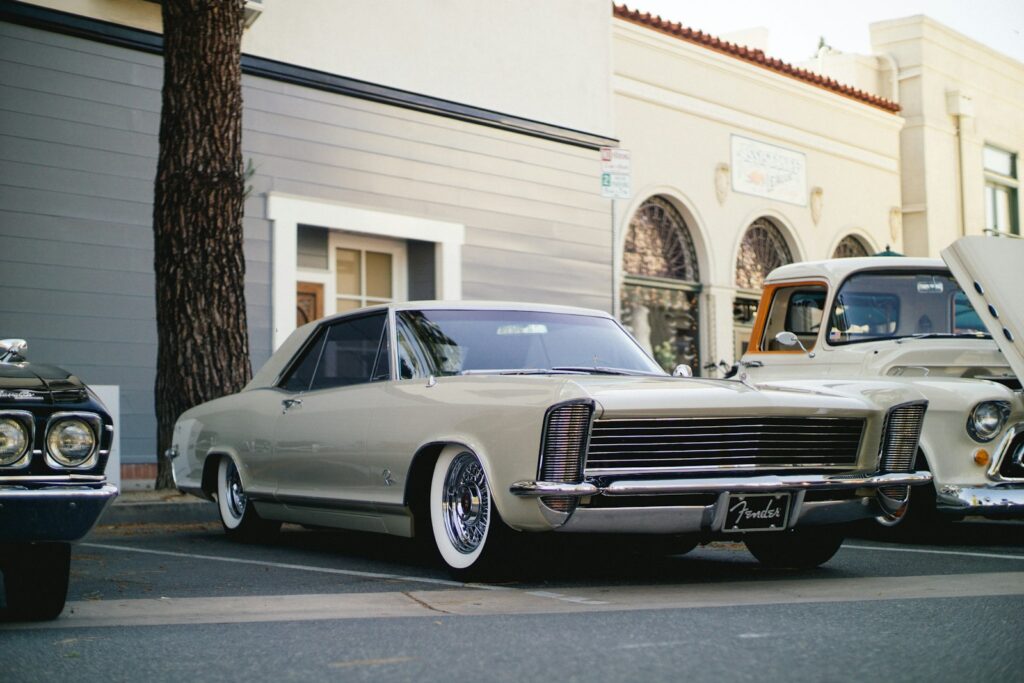
The car wasn’t “just sitting there” to him
The car had been his father’s pride in a very dad-like way—washed too often, driven too rarely, fussed over more than any reasonable person would admit. After his dad passed, the son inherited it along with a few tools, a watch, and the kind of grief that makes you attach meaning to physical objects because they’re the only things that don’t change. He didn’t drive it daily, but he’d take it out on quiet Sunday mornings, mostly to keep it running and mostly to feel like his dad was still nearby.
His wife knew all of that. She’d been to the funeral, she’d watched him sort through his dad’s garage, she’d seen him sit in the driver’s seat with the door open and just breathe for a while like he was trying to memorize the air. She wasn’t cruel about it, exactly—more impatient in the way some people get when grief doesn’t keep a neat schedule.
Over time, she started calling the car “dead space” in the garage. She’d point out how they could park both their cars inside if “that thing” wasn’t there, how insurance and registration were “wasted,” how it was “just sitting there.” He’d counter that it wasn’t a financial decision, it was an emotional one, and he wasn’t ready to talk about selling it, not to her and not to anyone.
She listed it anyway—quietly and confidently
What she did next wasn’t a spur-of-the-moment argument move. She didn’t explode and slap a “For Sale” sign on the windshield. She made a plan: take photos while he was at work, pull the cover off, angle the shots so the garage clutter didn’t show, and write a cheerful, persuasive description like she was the car’s proud caretaker.
He found out because she got careless with the conversation. The make and model, the year, the mileage—she rattled them off like she’d been rehearsing, and then she lowered her voice and said something about “clean title” and “serious offers only.” When he asked what she was doing, she snapped the laptop shut so fast it made that sharp clap that sounds like a door being slammed.
She tried to play it off for about ten seconds. Then she switched to irritation, like he was the one being unreasonable for asking. Yes, she’d listed it. No, she hadn’t “sold” it yet. And honestly, why was he acting like she’d put his father up on an auction block?
He demanded to see the listing. She hesitated, then spun the laptop back around with a tight smile that said she expected him to either roll over or explode—either outcome probably felt like proof that she was right. The listing was real, already live, with a price that made his eyebrows lift because it wasn’t a lowball “just get rid of it” number. She’d done enough research to aim high.
The offer came fast, and she treated it like a win
The next part is what made the whole thing feel extra surreal: someone offered full price within a day. Not a “will you take half” message, not an endless trade proposal, but a straightforward “I’ll pay your asking price and can come this weekend.” The kind of offer that makes people feel like the universe is giving them a nudge.
His wife was almost giddy. She walked around the house with that buzzing energy of someone who’s already spent the money in her head. She started talking about how this would “solve everything,” how they’d finally have a cushion, how she could book her trip without “begging,” how they could even upgrade some stuff around the house afterward.
And then, because she couldn’t help herself, she said the quiet part out loud: the sale could pay for her vacation. Not “our goals,” not “our bills,” not “our debt,” but her vacation—her long-awaited break, her friends, her timeline. The car wasn’t an asset to liquidate; it was a ticket out of her frustration.
He told her no. Not “maybe,” not “let’s talk,” not “after the weekend.” Just no, he wasn’t selling his late father’s car because she decided she deserved a trip. He said she had no right to list something that wasn’t hers, and he wasn’t going to reward that behavior by following through just because the offer happened to be good.
The buyer showed up anyway, and it got awkward fast
She didn’t take the “no” like a boundary. She treated it like an inconvenience that could be overcome with momentum. She’d already messaged the buyer, already arranged a time, already told him where to meet, and when her husband insisted she cancel, she acted like he was forcing her to disappoint an innocent stranger for no reason.
Saturday came, and the buyer arrived. He was polite, brought cash and paperwork, and looked like a guy who’d been excited all week about getting a great deal. The husband opened the garage door and immediately saw that his wife had washed the car and left the cover folded neatly like she was prepping for a handoff.
The husband told the buyer, as calmly as he could manage, that the car wasn’t for sale and there had been a misunderstanding. The buyer blinked, glanced at the wife, and you could almost see the math running behind his eyes: time spent, expectations set, now being told it’s off. His politeness tightened into that stiff, uncomfortable courtesy people use when they’re trying not to get pulled into a couple’s fight.
His wife tried to smooth it over by blaming her husband’s “sentimentality,” like he was being dramatic over a toy. The buyer looked between them, mumbled something about not wanting any trouble, and left. When his car backed out of the driveway, the wife spun on her husband like he’d just burned a pile of money in the front yard.
Her anger wasn’t about the car—it was about control
She wasn’t embarrassed, at least not in the way you’d expect. She was furious. She told him he’d humiliated her, wasted her time, and cost them a “rare chance” to get ahead. She kept saying “full price” like repeating it would make his grief evaporate.
He fired back that she’d humiliated herself by trying to sell something that wasn’t hers, behind his back, like he was a roommate she could outmaneuver. He asked what else she’d decide unilaterally if she thought she could justify it—sell his tools, cancel his insurance, empty a savings account? She called him paranoid, then swung right back to accusing him of choosing a dead man over his living wife.
That line landed like a slap. He didn’t even have a clever comeback because it wasn’t an argument point—it was a worldview. To her, the car was a stubborn symbol of him not moving on fast enough. To him, her secret listing was a symbol of something worse: that when she wants something badly enough, she’ll go around him, not to him.
He took the listing down himself, changed the passwords on the accounts she’d used, and moved the car key somewhere she couldn’t “accidentally” find it. She accused him of treating her like a thief, and he didn’t deny it as forcefully as he might’ve once. Because the truth was, he’d started thinking about the cover in the garage the way you think about a locked drawer after someone’s tried to pry it open.
Now their house has that tense, echoing quiet where normal routines continue but nothing feels normal. She still talks about her vacation like it’s a debt he owes her, and he still walks past the garage like he’s guarding something fragile. The car is still there, untouched, but the real thing that feels up for sale is the trust between them—and neither of them seems sure what price would cover that.
More from Steel Horse Rides: