

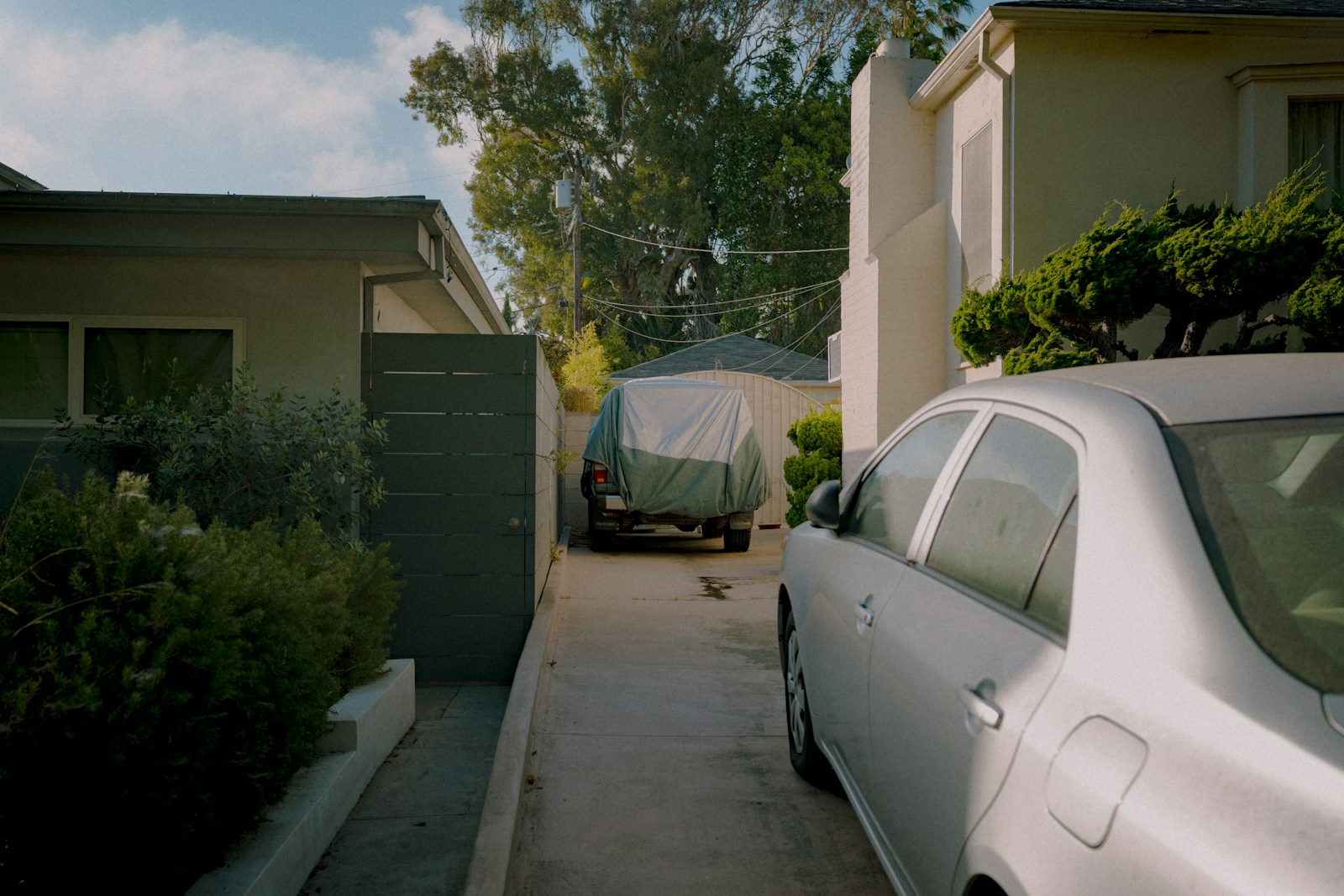
It started the way these neighborhood feuds always do: not with a screaming match, but with one person trying to get to work and realizing they physically can’t. She’d stepped outside with coffee in one hand, bag in the other, already doing that mental math of “if I hit every green light, I might still make it.” And there it was again—her neighbor’s truck parked squarely across the end of her driveway like it belonged there.
At first, she assumed it was a one-off mistake. Maybe he had company, maybe the street was crowded, maybe he was unloading something heavy and would move in a minute. But she’d been through this enough times to know the routine: the truck would sit there, engine cold, no sign of the neighbor, and she’d be the one standing in her own yard feeling ridiculous for even needing to ask.
She tried the polite version first. She walked over and knocked, then knocked louder, then knocked like someone who had an actual job to get to. When he finally opened the door, he had the posture of a guy being interrupted during something very important—except the important thing was apparently not moving the vehicle he’d left blocking someone else’s exit.
The “It’ll Just Be A Minute” Phase
He gave her that breezy, dismissive line: “It’ll just be a minute.” Not “Oh my bad,” not “Let me move it right now,” just the verbal equivalent of waving a fly away. She stood there for a second, waiting for him to grab his keys, but he didn’t move—just stared like she was the one inconveniencing him.
She tried to keep it calm, because that’s what you do when you live ten feet away from someone and you’d like your life to remain boring. She told him she had to leave for work, that she’d already been late once because of this, and she couldn’t keep doing the morning hostage situation. He shrugged and said something about how she was acting like it was “the end of the world.”
Then he did the thing that really made her blood pressure spike: he turned away mid-conversation, leaving her on the porch while he wandered back inside. It wasn’t even confrontational in a loud way. It was worse—he treated her like a nagging sound he could ignore until it stopped.
It Stops Being An Accident
After that morning, she started paying attention. The truck didn’t just “happen” to land there occasionally; it showed up in the same blocking position with weird consistency. Sometimes it was angled like he’d pulled up quickly and couldn’t be bothered to straighten out. Sometimes it was parked perfectly, like he’d lined it up on purpose to seal her in.
She left notes at first. Simple ones: “Please don’t block driveway. I need to leave early for work.” She didn’t use caps, didn’t threaten anything, didn’t get cute with it. The notes disappeared, and the truck kept showing up like a recurring nightmare.
When she caught him outside one afternoon, she tried again, face-to-face. He acted confused—like the idea of not blocking a driveway was a novel concept—and said he didn’t see what the big deal was because she “could just ask.” She reminded him she had asked, repeatedly, and that asking every morning like it was a favor was exactly the problem.
That’s when he started doing this little performance of patience. He’d sigh, roll his eyes toward the sky, and say things like, “Okay, okay, relax.” The words were calm, but the message was clear: he wanted her to feel unreasonable for expecting basic access to her own property.
The Morning She Finally Called It In
The breaking point came on a day that was already tight. She had an early shift, a meeting she couldn’t miss, and she’d planned her morning down to the minute. She walked out and saw the truck again, blocking her driveway like a barricade, and she didn’t even bother knocking first.
She called him—because at some point she’d gotten his number in the spirit of “being neighborly”—and it went to voicemail. She texted. No response. She waited five minutes, then ten, standing there with her car keys in her hand and that trapped feeling crawling up her throat.
She tried knocking anyway, harder this time. When he finally answered, he looked annoyed, like she’d woken him up. She told him she needed to leave now, and he smirked and said, “You’re always in such a rush.”
She asked him to move it immediately. He leaned against the doorframe and hit her with the line that pushed it over the edge: “You’re being dramatic.” Then he told her he’d move it “when he got a chance,” as if she was asking him to repaint her living room, not move a truck twenty feet.
Police Show Up, And He Tries To Control The Narrative
So she did what people swear they’ll do “next time” but rarely follow through on: she called the non-emergency line. She didn’t scream, didn’t exaggerate. She explained, very plainly, that her neighbor repeatedly blocked her driveway and refused to move his vehicle, and she needed to leave for work.
When the officer arrived, the neighbor suddenly found his energy. He came outside fast, keys in hand, ready to talk—just not to her. He went straight into “friendly guy” mode with the cop, smiling, gesturing, acting like this was all a silly misunderstanding.
And then, right in front of her, he tried to paint her as unhinged. He said she was “being dramatic” and “making a big deal out of nothing,” because she “just needed to leave for work.” Like that was some petty reason, like going to your job on time was an emotional indulgence.
The officer did that neutral face cops get when they’re listening to two adults argue over something that should not require law enforcement. He looked at the driveway, looked at the truck, and asked a couple of basic questions. Was this her driveway? Did she have access to the street? Had she asked him to move it? Was it a repeated issue?
She answered calmly, but you could feel the frustration in the way she kept her voice level. She wasn’t trying to win a screaming contest; she was trying to be taken seriously in a situation where her neighbor was working overtime to make her seem irrational. Meanwhile, the truck still sat there, physically proving her point the whole time.
The Part That Sticks: The Smirk And The Aftermath
The neighbor eventually moved the truck—of course he did. It took him under a minute, which made the whole thing feel even more insulting. He could’ve fixed it any of the times she asked, any of the mornings he brushed her off, but he chose not to until an officer was standing there.
What lingered wasn’t the blockage itself so much as his vibe afterward. He didn’t apologize. He didn’t look embarrassed. He had that little satisfied expression of someone who believes he’s still “won” because he got to frame her as overreacting, even if he had to comply.
And that’s where the story turns from annoying to unsettling. Because once you live next to someone who treats your boundaries like a joke—and then tries to make you sound crazy for enforcing them—you can’t un-know that. Every interaction becomes a calculation: Is he going to do it again? Is he going to escalate? Is he going to retaliate in some smaller, pettier way that’s hard to prove?
She started documenting things after that—dates, times, photos—because the pattern mattered more than the single incident. She didn’t want to keep calling the police, but she also didn’t want to spend her mornings begging for access to her own driveway like it was a privilege he could grant or deny. And the most frustrating part was how easily he’d said it, like it was a punchline: she was “being dramatic” for needing to leave for work, as if her life and schedule existed purely for his convenience.
Nothing about it felt neatly resolved. The truck moved, sure, but the neighbor didn’t suddenly become respectful, and she didn’t suddenly feel safe assuming the problem was over. The last thing she remembered from that morning wasn’t the officer leaving—it was the neighbor lingering by his door, watching her back out like he was waiting to see whether she’d flinch next time.