
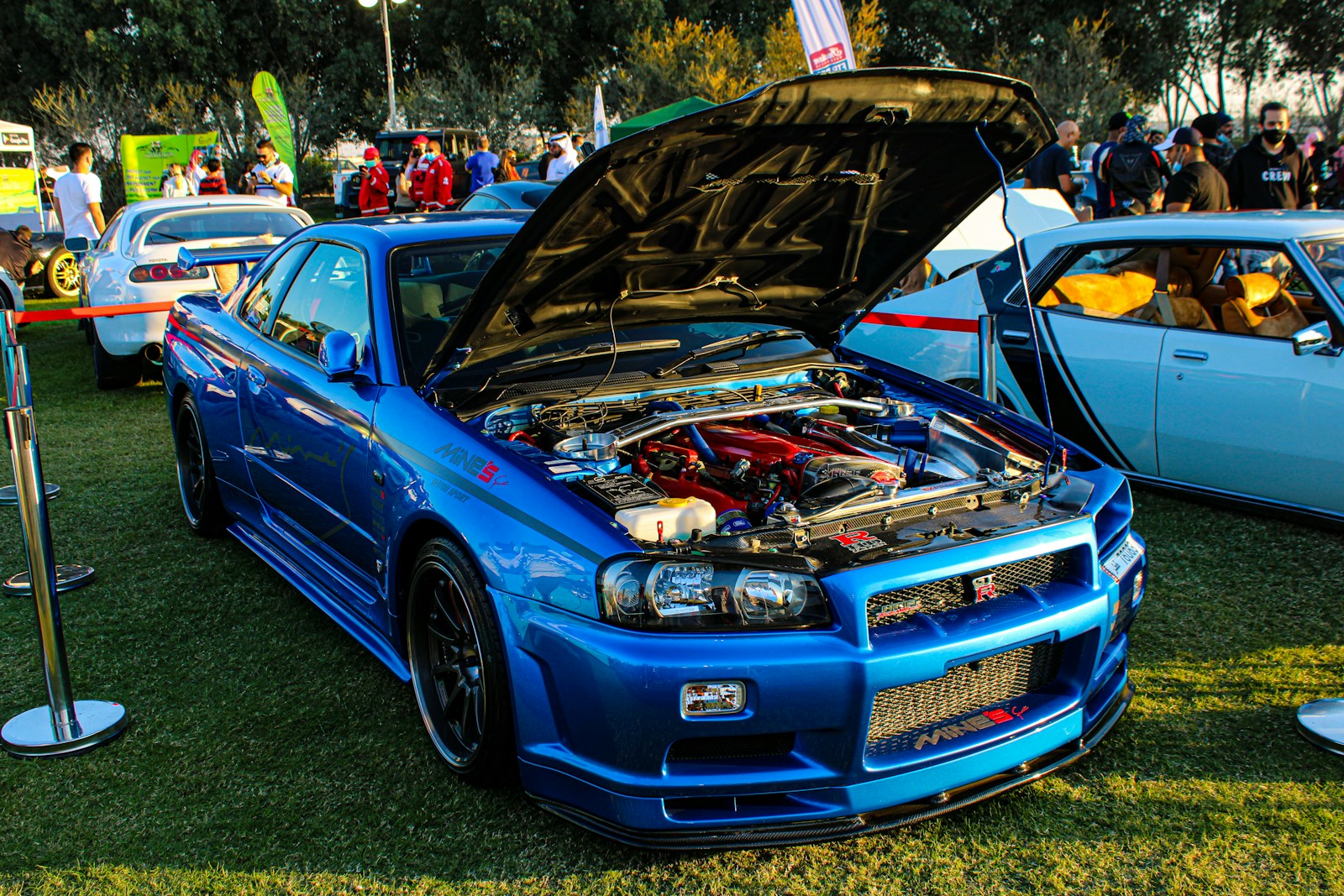

A 1989 Nissan Skyline GT-R sold for $25,000 in September 2015, a year after the R32 generation first crossed America’s 25-year import threshold. By May 2020, according to Hagerty’s own valuation data, that same car was worth $34,900, a 40 percent jump in under five years for a model that spent the prior two decades as forbidden fruit in the U.S. That pattern has now repeated itself, generation after generation, as each successive Skyline GT-R aged into legal-import status. The R32, R33, and R34 didn’t just get more desirable as they got older. They got measurably, specifically more expensive, and the auction data going back a decade lays out exactly how much.

R32: The One That Broke the Ice, Starting in 2014
Federal law bars importing a foreign car until it hits 25 years old, calculated down to the month of manufacture, and the earliest R32 GT-Rs crossed that line starting in 1989-built cars reaching 2014. Hagerty tracked values climbing “gradually since 2015, posting an average gain of 30 percent as supply has adapted to meet demand,” with that $25,000-to-$34,900 example as a concrete data point. Nearly a decade on, the market has kept moving: current listing aggregator Classic.com puts the R32 GT-R’s average sale price at $56,535, with clean examples now regularly clearing $150,000 for special variants and low-mileage cars. What was a $25,000 gray-market curiosity in 2015 is a $56,000-and-climbing collector car today.
R33: The Generation That Actually Outpaced the R32’s Debut
The R33 began reaching its own 25-year mark around 2020, and Hagerty’s analysis found something the R32’s own early buyers might not have expected: import demand for R33s “has already eclipsed the R32’s initial fever” when comparing first-year import numbers between the two generations. The pricing data backs that up. Classic.com lists the R33 GT-R’s average sale price at $85,412, well above the R32’s average, and the top of the market has gone somewhere the R32 never has: a 1996 Nismo 400R sold for $857,500 in August 2026, according to the same listing data, a figure that would have been unthinkable for any Skyline a decade ago.
R34: The Most Desirable Generation, and the Numbers Show It
The R34 didn’t become broadly import-eligible until January 2024, the most recent of the three generations to cross the threshold, and the market had been pricing in that scarcity for years beforehand through the narrower Show or Display exemption. A 1999 R34 GT-R V-Spec sold on Bring a Trailer for $320,187 in June 2021, a U.S. auction record at the time according to Hagerty’s coverage of the sale, and it beat the previous record of $316,553 set in 2018 by a 2002 V-Spec II Nür. Hagerty had already flagged black-market R34 examples reaching $316,500 in premium condition before the generation was even broadly legal, and called it, in its own analysis, “the most desirable generation” of the three, predicting the car would “make waves” in the collector market once the 25-year window fully opened.
The Math Behind the Curve
Line the three generations up and the shape of the trend is unmistakable. Each GT-R generation has commanded a higher average price than the one before it, and each has appreciated faster in its early import years than its predecessor did. Part of that is simple scarcity economics: a fixed, aging supply of cars meeting an import law’s calendar can only go one direction as demand from American buyers who grew up idolizing these cars via video games and magazine covers keeps growing. But part of it is also that each newer generation carries a stronger performance and cultural reputation by the time it crosses the line, so the R34, widely regarded as the peak of the RB26-powered Skyline era, was always going to command more than a car built seven years earlier.
What the Import Calendar Actually Predicts
The 25-year rule isn’t just a legal formality anymore. It’s become a remarkably reliable price-appreciation clock for an entire category of Japanese performance car, and the Skyline GT-R is the cleanest example of it running in real time. If the pattern holds, and three straight generations suggest it will, the next Nissan performance car to cross that threshold is worth watching closely, because the R32-to-R34 data says the price doesn’t just rise. It rises faster with every generation that gets there.