

Ask any seasoned mechanic about wheel bearings and you will probably hear a story about a stubborn race that would not come off. A shop owner who posts as @talkingshop716 shared a short tip on exactly that problem, and he introduced it with a phrase old timers love. He called it an oldie but a goodie.
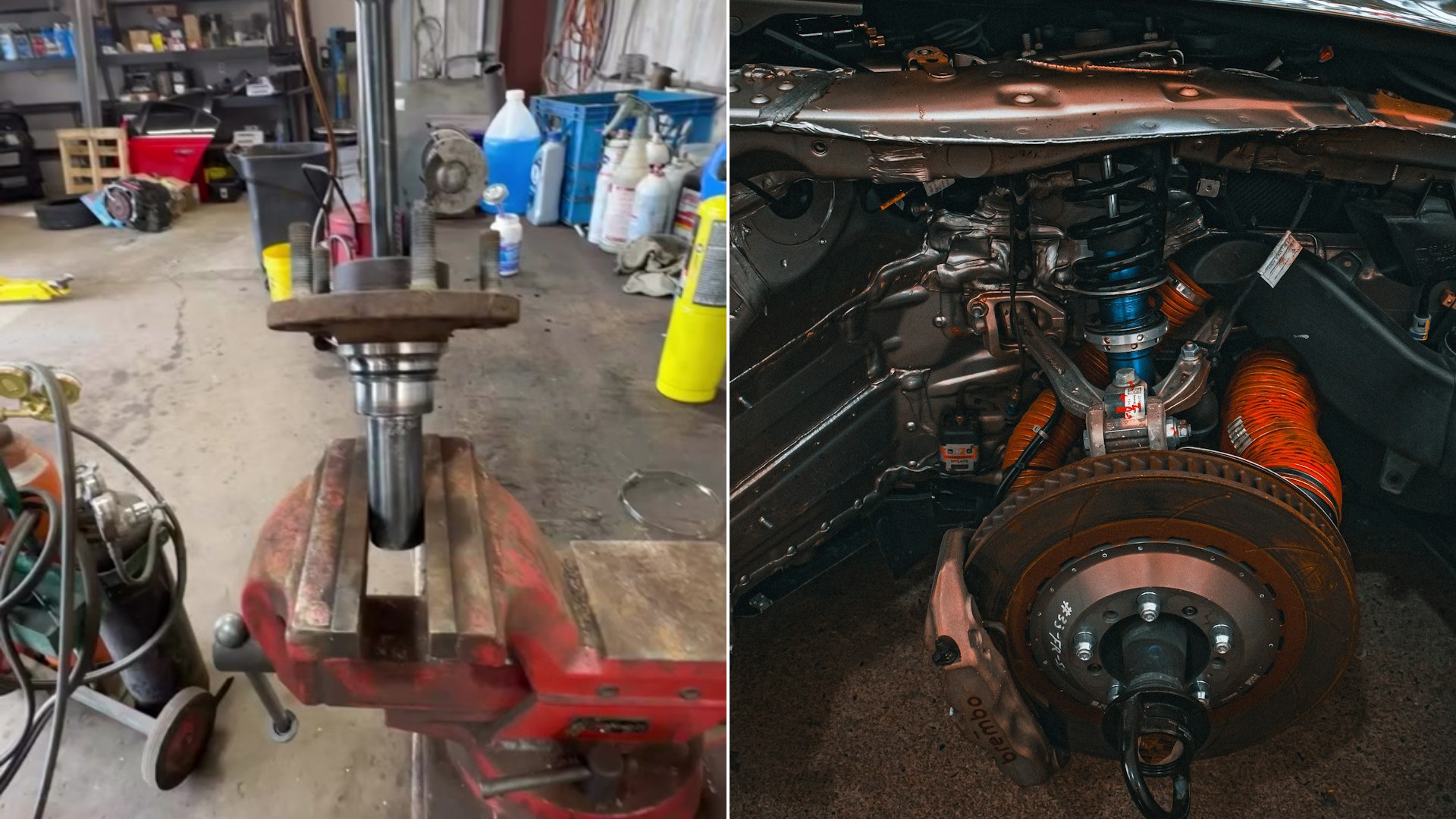
The clip is only about half a minute long, and he labeled it a lesson in thermodynamics. It is a quick glimpse of a trick that has been passed from one mechanic to the next for years. Because the clip is so short, this article also explains the background so you can understand what he is talking about and why heat is involved.
@talkingshop716
What The Shop Owner Says
His setup is straightforward. If you are pressing wheel bearings and you do not want to cut the race off of your hub, he says, you can use a socket and an extension. If you have a torch available, you get it good and hot, and you heat the race.
That is the whole tip as he gives it. The clip ends before he finishes explaining the last step, so it is best treated as a teaser for the idea and not a full set of instructions. If you plan to try anything like it, look up the procedure for your specific vehicle and follow the manufacturer’s guidance.
Why A Bearing Race Gets Stuck On The Hub
A wheel bearing is made of rolling parts that sit between two rings, called races. When a bearing is pressed out of a hub or knuckle, one of those rings often stays behind, tightly attached to the hub. It is held there by what machinists call an interference fit, which means the part is slightly larger than the surface it sits on, so it has to be forced into place. Over years of heat, moisture, and road salt, it can become even harder to remove.
The usual shop answer is to cut the stuck race with a grinder or chisel, taking care not to damage the hub underneath. That works, but it takes patience, and a slip can leave a gouge in a surface that must be smooth for the new bearing to seat correctly. That is why a trick that avoids cutting is appealing to so many people who work with their hands.
The Thermodynamics Behind It
The caption points to thermodynamics, and the idea is simple. Metal expands when it is heated. When a steel ring is warmed up, it grows slightly larger, and a tight fit can loosen. That is the reason heat is such an old favorite for frozen parts. The challenge is to heat the ring that you want to expand without also heating everything around it.
This is also why the same principle is used in factories, but under very controlled conditions. The bearing maker NSK describes heating bearings for a shrink fit using methods such as an oil bath, an oil tank, or an induction heater, and it advises against heating bearings above about 120 degrees Celsius for long periods. You can read the details in its guide to bearing mounting. Another maker, Timken, tells installers in its guide to proper installation of bearing components never to heat bearings above 250 degrees Fahrenheit, and it notes that temperature extremes can cause permanent metallurgical damage. Its approved heat sources are electric ovens and electrically heated oil baths.
The difference matters. A torch is a hot, uncontrolled source, and it can easily go well beyond those limits. That is why the common wisdom is that a torch is a tool for removing an old, worn race that you plan to throw away, and not for warming a new bearing that you plan to keep. Anything you intend to reuse should be heated only in the way its manufacturer recommends.
Safety Comes First
If you ever work on wheel bearings at home, a few precautions are essential.
- Know what is nearby. Brake lines, rubber seals, grease, and wiring for the antilock brake system can all be close to the hub. Heat can damage or ignite them.
- Keep a fire extinguisher handy. Old grease and brake dust burn, and a torch makes it easy for a small flame to spread.
- Protect your hands and eyes. Wear heavy gloves and safety glasses, because hot metal and flying scale can cause injuries.
- Let parts cool safely. A race that was just heated stays hot for a while, so give it time before you handle it.
- Never heat a part you plan to reuse with a torch. Damage may not be visible, but it can shorten the life of the part.
The NSK guide also advises wearing gloves and taking steps to prevent burns when heating bearings, and says to hold a heated bearing firmly against its shoulder as it cools so that no gap forms. That is a good reminder that proper seating matters just as much as the removal.
Signs Your Wheel Bearing Needs Attention
Most people never think about a wheel bearing until it starts to complain. Common signs include a humming or growling noise that changes with vehicle speed, a feeling of looseness in the wheel, or uneven tire wear. If you notice any of these, have the car checked. A worn bearing is not something to ignore, since it carries the weight of the vehicle at every corner.
Because the job requires pressing parts together and apart, many drivers choose to leave it to a shop that has a hydraulic press and the right tools. That is perfectly reasonable. Still, understanding what goes on gives you a better sense of what the repair involves and helps you ask better questions when you get an estimate.
The Takeaway
The beauty of the tip is how it blends old fashioned shop knowledge with basic science. Heat makes metal grow, and a clever mechanic can use that to loosen a fit that would otherwise take a grinder. The clip is short and leaves some questions unanswered, but it does show the spirit of the trade, where simple tools and a little know how can solve a stubborn problem.
If you try anything like this yourself, go slowly, follow the vehicle manufacturer’s service instructions, and treat heat with respect. When in doubt, a professional shop is always a safe place to turn.