

Not every car story is about a flashy find or a record sale. Some of the best ones are about one person, a neglected old Volvo, and a long list of problems that need solving before the snow flies. The channel Benasven follows exactly that kind of project, with short captions that read like entries in a garage diary. It is a simple format, but it says a lot about what restoring an old car is really like.
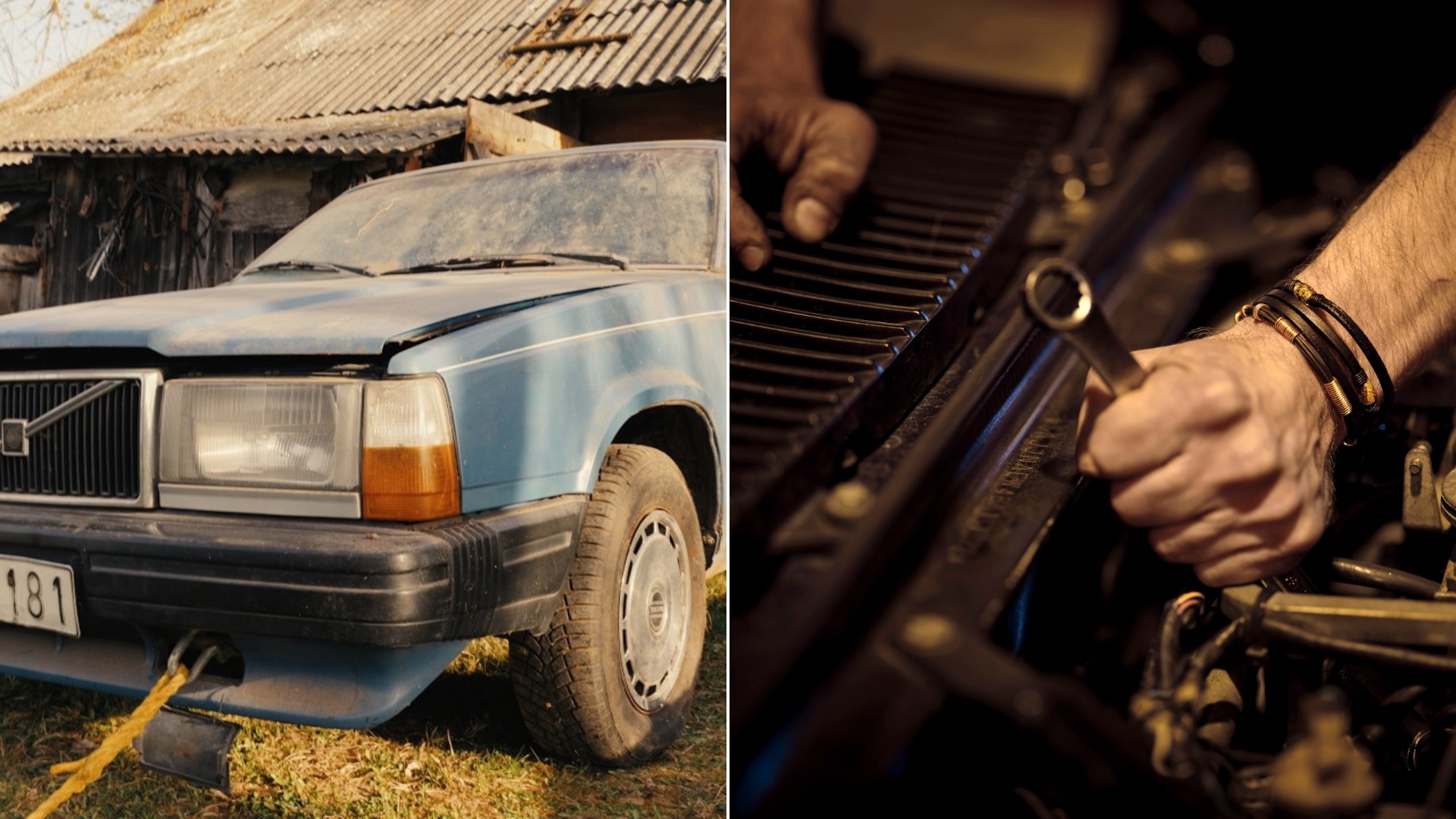
The log begins on a note of mild disappointment. The owner had hoped the spare tire would be usable, and it was not. One caption mentions that prices are in the old currency, the Litai, a small clue about where the work is taking place. The oil change was already overdue. The chassis is described as pretty rough. Still, there were bright spots early on: the engine spins, which he said he was a bit worried about, and the fuel pump works perfectly.
When the Fuel System Fights Back
The first real trouble was fuel. The car had leaking fuel lines, and the rubber hoses were completely stuck on their fittings. The owner could not find a rebuild kit for the carburetor, so he decided not to tear it down. He also could not find replacement fuel lines for sale, so improvising was the only option. At one point he mixed up the inlet and return lines. And while taking them off again, the inlet pipe broke off.
Anyone who has chased a fuel leak on an older car knows this story. Fuel lines age quietly. Rubber hardens, metal rusts from the outside in, and fittings seize after decades. A few things are worth knowing if you face the same problem.
- Use hose rated for fuel. Ordinary rubber or vacuum hose breaks down quickly when exposed to gasoline, and modern fuel blends are harder on old rubber than the fuels these cars were built for.
- Mark your lines before you remove them. Inlet and return can look alike, and swapping them is a classic mistake. Take photos, or label each end with tape.
- Be gentle with old metal lines. Rust can eat a pipe thin, and a steel line that looks fine may snap at the fitting under light force.
- Replace what you cannot trust. A leaking fuel line is a fire hazard, so it is worth a bit of extra effort.
The Missing Tank Sender
The next headache was the fuel tank sender unit, the part that tells the gauge how much gas is left. He spent a few days searching for a used one, only to learn that there were many different versions and he could not find the correct one. This is common with older vehicles. Parts that were once on a shelf at every dealer become scarce, and small differences between model years or trim levels mean one will not fit another. When you hunt for a part like this, take the old one with you, measure it, and note any numbers cast or stamped into it. Owner groups and club forums are often the best place to find a match.
There was some good news on the engine side. An oil seal looked good, and he decided to keep the new one he had bought for some other Volvo. That is a good habit: a spare seal or gasket on the shelf has a way of getting used eventually. The distributor, however, was leaking, and the welding went poorly. He tried different wire speeds and power settings, but nothing seemed to affect the welds, which is a frustrating feeling anyone who has welded thin, old, rusty steel will recognize.
Hidden Primer and Poor Repaints
The body brought its own surprises. One whole fender had been repainted, and he was not sure of the best way to get it looking good again. He hoped he would not find primer under there, but he did. Then he found another poorly repainted area. He decided to get the easiest work out of the way first and then focus on the painted parts.
Then came the line any restorer dreads: Bingo, Bondo. That was filler under the paint, the sign of an earlier repair. Old filler is not always a disaster, but it is worth knowing about. A few tips for dealing with it:
- Use a small magnet to find filler. It will not stick well over thick body filler.
- Do not panic about a thin skim. A bit of filler to smooth a repair is normal. Thick, cracking filler over rust is the real danger.
- Strip back to find the truth. You will not know what lies beneath until you sand to bare metal.
- Do the repair properly. Cutting out rust and welding in new metal beats covering it up.
For the color, he had correct paint mixed using the fuel cap, which is a neat trick. The fuel filler cap or the area behind the filler door often retains the original color, protected from sun and weather, so it is a great place to take a sample for matching. He admitted that it would not be perfect, but it was worth a shot.
Drivable, With Winter Coming
By the end of the log, the picture was more hopeful. The front suspension is worn, but apart from that, he says, the car drives great. And with that, the last caption is a very human one: winter is coming and he needs some firewood.
That final line captures the spirit of a project car. It is not a race. It is a series of small battles, each one solved with patience, some improvising and a willingness to keep going. If you have an old car sitting in your garage, take heart. Most of the problems in this video, from stuck hoses to missing parts, have a solution if you are willing to try.
More Stories You May Like
- Pickers Checked Out A Hidden Garage Of Cars Next Door Including A Big Block 1967 Chevelle And A 1967 Corvette The Owner Refuses To Put Any Price On
- Man Pays Sixty Five Thousand Dollars For A McLaren Then Gets A Twenty Eight Thousand Dollar Repair Quote And Fixes The Seat Himself For Under Three Hundred
- Honda Dealer Pushes An Expensive Evaporator Repair On A Customer With A Broken AC But A Mechanic’s Borescope Shows The Real Problem Was A One Hundred Dollar Part