
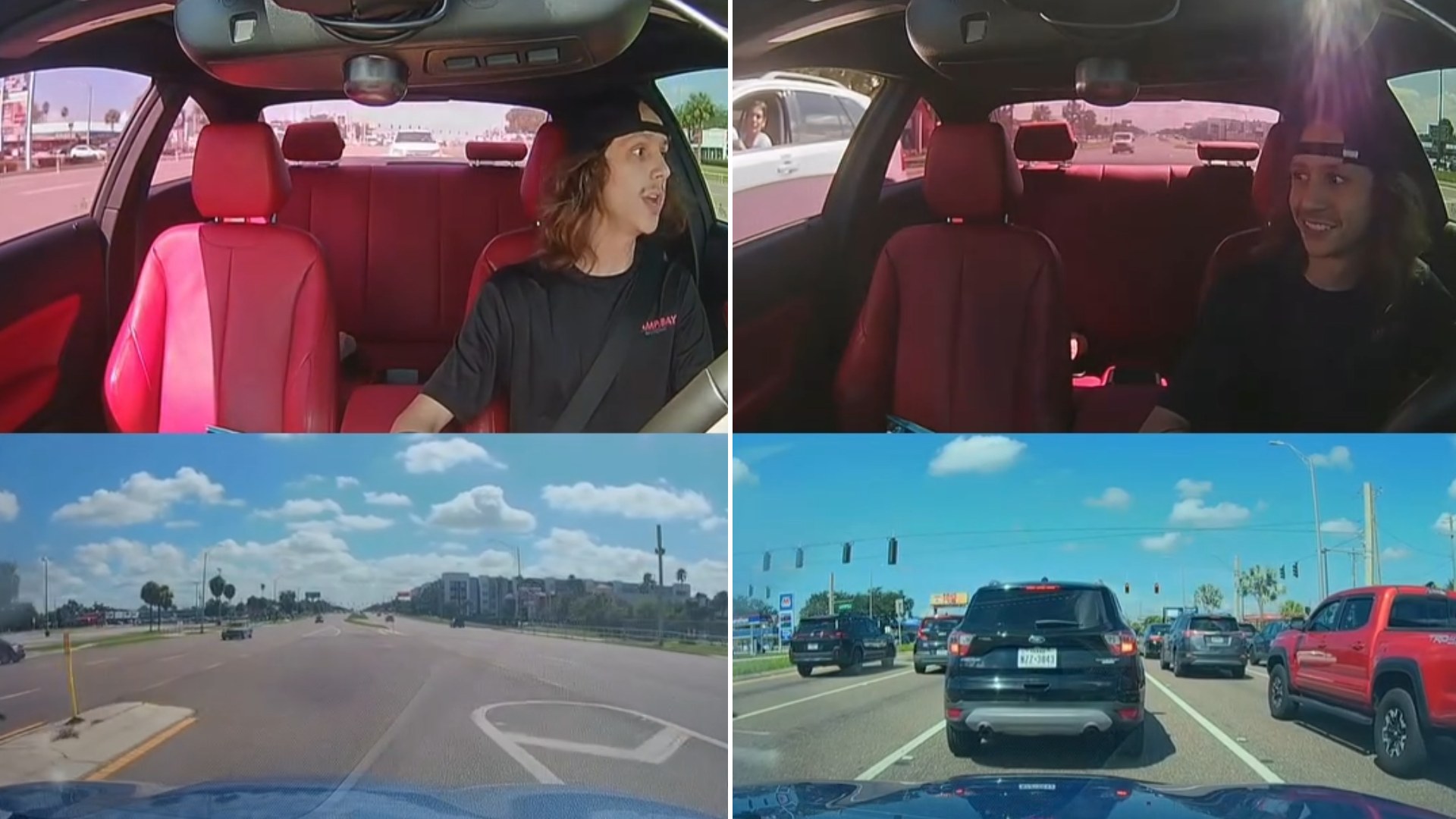

Most parking lot disagreements stay small. Someone cuts a corner too tight, someone else taps the horn, and everyone moves on with their day. Every so often, though, a routine drive turns into something a lot more confrontational, and increasingly, someone’s dashcam is running the whole time. That’s the case in a clip shared by Instagram creator @aidenbennett_16, which shows exactly that kind of escalation unfolding after he’d simply left lunch. The clip has since been watched more than 2.7 million times.
What the Video Captures
According to the reel and its caption, the confrontation began right after the creator left a lunch stop, when another driver stopped her vehicle in the middle of the travel lane rather than pulling into a space or off to the side. Instead of continuing on, she got out of her car to approach him directly and voice her frustration, all while his dashcam kept rolling from the dashboard. The footage shows the entire sequence unbroken, from the moment her car comes to a stop blocking the lane through the confrontation itself.
Why Dashcam Footage Keeps Going Viral
Clips like this one have become a recognizable genre online, not because road rage is new, but because verifiable footage of it is. A dashcam removes the “he said, she said” element that used to define most roadway disputes. Instead of two conflicting accounts, there’s a timestamped recording showing exactly how a confrontation started, who initiated it, and how it played out. It also explains why dashcams have become such a common accessory rather than a novelty. Drivers increasingly treat them the way homeowners treat a doorbell camera, as a passive witness that’s there specifically for moments like this one.
What to Actually Do if It Happens to You
Confrontations like the one caught on @aidenbennett_16’s dashcam are a useful reminder of what safety experts generally recommend when a stranger approaches a vehicle aggressively: stay inside the car, keep the doors locked, and avoid escalating verbally if it can be avoided, since a parked or slow-moving vehicle is far safer than stepping out into an unpredictable situation. Footage does the heavy lifting afterward, giving a driver something concrete to hand to police or an insurance company if the confrontation turns into a formal complaint.
The Bigger Pattern
What’s notable about this particular clip isn’t that a road rage incident happened. What’s notable is how normal it’s become to have proof. A decade ago, a driver in this exact situation would have had no way to corroborate what happened after the fact. Now a dashcam that costs less than a tank of gas can capture the entire thing in crisp detail, turn it into a shareable clip, and let millions of strangers watch a stranger’s temper flare in real time.
Road rage confrontations like this one are also prompting more drivers to think carefully about how they respond in the moment, not just how they document it afterward. Safety experts generally advise against rolling down a window or stepping out of a vehicle to engage with an aggressive stranger, since doing so escalates a situation that a locked door and a moving car can otherwise de-escalate on their own. The footage in this case shows exactly why that advice exists: the confrontation only became a confrontation because one driver chose to get out and approach, turning what could have stayed a minor traffic annoyance into a recorded, widely viewed public dispute.
Parking lot confrontations captured on dashcam have become common enough that some insurance companies now specifically ask policyholders whether they have video evidence when a claim involves any kind of altercation, not just a collision. That shift reflects how much footage like this can simplify what would otherwise be a messy liability question, particularly in cases where a verbal confrontation escalates into something physical, since a clear recording removes any ambiguity about who approached whom first and what was actually said in the moments before things got heated.
Whatever prompted the other driver to stop and confront him in the first place, the footage never shows him escalating the exchange himself, a detail that likely worked in his favor once the clip started circulating widely online.