
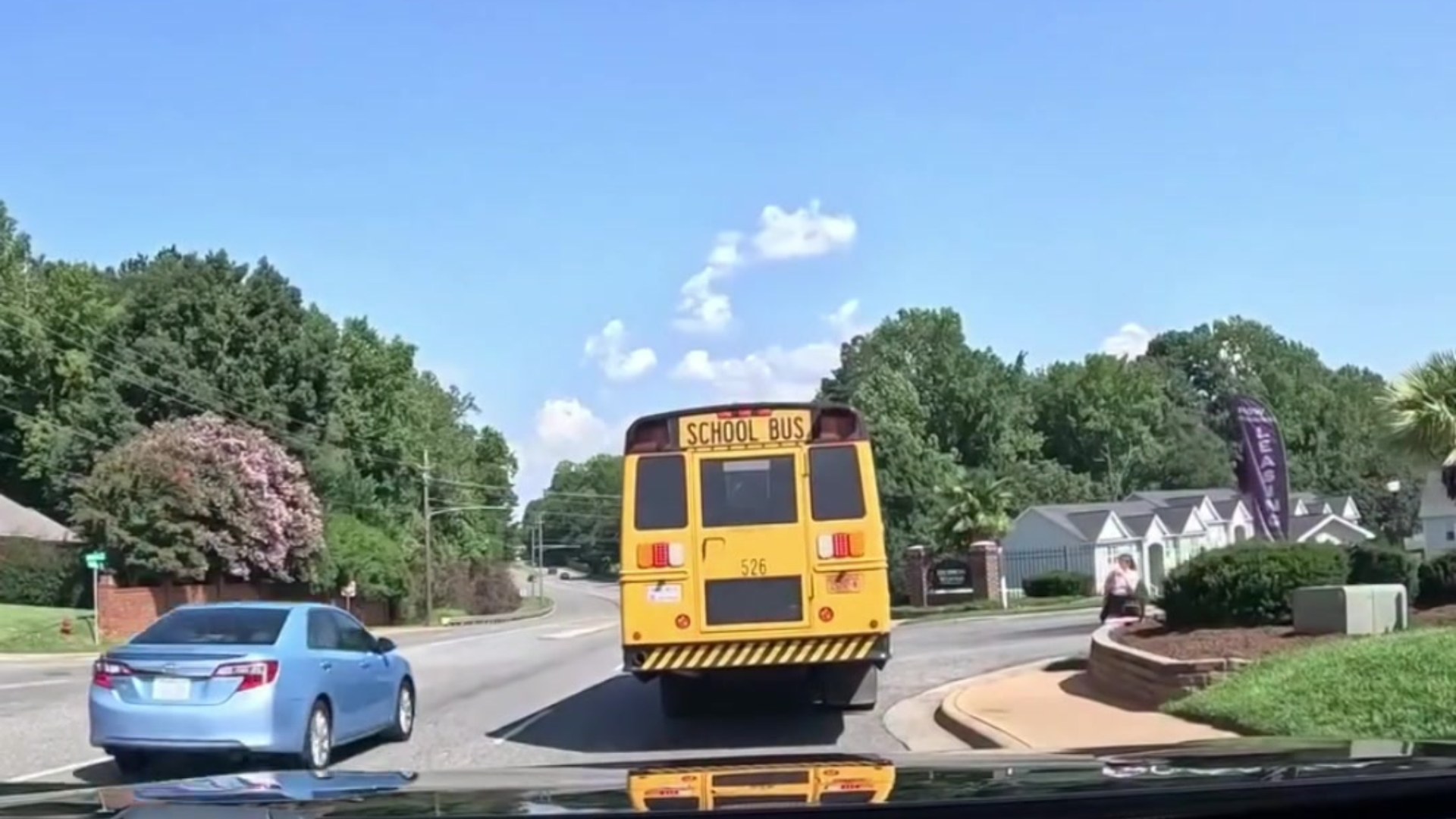

A stopped school bus is about as unambiguous a signal as exists on any American road. Red lights flashing, stop arm extended, every driver nearby is supposed to freeze in place no matter which direction they’re headed. One driver in Gastonia, North Carolina apparently didn’t, and a police officer happened to have his dashcam rolling for the entire violation.
@wcnc_charlotte A Gastonia police officer pulled over a driver speeding past a stopped school bus.
♬ original sound – WCNC_Charlotte – WCNC_Charlotte
What the Footage Shows
The incident happened on Thursday, August 27, 2026, right as students across Gaston County were settling back into the school year. A Gastonia Police Department officer’s dashcam captured a vehicle approaching a school bus that had already stopped, lights flashing and stop arm out, and continuing straight through the zone without slowing down, according to WBTV. The officer was positioned close enough to witness the entire violation firsthand, and he pulled out behind the car almost immediately. WCNC Charlotte, the market’s NBC affiliate, shared the clip from its own coverage of the stop.
What Gastonia Police Are Saying
The department didn’t mince words when it posted the video. “When a school bus stops, STOP. Slow down. Stay alert. Help us keep Gastonia’s kids safe,” officers wrote alongside the footage, per WBTV’s reporting. Gastonia PD also said it plans to increase patrols in school zones and have officers regularly follow buses on their routes for the rest of the week. The department released recent citation numbers alongside the video: 60 speeding violations in school zones, including one driver clocked at 62 mph in a 25 mph zone, five separate citations for passing a stopped bus with its lights and stop arm active, and one additional improper-passing violation.
Why the Law Treats This So Seriously
North Carolina requires drivers approaching a stopped school bus from either direction to stop once the red lights or mechanical stop arm activate, with an exception only for divided highways of four or more lanes separated by a median, according to Neuse News. A standard violation is a Class 1 misdemeanor carrying a minimum $500 fine. If the driver strikes someone, the charge jumps to a Class I felony with a minimum $1,250 fine. If someone dies, it becomes a Class H felony with a minimum $2,500 fine. North Carolina recorded 1,079 crashes involving school buses in 2023 alone, resulting in 683 injuries and six deaths, per the same reporting.
A Second or Two, Caught on Camera
What makes this particular clip land differently than a written citation report is the timing. Viewers watch the vehicle roll past a bus loaded with kids getting on or off, lights blazing, arm extended, and then watch the consequences arrive within seconds. Gastonia’s decision to publish the clip rather than just cite the driver and move on says something about how departments are trying to use video now. It’s not only about catching one driver. It’s about making every other driver watching think twice the next time a bus flips its lights on.
Video like this has become an increasingly common tool for police departments trying to change driver behavior beyond just issuing citations. A written ticket only reaches the one driver involved, but a dashcam clip shared publicly reaches thousands of others who might otherwise assume passing a stopped bus is a minor, low-risk violation. Departments across North Carolina have leaned harder into publishing this kind of footage specifically because the visual of a bus loaded with children, lights flashing, does more to change behavior than a fine amount buried in a statute most drivers have never actually read.
School bus stop-arm violations remain stubbornly common nationwide despite decades of public awareness campaigns, in part because the consequence of a violation, unless it results in a crash, rarely feels immediate to the driver who commits it. A national survey conducted by school bus safety advocates has repeatedly found that a significant share of bus drivers report witnessing a stop-arm violation on any given school day, a figure that has helped push several states toward pairing traditional traffic enforcement with stop-arm cameras mounted directly on buses, designed to automatically capture license plates of vehicles that pass illegally.
For parents, the footage is also a reminder that a bus’s own stop-arm and flashing lights are the only warning a driver gets, since young children boarding or exiting rarely check for traffic themselves before stepping off the curb.