
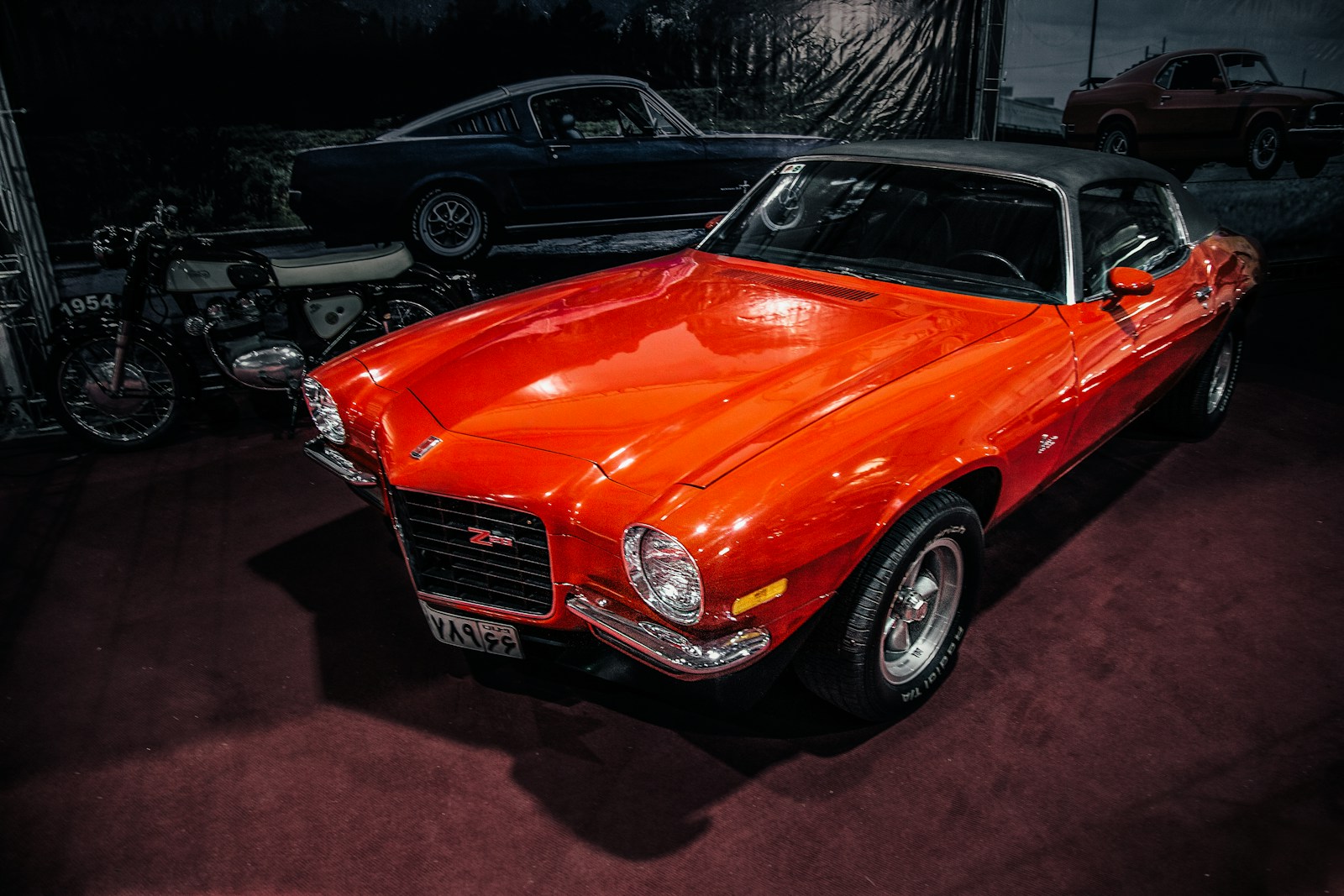

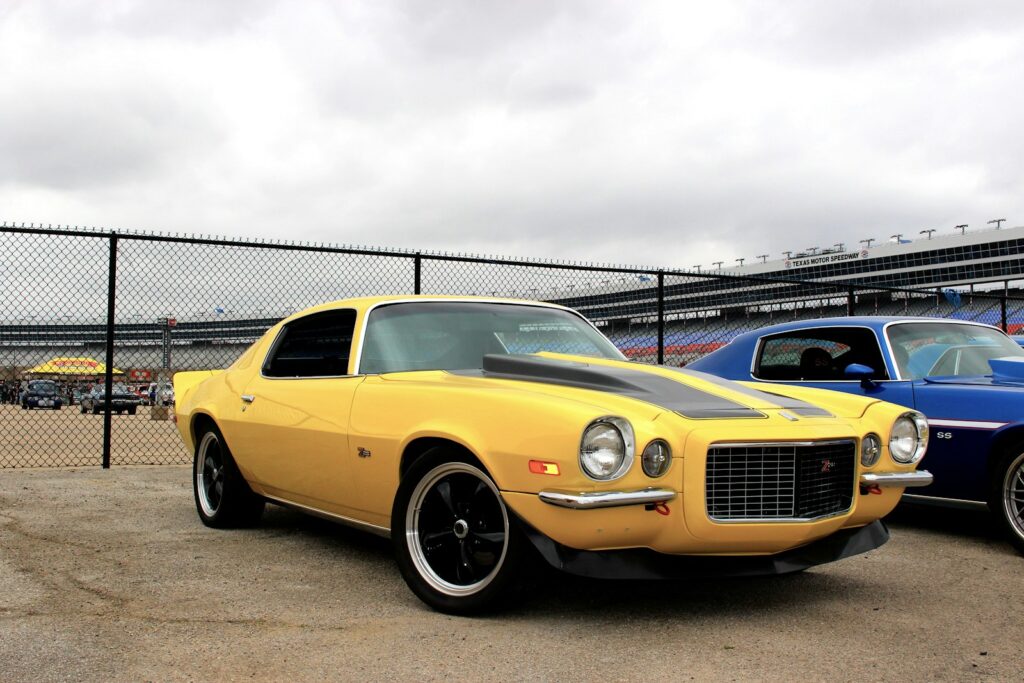
A 1972 Chevrolet Camaro Z/28 left the factory in a run of roughly 2,500 cars, well under an eighth of the 20,302 Z/28s Chevrolet built for 1969. By simple scarcity logic, the 1972 car should be worth more today. It isn’t. Hagerty’s own price guide has the 1970-73 Z/28 sitting nearly flat, up just 4 percent over the past year and only 15 percent over the past decade, while the far more common 1969 Z/28 remains one of the most desirable pony cars ever built, with Hagerty itself calling the later, scarcer cars “underappreciated” and unlikely to move.
That contradiction sent us digging through auction results and Hagerty valuation data across Mustangs, Camaros and Challengers to see whether any single spec actually tracks resale value. Quarter-mile time doesn’t hold up. Neither does 0-60 or original sticker price. Production numbers come closest, but not in the way most buyers assume.
Rarity Doesn’t Draw a Straight Line
Hagerty analysts once plotted roughly 200 vehicles from the Hagerty Price Guide against their factory production totals, expecting the usual downward slope: fewer built, higher price. What came back was an L-shape instead of a diagonal. A handful of genuinely rare cars, like the Ferrari 250 GTO, sat alone at the top. Everything else clustered along the bottom, rare or common, cheap either way. Fox-body Mustangs, built by the hundreds of thousands, landed in the same low-value territory as plenty of cars nobody ever heard of. The analysts’ conclusion, in their own words, was that “there’s actually not much of a relationship” between how few were made and what one sells for.
Where Scarcity Actually Bites
The pony car data backs that up, but with one wrinkle worth chasing. A 1969 Chevrolet Camaro ZL1, of which Chevrolet built just 69, sold for $1,094,500 at Barrett-Jackson in Scottsdale, a car Hagerty covered in detail after the record-setting sale. A 1971 Hemi ‘Cuda convertible, built in numbers that can be counted on two hands, has sold for a record $3.5 million. Compare that to the 1969 Ford Mustang Boss 429, itself no volume car at 859 units that first year, which changed hands for a comparatively modest $250,000. All three are rare. Only two of them are rare enough to matter. The market seems to treat production counts less as a sliding scale and more as a gate: drop under a few hundred units and prices go vertical, but sitting in the high hundreds or low thousands, like the Boss 429 or the later Z/28s, buys almost nothing extra.
Horsepower and Sticker Price Explain Even Less
Performance numbers fare worse. The Boss 429 wasn’t the quickest Mustang in the 1969 lineup in a straight line; a well-tuned 428 Cobra Jet could match or beat its quarter-mile times, since the Boss 429’s big NASCAR-homologation engine was built for high-rpm output, not stoplight drama. Yet the Boss 429 is worth several times what a Cobra Jet fastback brings today. Original MSRP tells a similarly weak story. A Boss 429 and a garden-variety Mustang GT left the factory only a few hundred dollars apart on the window sticker, a gap that explains nothing about the six-figure canyon separating their values fifty-plus years later.
Authenticity Outweighs the Spec Sheet
The clearest evidence that a car’s paper numbers matter less than what can be proven about it sits inside that ZL1 sale. The same physical car brought $770,000 in 2018. Two years later, after its owner spent roughly $100,000 tracking down and reinstalling the car’s original, numbers-matching engine block, it sold again for $1,094,500. Nothing on the spec sheet changed. The horsepower rating, the production count, the MSRP all stayed identical. What moved the price by more than 40 percent was documentation, proof that the block under the hood was the one Chevrolet dropped in at the factory.
What the Data Actually Says
Of the usual candidates, production count is the only one with real predictive teeth, but it behaves like a threshold rather than a ruler. Under roughly a thousand units, pony car values start climbing steeply, and under a hundred they can go parabolic. Above that line, the difference between 2,500 units and 20,302, or between 5,000 and 9,000, barely registers, which is exactly why the scarcer early-70s Z/28s trail their more plentiful 1969 sibling. Quarter-mile times, 0-60 runs and original sticker prices track almost nothing. The single number worth checking before buying a pony car isn’t how fast it was new. It’s how few were built, and whether the paperwork can still prove which one is sitting in front of you.