

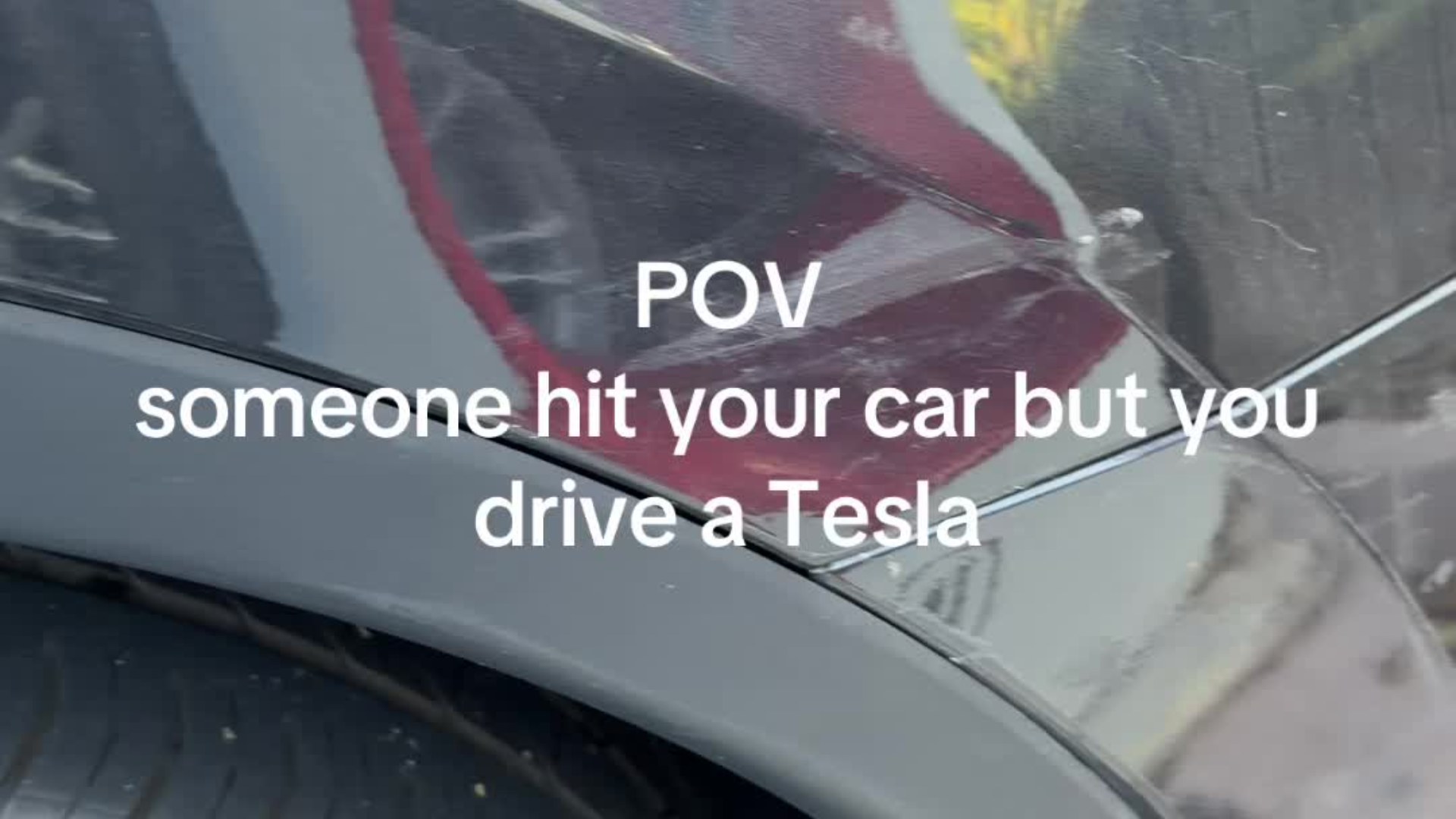
A dent with no note is one of the more frustrating things a driver can come back to. For one Tesla owner, though, the story didn’t end there. TikTok creator @blondyinsider shared dashcam footage showing exactly that scenario: a fresh dent in the bumper, no note left behind, and a Tesla Sentry Mode clip that had already captured the other driver’s license plate the entire time.
@blondyinsider I see you 👀 #teslatok #caraccident #hitandrun #viral #fyp
♬ Saxophones getting louder – Sped Up – AntonioVivald
What the Footage Shows
According to the video, the owner returned to her Tesla to find a new dent in the bumper and no note or contact information left by whoever caused it. The dashcam footage tells a different story than the empty windshield, though, showing the responsible driver’s license plate clearly visible in the recording the entire time the incident occurred.
How Sentry Mode Actually Works
Sentry Mode uses the vehicle’s built-in cameras and sensors to monitor its surroundings whenever the car is parked and locked, according to Tesla’s own owner’s manual. When the system detects a potential threat, it pulses the headlights, sounds an alarm, displays an on-screen alert, sends a notification to the owner’s phone, and saves footage to a connected USB drive. When Sentry Sounds are turned off, the system saves the last 10 minutes of footage surrounding a triggered event, per the same documentation.
Why This Story Keeps Playing Out
Hit-and-run parking lot incidents are common enough that most drivers assume there’s simply nothing to be done about them beyond filing an insurance claim and moving on. A parked Tesla with Sentry Mode active functions less like a passive vehicle and more like a security camera that happens to also drive.
What Comes Next for a Driver in This Spot
Footage like this is typically the strongest leverage a hit-and-run victim can have. With a visible license plate on tape, a police report generally gives an owner enough for law enforcement to trace the vehicle back to its registered owner, and the same footage can support an insurance claim against the other driver’s policy rather than the owner’s own collision coverage.
Stories like this one are becoming common enough that some insurers have started factoring dashcam and Sentry Mode footage directly into how they price hit-and-run claims, since a documented at-fault party changes the entire calculus of a claim from an unrecoverable loss into a straightforward liability case. For owners of vehicles without built-in camera systems, the gap is notable: a driver without footage in the exact same scenario would likely be left filing an uninsured motorist or comprehensive claim against their own policy, with no realistic path to identifying who actually caused the damage in the first place.
Beyond the immediate claims benefit, stories like this one have started to influence how insurers price policies for vehicles equipped with always-on camera systems. Some companies now offer modest premium discounts for drivers who can demonstrate active dashcam or Sentry Mode usage, reasoning that a car more likely to produce clear evidence in a dispute is also a car less likely to generate a costly, unresolved claim. For owners still driving without any kind of camera system, cases like this one have become a recurring argument for retrofitting an aftermarket dashcam, even on vehicles that didn’t come with the technology built in from the factory.
Whether the footage ultimately helps track down the other driver depends on how legible the plate reads once investigators or insurers pull the actual clip rather than relying on secondhand descriptions of it.
Dashcam-equipped vehicles are becoming common enough in shared parking structures and retail lots that some property managers now post signage noting the area is under camera surveillance by parked vehicles themselves, not just fixed security systems.
It’s a small technological edge, but one that increasingly tips these disputes toward the driver who happened to be recording.
Cameras that never stop rolling are quietly becoming every driver’s best witness.
No note necessary when the footage already has all the answers.
What used to be a he-said-she-said parking lot mystery is now, more often than not, a solved case before the owner even calls their insurer. That shift, quiet and incremental as it’s been, has changed the odds for victims of these anonymous little collisions in a way most drivers only appreciate the first time it happens to them.