

Nobody likes admitting a big purchase was a mistake, especially one with a price tag near $90,000. But car reviewer @BenHardyCars says it plainly: his 2026 Toyota Sequoia TRD Pro is the worst Toyota his family has ever owned, and it is already gone. He sold it, and he took a long, honest look at why.
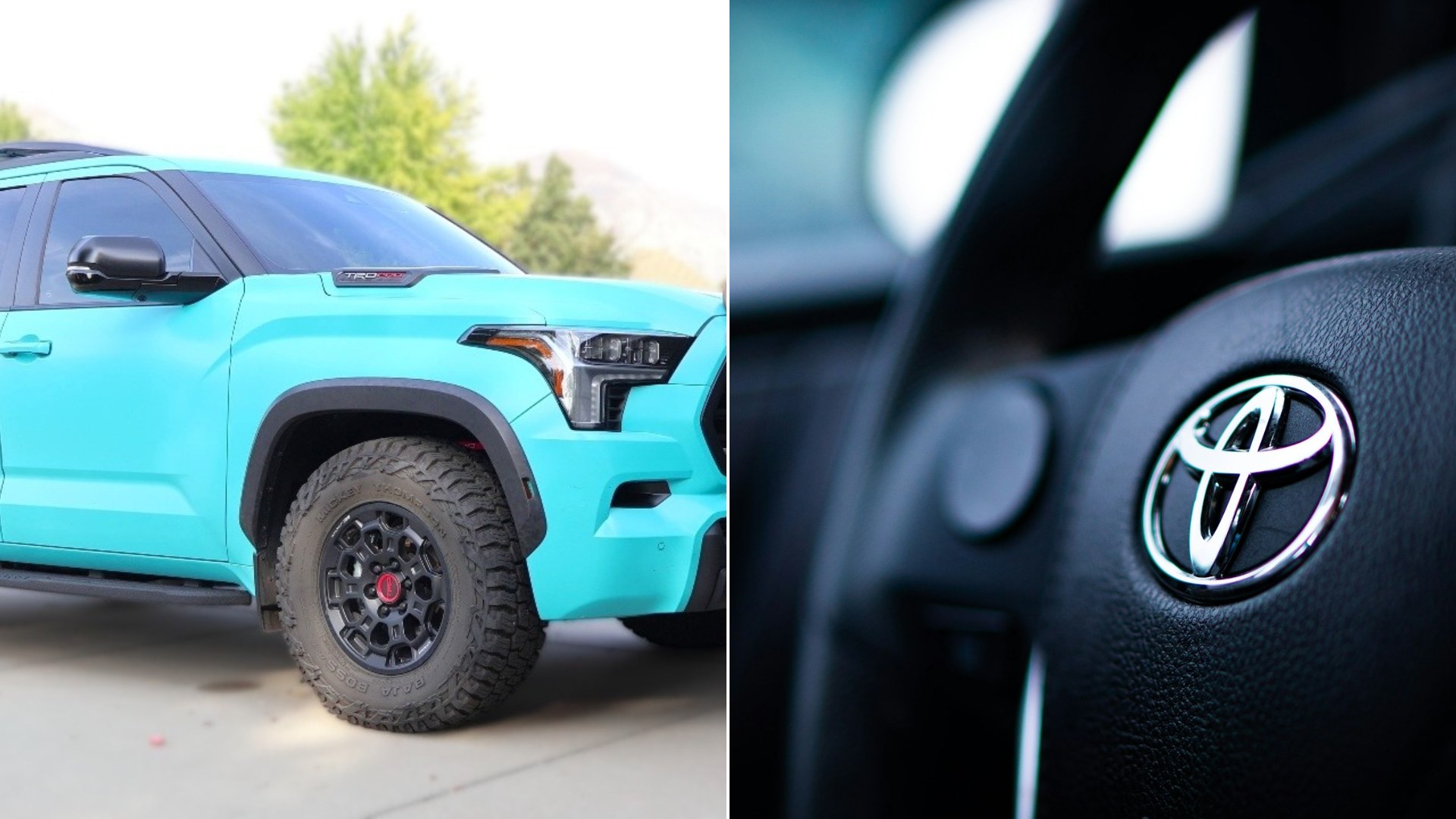
What makes the verdict sting is that this is not a man who hates the brand. He says Toyota builds an entire lineup he likes, and he has had a 2020 Land Cruiser and a 2025 Lexus LX 700h in his driveway. He even apologized to the Land Cruiser 250, which he had earlier called the worst Toyota they ever owned. That title now belongs to the Sequoia.
The truck listed at $88,758 when new, which he points out is knocking on the door of six figures. And with only about 6,700 miles on it, he says, it felt like something with 100,000.
A good-looking truck with a rough ride
He starts with what he loves. The bright blue paint grew on him, his wife liked it from day one, and he calls it the best-looking Sequoia ever. The 34-inch tires and wheels on the TRD Pro look great. The front and second rows are, in his words, phenomenal, with tons of space and easy car seat installation. The powertrain, with a performance kit he added, sounds good and has plenty of pep.
Then the complaints start piling up, and they are mostly about how the thing is put together.
- Rattles. He says the interior creaks and rattles so much that you could put someone in it blindfolded and they would guess it had six figures on the odometer. His older Land Cruiser, with about 40,000 miles, and the Lexus, with about 20,000, are airtight by comparison.
- Panel gaps and small defects. He points to uneven panel alignment, a marker light that has sunk into the fender flare, and a license plate light that never turns off, even when the vehicle is locked and sitting for hours.
- Noise and ride. The roof rack that now comes standard on the TRD Pro adds a lot of wind noise, and he says the highway ride feels like an airplane in mild turbulence. He says he would not take it on a road trip.
- Power that comes and goes. The engine randomly loses torque at the low end, usually when it is hot. He notes his Lexus does the same, but the Sequoia does it more often.
- Off-road ability. He took it off-road once with the big tires and has not done it since, calling it the worst Toyota off-road, thanks to low-hanging parts and poor articulation.
- The third row and cargo. His wife made it work, he says, but it is not well designed. He believes the solid rear axle hurts the cargo floor and suggests independent rear suspension would help.
One line from him will stick with a lot of readers: a $25,000 Corolla, he says, has better build quality than this $88,000 Sequoia.
The Texas plant question
He is careful to note that the electronics have been flawless. No glitches, nothing that failed. This is about build quality, not technology. And he goes after a popular excuse. Some people say North American-built Toyotas are always worse. He lists the Camry, RAV4, Corolla, Corolla Cross, Highlander, Grand Highlander and Sienna, all built here, and says they hold up fine without creaking at high mileage. In his understanding, only the Tundra and Sequoia come from the San Antonio, Texas plant, and he thinks that plant needs a big quality control overhaul. He compares it to the late-1990s Dodge Rams with the Cummins diesel: a drivetrain that would last forever, wrapped in a truck with awful door panels and trim.
He also sends a message to anyone at Toyota listening. What made the older Sequoias and Tundras so sought after, he says, is not only the engines. It was a soft, comfortable highway ride and big, open interiors. His point is that a 6,000-pound SUV does not need to handle like a race car. People want it to be comfortable and roomy, and those older trucks still sell for strong money for that reason.
What to do before you buy a big SUV
You do not have to be a car reviewer to protect yourself from a letdown like this. A few habits help:
- Drive it on your own roads. A short loop around the dealer lot will not reveal highway wind noise or a ride that wears you out. Take it on the interstate and over a few bumpy roads.
- Listen for rattles. Turn the radio off and listen. Press on the dash, trim and door panels. If a new vehicle rattles on the lot, it will not get quieter.
- Look at the gaps. Uneven spacing between body panels is easy to spot if you stand back and sight along the sides.
- Check the cargo and third row for real use. Bring the car seats, the cooler or the golf bags you actually carry.
- Read owner forums and recall listings for the exact model year before you commit, not only the brand reputation.
- Remember the price. The higher the sticker, the higher the bar. Do not let a badge talk you out of expecting a quiet, tight vehicle.
Not leaving Toyota
The story does not end in a feud. He says his family is staying with Toyota, and his wife has decided on a replacement that he will show in a later video. He also says Toyota has announced a major overhaul of the Sequoia and Tundra for the 2027 model year, and he plans to review one. If the company fixes the problems, he says, he will tell people. That seems like the fair way to do it: say what is wrong, and say when it gets better.
More Stories You May Like
- Family Sold Their Grandmother’s 1971 Plymouth Valiant To A Detailer For Five Hundred Dollars Cash After Twenty Seven Years In A Field And He Made It Shine Again
- Car Buying Expert Lists The Sleazy Dealership Tricks That Take Advantage Of Shoppers From Add Ons On The Final Paperwork To Forcing You Into Their Financing
- Honda Owner Went For A Coupon Oil Change And The Dealership Said The Oil Pan Was Leaking Until An Independent Shop Looked And Found No Oil At All