

He wasn’t street racing. He wasn’t weaving through traffic or baiting anyone at a light. He was doing that thing a lot of performance-coupe owners do when the stars align: empty on-ramp, warm tires, decent visibility, and a quick pull to hear the exhaust open up and feel the car squat for a second.
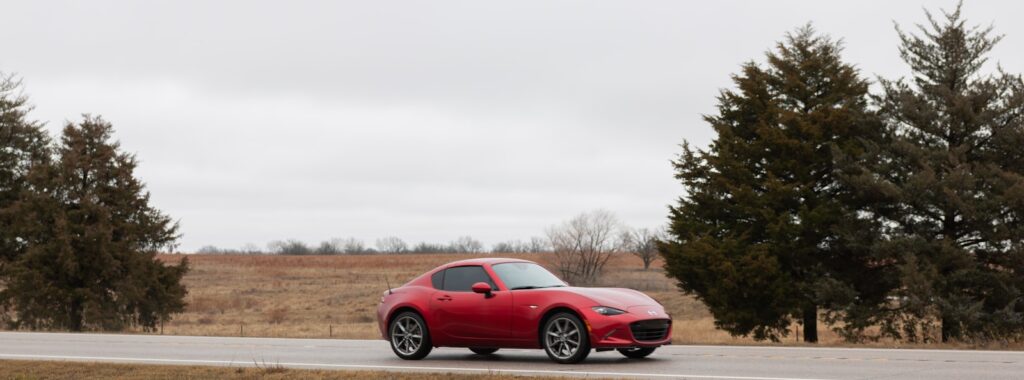
The coupe was one of those modern-ish, rear-drive setups that looks factory-clean but has just enough “tasteful” work done to make you suspicious. Wider tires than stock, an exhaust you can hear through closed windows, and a set of wheels that cost more than some people’s first car. He’d taken that ramp a hundred times, and it had become his little private test strip—two seconds of throttle, then back to being a normal adult commuting like everyone else.
Only this time, right as the RPM climbed and the rear end loaded up, there was a single violent bang. Not a pop or a backfire, but the kind of metallic impact that makes your stomach drop before your brain even catches up. He lifted instantly, coasting on pure reflex, and in the mirror he caught something long and dark bouncing and skating behind him like a thrown spear.
The “Pull” That Lasted Half a Second
He’d rolled into the on-ramp slow, checked for headlights, and then eased the throttle in like he always did. The car responded perfectly for the first heartbeat—clean, eager, the kind of acceleration that makes you grin even when you’re trying not to. Then the bang hit so hard it felt like someone had swung a sledgehammer under the car.
The coupe didn’t just make a noise; it changed posture. The rear jolted, the shifter buzzed in his hand, and the whole cabin filled with a rough, hollow vibration for a fraction of a second before it went oddly quiet. His foot was already off the gas, and the car was suddenly coasting like it had forgotten what “power” meant.
He did that quick scan drivers do when something goes wrong: gauges, warning lights, mirrors, road. No oil light, no temperature spike, no engine misfire—nothing that made any sense. But in the mirror, the “something” behind him was still moving, tumbling end-over-end and throwing sparks when it kissed pavement.
Stopping on the Shoulder and Seeing the Worst-Case Scenario
He signaled and drifted onto the ramp shoulder, half expecting smoke or fluid pouring out. Instead, the car just sat there idling like it was innocent, exhaust burbling softly, as if it didn’t just try to disassemble itself. He got out, walked back a few steps, and that’s when the reality hit him: the driveshaft was lying in the road behind him.
Not “a piece of something.” A full-on driveshaft, long and unmistakable, sitting at an angle like it had been casually dropped there. The front yoke end looked wrong in a way that made even non-mechanics wince—twisted, torn, with fresh shiny metal showing where it absolutely shouldn’t be shiny.
He crouched and looked under the car, and the gap where the shaft should’ve been was like missing teeth. You could see up into the tunnel, and there were scuffs and impacts where something had been whipping around before it let go. He didn’t have to be a drivetrain specialist to understand the immediate problem: the engine could rev all day, but nothing was turning the rear wheels anymore.
The Part That Failed “Without a Single Warning Click”
When he later described it, the detail he kept coming back to wasn’t even the bang—it was the lack of warning. No chirping at low speed, no clunk shifting from reverse to drive, no vibration creeping in over the past week. The U-joint had failed without a single warning click, which is the kind of sentence that instantly makes every other car person start mentally replaying their own noises and dismissals.
He’d always heard the classic U-joint death rattle stories: squeaks you ignore until it becomes a clunk, then a vibration you pretend is tire balance, then suddenly you’re on the side of the road. But his car hadn’t done any of that. It had been smooth at highway speeds the day before, smooth on the way to the ramp, smooth for the first moment of the pull—and then it just let go like a snapped strap.
Standing there, he was stuck between two fears. One was practical: if that shaft had launched differently, it could’ve punched the floor, dug into the pavement, or sent the car sideways. The other was personal and more embarrassing: he knew exactly how the story sounded when you start it with “So I did a pull on the on-ramp…”
The Awkward Logistics: A Driveshaft in the Road and a Car That Won’t Move
He couldn’t just leave the driveshaft sitting there, so he did the only thing available—hazards on, keep checking mirrors, and jog back to drag it out of the lane. It was heavier than it looked, awkward and greasy, and he had to pull it by the end like he was dragging a dead animal off a trail. A couple cars came around the curve, slowed, and gave him that cautious, wide-eyed look people give when they’re deciding if you’re a stranded idiot or a guy in the middle of something dangerous.
Once it was on the shoulder, he stared at it like it might explain itself. The joint was the obvious failure point, but it still felt unreal that one component could go from “fine” to “catastrophic” in a blink. He kept glancing under the car, trying to spot collateral damage—torn brake lines, cracked transmission housing, anything dripping.
Calling for a tow was the next humiliation. Not because towing is shameful, but because there’s a certain vibe to standing next to a sporty coupe with the rear wheels angled toward the grass and a metal tube lying beside it like evidence. He already knew the driver was going to ask what happened, and he already knew he was going to have to decide how honest to be in that exact moment.
The tow truck arrived with the usual no-rush energy, the driver taking a lap around the car like a doctor doing rounds. When he spotted the missing driveshaft, he made the kind of sound that isn’t quite a laugh or a whistle, just a low “huh” of someone who’s seen enough broken stuff to be impressed. The coupe owner kept it simple: loud bang, no more drive, found the shaft behind him.
The Fallout: Shop Talk, Blame, and That One Nagging Question
Once the car was off the ramp and in a safer place, the story stopped being about danger and started being about blame. Was the U-joint original and tired? Was it replaced at some point with a cheap part? Did the car have more torque than the driveline was truly happy with, even if it felt fine on the street?
He thought about the little choices that suddenly mattered. The “I’ll do it next oil change” mentality. The way people treat driveline parts like they’re eternal because they don’t make noise—until they do. And he kept replaying the fact that he didn’t hear anything beforehand, which made it harder to accept the idea that he’d ignored a warning.
There was also the social part of it, which he couldn’t escape. Friends he texted about it immediately asked the same two questions: “How hard were you on it?” and “Did it hop?” The first one was about judgment, the second was about physics, but both landed like accusations.
The most uncomfortable conversations were the ones with people who weren’t even blaming him—just calmly pointing out how close it came to being worse. A driveshaft can turn into a pole vault if it digs into pavement. It can beat the underside of the car like a flail. The fact that it simply dropped and skittered behind him felt like luck, not design.
And that’s where the story leaves a weird residue: he didn’t crash, he didn’t hit anyone, and nobody got hurt, but he also didn’t get the clean closure of “I knew it was failing.” He got a violent reminder that sometimes parts don’t negotiate or warn or slowly degrade in a way you can hear. Sometimes they’re quiet right up until the exact moment they decide to exit the chat, and you’re left standing on the shoulder with a coupe that looks perfectly fine—except for the missing chunk of drivetrain and the memory of that bang echoing in your chest.
More from Steel Horse Rides:
- 13 Most Powerful Muscle Cars of All Time
- 13 Underrated JDM Cars That Deserve More Love
- 15 JDM Cars That Were Illegal in the U.S.
- 13 SUVs From the ’90s That Are Surprisingly Cool Today