
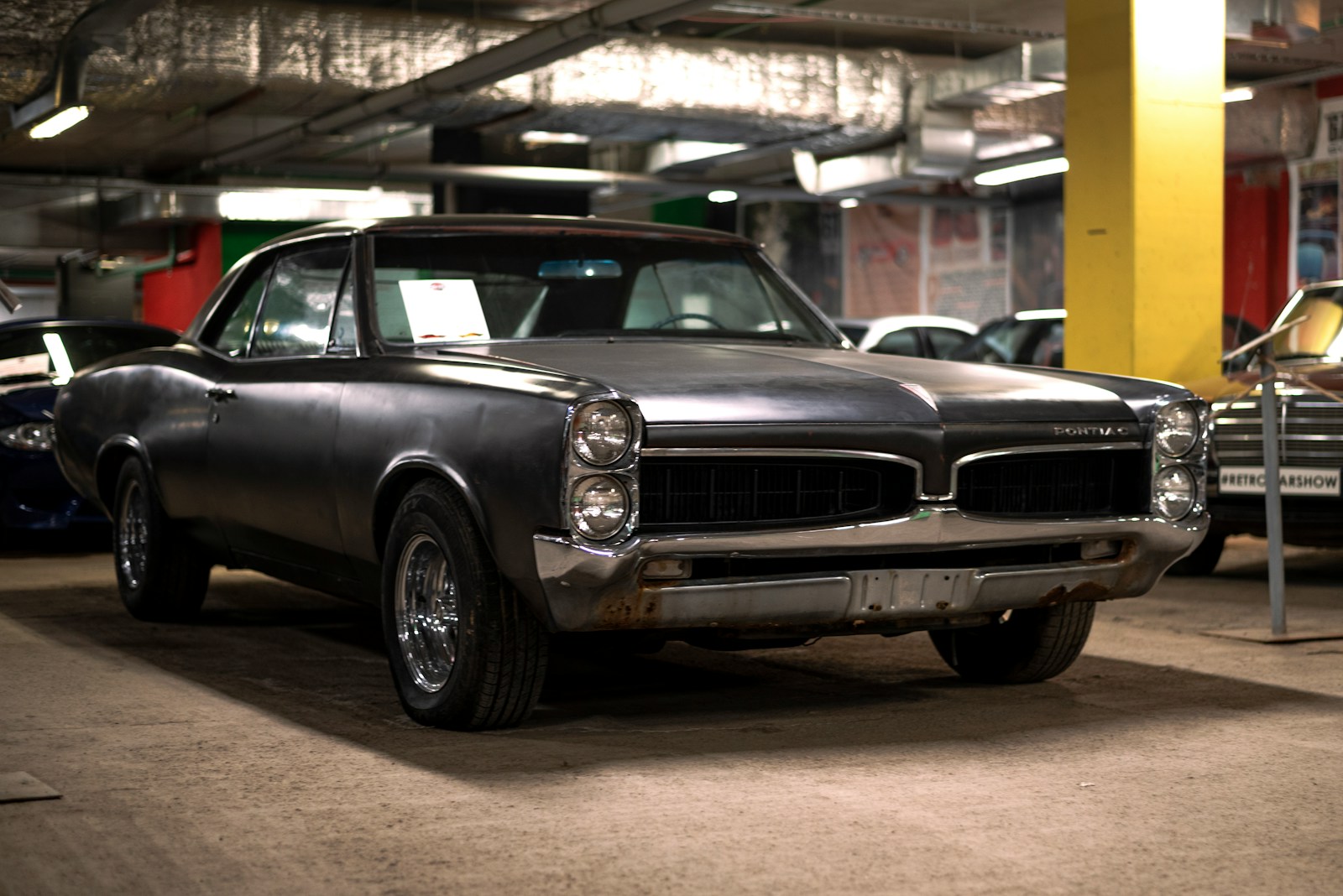

Pontiac charged $55 for the option code that put a screaming gold phoenix across a Trans Am’s hood in 1973, and $95 for the larger version it sold in 1985. Neither price tells you what the graphic is actually worth today, because nobody thought to ask that question until the cars themselves became collectible. Steel Horse Rides hasn’t covered a single Pontiac or Trans Am in this category before now, which is its own kind of gap given how much of the pony car conversation the “screaming chicken” has quietly dominated for fifty years.
A decal with its own paper trail
The graphic’s history is better documented than most people realize. According to Hagerty’s own retrospective on the design, Pontiac introduced the hood bird as option code WW7 for 1973 and revived a bigger, more aggressive version under code DX1 for the 1985 model year, after a brief mid-1980s absence. It was never standard equipment, and buyers who skipped the box on the order form got a Trans Am that looked meaningfully more restrained than the one on the poster. That optional status is exactly what makes a price comparison possible now, decades after the fact, in a way it wouldn’t be if every car had come with the same graphic from the factory.

What the sales data actually shows
The clearest number comes from comparing trims rather than hunting for matched pairs of the exact same car with and without the option, since factory decal-delete examples are rare enough that a like-for-like sample barely exists. Sales-data aggregator Classic.com puts the average price of a second-generation Trans Am Special Edition, the black-and-gold package built around the largest version of the bird graphic, at $72,663 across recent transactions, with individual sales ranging as high as $110,000 for a well-documented 1977 car sold at Barrett-Jackson Las Vegas. That compares to an average of roughly $50,758 across second-generation Trans Ams overall, spanning every trim and hood treatment sold during that body style’s run. The gap between those two figures, close to $22,000, is real money attached to a specific, documented option package built around the graphic.
None of that isolates the decal’s dollar value with laboratory precision. The Special Edition package bundled the largest hood bird with gold pinstriping, specific wheels, and a black-and-gold color scheme that also happens to be the one Burt Reynolds made famous in “Smokey and the Bandit,” and that cultural association is doing some of the lifting alongside the graphic itself. A buyer paying up for a Special Edition is paying for the whole look, not purely for the screaming chicken in isolation, and Steel Horse Rides isn’t aware of a clean study that strips those variables apart. What the sales data does establish is that Trans Ams sold with the largest, most visually dominant version of the bird consistently transact well above the nameplate’s average, and that gap has widened as the cars have aged into full collector status rather than shrinking.
The base trims tell a similar story from the other direction. Hagerty’s own valuation tool prices a standard 1978 Trans Am, equipped with the smaller optional bird graphic rather than the full Special Edition treatment, at $24,600, a fraction of what the black-and-gold cars are commanding at auction in the same model years. Collectors clearly aren’t paying for a 1978 Trans Am as an undifferentiated object. They’re paying for a specific combination of graphics package, color scheme, and trim level, and the size and placement of the bird on the hood tracks closely with where a given car lands in that pricing spread.
Why the option mattered in the first place
Pontiac’s own dealers understood the graphic was doing real work on the showroom floor well before collectors started arguing about it. The bird gave an otherwise ordinary Firebird coupe an unmistakable visual identity at a time when GM’s F-body lineup was fighting for the same buyers as the Camaro, and it turned the Trans Am into one of the most recognizable American cars of the decade regardless of what was actually under the hood. That branding effect outlasted the cars’ original owners and became, in effect, the thing later buyers were paying to reclaim. A stripped-down Trans Am without the graphic is still a genuine, driveable piece of Pontiac history, and the current data suggests the market treats it as a meaningfully different, and less expensive, one.