

Twenty-eight years is a long time for any motorcycle to sit. For a rare Yamaha two stroke that was parked in 1998, it was long enough to leave rust in the tank, varnish in the carburetors and, as it turned out, water hiding inside the floats.
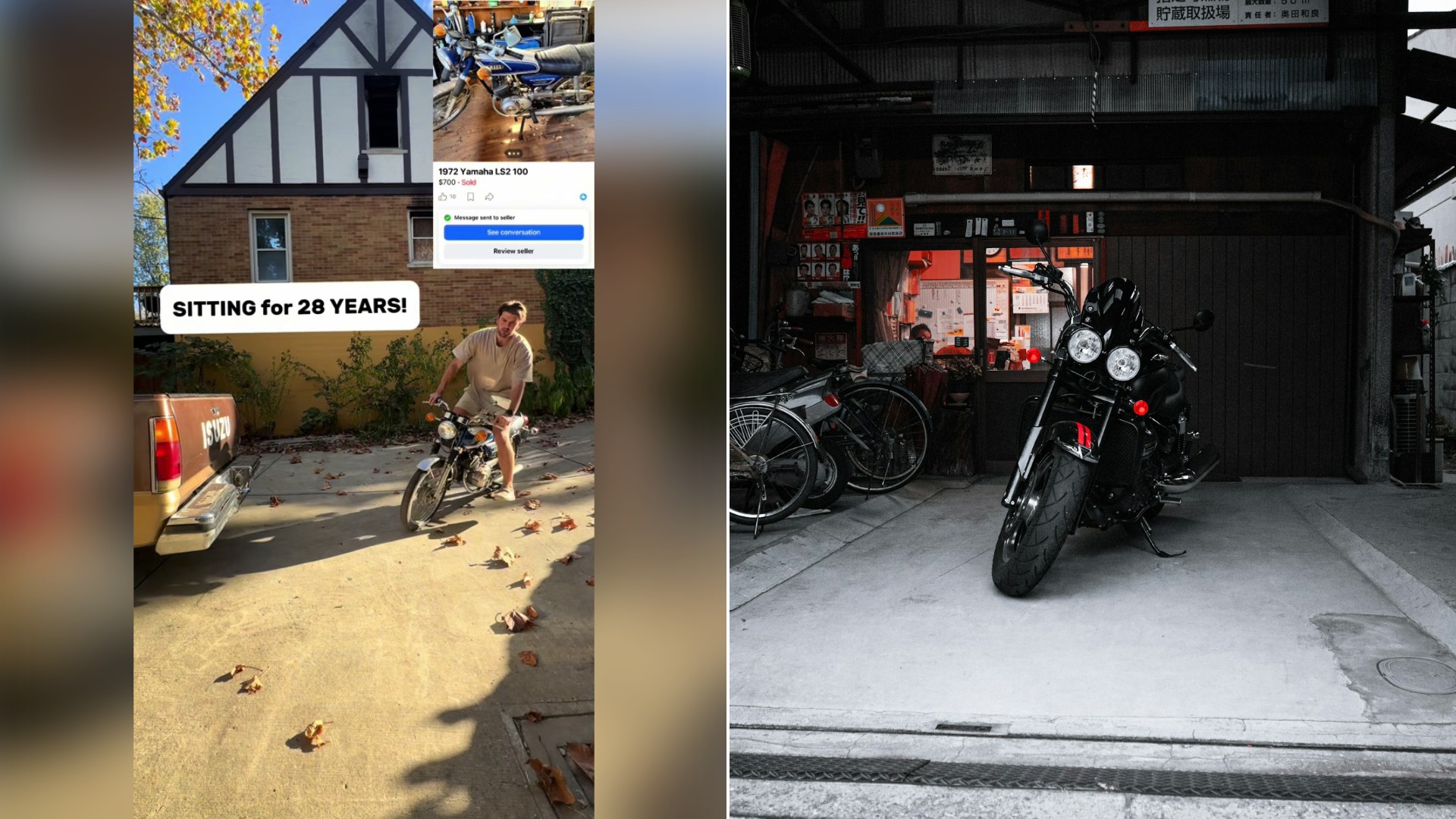
@makingmoneywithmar picked the bike up and set out to bring it back to life, one careful step at a time.
A Super Rare Yamaha That Sat For 28 Years With Just Over 4,000 Miles
The bike is a Yamaha LS2, a twin cylinder 100cc two stroke, which he calls super unusual. Sitting since 1998, he says, you would assume it was near the end of its life. Instead it shows just over 4,000 miles, and the fenders are going to shine up beautifully.
The gas tank is the first roadblock. It is rusty enough that he jokes it is a little early in the video to be crunching on some rust. Still, he found one piece of good news right away: for a change, the bike is not locked up, so he has nothing but time to work on it.
@makingmoneywithmar
The One Owner Bike With A Warranty Card Still Attached
The story behind it is just as good as the machine. He says he got it from a very nice lady named Julie, who bought it in 1973. That makes it a one owner bike, and she rode it in high school and college.
She kept all the paperwork, including the original warranty. He jokes that if anything goes wrong he can just contact Yamaha. The bike has lived in Jersey and Iowa before landing in his shop, and he shows a photo of Julie standing with it one last time. He told her he would get it running, and that promise is what drives the whole project.
First Check The Plugs And Look For Spark
Before touching anything else, he pulled a plug, dropped a little lubrication into the cylinder and let the bike sit for a few days. That is a sensible first step on any engine that has been asleep for decades, because it gives dry rings and walls a little protection before they move.
With the plug out, he checked for spark and was honestly shocked to see it. That was one cylinder, and he reminds viewers that this is a twin, which is part of what makes it cool. The plug itself did not look bad at all.
Varnish In The Carburetor Bowls And A Race To Clean It
A few days later he turned to the two carburetors. This is a one year only model, he says, which means parts are very hard to come by. Even the air filter would be tough to replace, and the carbs cannot be replaced at all. His only choice was to hope they were fully intact.
They were intact, which was his biggest worry, but the bowls held varnish rather than fuel. He says plainly that what was in there is not fuel, it is varnish. He took the carbs apart, putting every small piece in a bag and sending the parts to an ultrasonic cleaner.
He kept the two carburetors separate because one is left handed and the other right handed. He jokes that mixing them up could confuse the bike into turning right when he turns left. The pilot jet on one side would not pass any air no matter how hard he blew, so it needed extra cleaning too.
Water Pouring Out Of Both Floats Threatens The Whole Comeback
After the ultrasonic bath, the carbs looked like brand new. Then came the shock. Water was coming out of the floats. He points out what a float does: it regulates how much gas fills the bowl, and a float full of water does not float.
That is a huge problem, and he asks viewers for suggestions in the comments. The other float was filled too, though it was sealed somehow. He drilled a hole to drain it and found a whopping four grams of water inside. Then he plugged the holes with solder and says the fix is a gamble that only a test run will prove.
He put everything back together and ran a temporary fuel line from a temporary tank, since the real tank is rusty and will get its own treatment later. He turned on the fuel, took the bike outside and went for the moment of truth.
It Fired, But The Exhaust Sounds Clogged And Smoke Fills The Air
It started. The exhaust sounded completely clogged to him, and the bike put out an excess of smoke because he is running two cycle oil as insurance in case the oil injection was not working. The oil injection clearly is working, he says, given the amount of smoke. The RPM gauge works too.
It is not running as crisp as he wants, and he suspects the repaired floats are the cause. Next up are the tank and, he hopes, advice from viewers on what to do about those floats. For a bike that has been sitting since 1998, he says, he is happy.
What Anyone Can Learn From A Long Sleeping Bike
You do not need a rare Yamaha to use these lessons. If you ever buy a bike or small engine that has sat for years, here is the order he followed.
- Pull the plugs and put a little oil in the cylinders before turning anything over.
- Check for spark so you know the ignition side is alive.
- Expect varnish in the carburetors and plan on a full teardown and clean.
- Keep left and right parts separate, and bag every small piece.
- Test the floats, because a float with water inside cannot do its job.
More Stories You May Like
- One Family Kept This 1978 Nova For 45 Years With Just Over 34,500 Miles, And Now The Inherited V8 Hatchback Is Listed For $9,970
- Dad Buys A 1976 Camaro Like The One He Owned 40 Years Ago, And Even The Dealer Selling It Could Not Say Whether He Got 50% Off Or Paid 25% More
- Auction Crew Spots The Outline Where Window Stickers Were Ripped Off Two Mustang Boss 302s With Just 16 And 20 Miles, Then The Stickers Turn Up And One Is Folded