

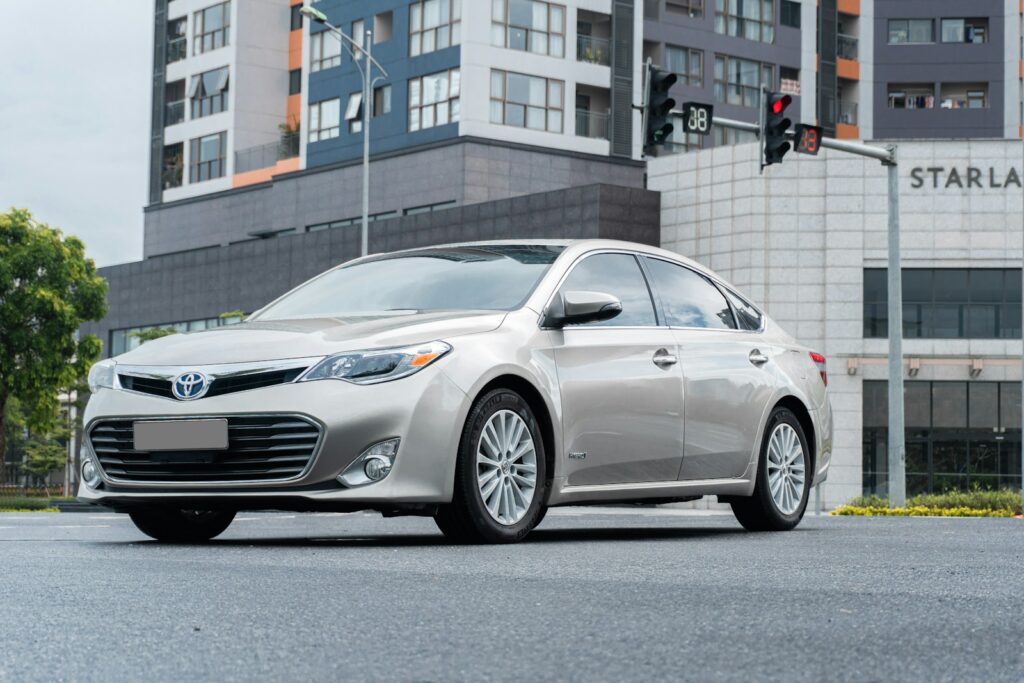
iSeeCars built its newest reliability rankings for used hybrids and electric cars from an analysis of more than 312 million vehicles, not from a survey asking owners how happy they feel about their car. That distinction changes what the list actually says. The Toyota Avalon Hybrid tops the hybrid ranking with a reliability score of 8.1 out of 10, and the Toyota Prius, Honda Accord Hybrid, and Toyota Camry Hybrid all land within a few tenths of it. The electric-car version of the list looks almost empty by comparison. Most EV nameplates are marked “coming soon” because they haven’t been on American roads long enough to generate the mileage data iSeeCars needs. Only the Tesla Model S, at 7.9, and the Nissan LEAF, at 6.6, have scores at all.
How a Reliability Score Gets Built From Repair Data, Not Feelings
Most widely circulated reliability lists ask owners to self-report how many problems they’ve had in a set window, a method that’s inherently subjective and colored by how much someone paid and how attached they feel to the badge on the hood. iSeeCars works from the other direction. Its Reliability Rating measures a vehicle’s actual “useful lifespan and its ability to last 200,000 miles or more,” built from a dataset the company says covers over 312 million vehicles. A related iSeeCars analysis of more than 12 million new and used vehicles feeds the site’s separate Longest-Lasting Cars and five-year depreciation studies, which combine with safety ratings from the National Highway Traffic Safety Administration and the Insurance Institute for Highway Safety to produce the overall Quality Score used on iSeeCars’ buying guides. Nothing in that calculation asks how a current owner feels about the car. It’s closer to actuarial work than to a customer-satisfaction poll, which is precisely why a model with a devoted, vocal fan base can still score lower than a car nobody talks about at all.
Why Toyota and Honda Dominate the Hybrid List
The hybrid rankings read almost like a company roster: Avalon Hybrid at 8.1, Prius and Accord Hybrid tied at 7.9, Camry Hybrid and Sienna Hybrid at 7.8, Honda Insight at 7.5, Prius Plug-in Hybrid at 7.2, both Civic Hybrid variants at 7.0, and the Hyundai Sonata Hybrid closing the list at 6.9. That pattern isn’t really about brand loyalty. It’s about time on the road. Toyota’s hybrid system has been in mass production since the original Prius launched in 2000, and Honda’s since the Insight and Civic Hybrid arrived a few years later, which means there’s simply a far larger population of high-mileage examples for iSeeCars’ model to draw from. A car can’t prove it survives 200,000 miles if it hasn’t existed long enough for anyone to put 200,000 miles on it. On the used-hybrid buying guide, that plays out in concrete picks: a 2015 Kia Optima Hybrid under $10,000, a 2015 Toyota Prius hatchback under $15,000, a 2019 Honda Insight under $20,000, and a 2024 Prius hatchback for buyers willing to spend up to $35,000. iSeeCars also flags a 2021 Toyota Sienna hybrid under $40,000 for buyers who need a minivan’s cargo room without giving up the same long-haul dependability the sedans have already demonstrated.
Why the EV List Is Mostly Blank
Electric cars as a mass-market category are simply younger. Most nameplates outside Tesla and the Nissan LEAF have only been sold in real volume since roughly 2017 to 2020, so the population of EVs old enough to have logged the mileage history iSeeCars needs is still thin. That’s why the company marks most models “coming soon” rather than assigning them a bad score. The Tesla Model S and Nissan LEAF are the exceptions specifically because both have been on sale long enough, the Model S since 2012 and the LEAF since 2010, to have generated a real high-mileage population to study. iSeeCars’ used-EV price-bracket picks lean on that same maturity: a 2017 Nissan LEAF under $10,000, a 2023 LEAF under $20,000, and a 2020 Tesla Model S for buyers up to $35,000. Every other nameplate on the list, including the Chevy Bolt, Hyundai IONIQ, BMW i3, Hyundai Kona Electric, and Kia Niro EV, is still waiting on enough high-mileage examples to earn a number at all, which says less about those cars’ quality and more about how recently EV ownership at scale actually started.
A reliability score that’s mostly blank isn’t a flaw in the electric-car ranking. It’s an honest admission that most EV nameplates haven’t existed long enough to prove anything either way, and the hybrid list, by contrast, is really just a record of which vehicles have had two extra decades to rack up the miles. Buyers cross-shopping both categories are effectively choosing between a segment with a two-decade paper trail and one still writing its first chapter.