
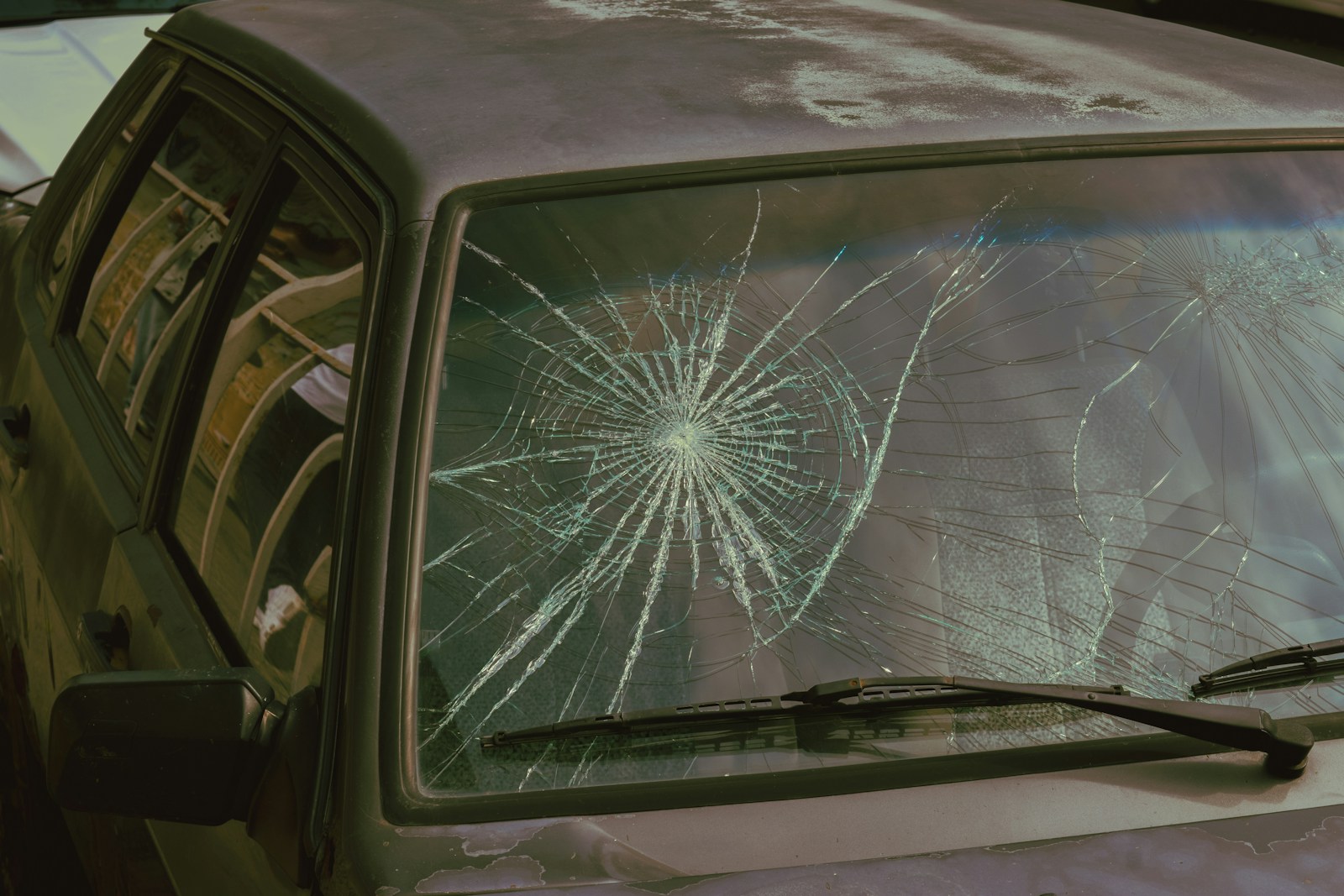

A cracked windshield used to be one of the most predictable repair bills a driver could face, somewhere in the neighborhood of a few hundred dollars, largely absorbed by a comprehensive insurance deductible. That math has quietly broken down for the growing share of vehicles built with a head-up display, because HUD-compatible windshields now run $800 to $2,500 or more, roughly two to three times what a standard replacement costs on the same vehicle. Most drivers still carry a comprehensive deductible sized for the old math, which means the first time their HUD car needs new glass, the bill can land well past what they budgeted for.
Standard Glass Versus HUD Glass, Side by Side
According to Glass.NET’s own installer pricing data, a standard windshield replacement typically costs between $250 and $500 depending on the vehicle. A windshield built to project a head-up display is a different product entirely, and the same source puts that range at $800 to $2,500-plus once make, model, and calibration needs are factored in. Kelley Blue Book’s reporting backs up the scale of that jump, noting that older vehicles without advanced glass can often still be replaced for $300 to $600 out of pocket, while newer vehicles equipped with HUD and driver-assistance cameras routinely push past $1,000 once everything is accounted for.

Why a HUD Windshield Costs So Much More to Build
The price gap is not simply dealer markup. Safelite’s own technical explanation describes a HUD windshield as “an entirely polarized windshield,” built with a precisely angled interlayer that keeps the projected speed, navigation, or safety alerts crisp and free of the double-image ghosting that would show up if an ordinary windshield’s curvature were used instead. That interlayer has to be manufactured to a tighter tolerance than standard glass, and it typically has to be sourced from, or matched closely to, the original equipment supplier, which is a large part of why aftermarket alternatives are harder to find and OEM glass carries a real premium.
What a Typical Deductible Actually Covers
Most drivers with comprehensive coverage carry a deductible in a fairly narrow band. Forbes Advisor’s insurance data puts common comprehensive and collision deductibles at $250 to $1,000, with policies commonly modeled around a $500 deductible in industry rate calculations. For a $300 to $500 standard windshield, that deductible either covers the repair close to in full or comes reasonably near it. For an $800 to $2,500 HUD windshield, that same deductible covers only a fraction of the total bill, leaving hundreds or even more than a thousand dollars of exposure a driver never priced in.
Where the Assumption Breaks Down Completely
The bigger trap is not the deductible math alone, it is coverage scope. Safelite’s own guidance on HUD glass warns that some policies may only reimburse a driver as though standard glass were being installed, leaving the policyholder to personally cover the difference for OEM HUD-compatible glass, a gap that can exceed the deductible itself even after a claim is approved. A driver who assumes worst case, they pay their deductible, has not accounted for the possibility that their policy was never written to cover this specific type of glass at full replacement cost in the first place.
A Few States Remove the Deductible Entirely
Not every driver faces this gap the same way. Forbes Advisor notes that Florida law, state statute 627.7288, eliminates the deductible for comprehensive glass claims outright, and Kentucky and South Carolina offer similar full-glass protections. Drivers in those states who carry comprehensive coverage may see their HUD windshield fully covered regardless of the sticker price, which makes the state a driver is insured in nearly as relevant to this cost as the car they drive.
What to Check Before the Windshield Actually Cracks
Two questions are worth asking an insurance agent well before a rock chip ever spreads into a crack. The first is whether the policy specifies full glass coverage or an OEM parts endorsement, rather than a generic comprehensive deductible that assumes standard glass. The second is whether the deductible itself was set years ago, before the car came equipped with HUD, ADAS cameras, rain sensors, or acoustic layers that all now live inside that one piece of glass. A deductible that felt right for a $300 windshield a decade ago is not sized for the $1,500 windshield that same driver’s next vehicle is likely to need.
The cost of the glass has not gotten more expensive by accident. It is carrying a display system, a camera housing, and in some cars a rain sensor and acoustic dampening layer all bonded into one component, and insurance products built around the old, simpler windshield have not universally caught up. Reading the actual coverage terms before the crack happens is the only way to find out which side of that gap a given driver is standing on.