
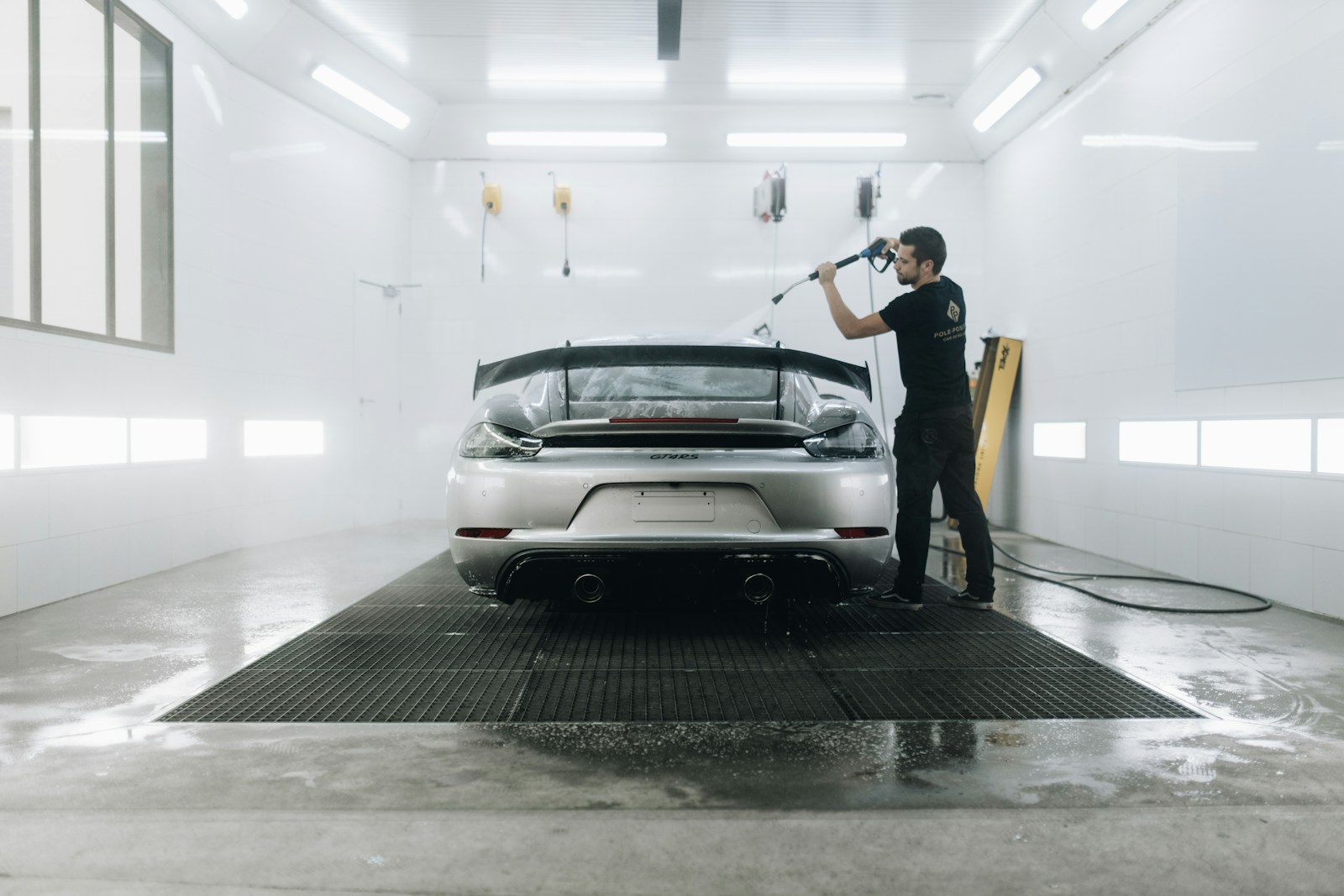

He’d rented the booth for four hours, paid the cash deposit, and dragged his convertible’s hood in like it was a sacred object. The guy doing the work—everyone in the local scene knew him as a “restorer,” the kind who always had primer dust in his hair—kept saying this was the fun part. Color day. The booth lights were bright enough to make every sanding scratch look like a confession.
The hood was bare aluminum, stripped down until it had that clean, pale sheen that makes people feel like they’ve “reset” the project. He’d wiped it down, tacked it off, and lined up his single-stage paint like he’d been dreaming of this moment for weeks. The shop’s paint tech poked his head in, asked the usual questions—what primer, what sealer—and got a shruggy answer that sounded like, “It’s prepped, it’s fine.”
He laid the first coat and it looked incredible for about ten minutes. Deep gloss, wet edge, the kind of finish that makes you start mentally spending money you haven’t earned yet. Then he came back around to check the hood under the light, and the color started doing something that didn’t look like orange peel or a run. It looked like the paint was getting tired of being there.
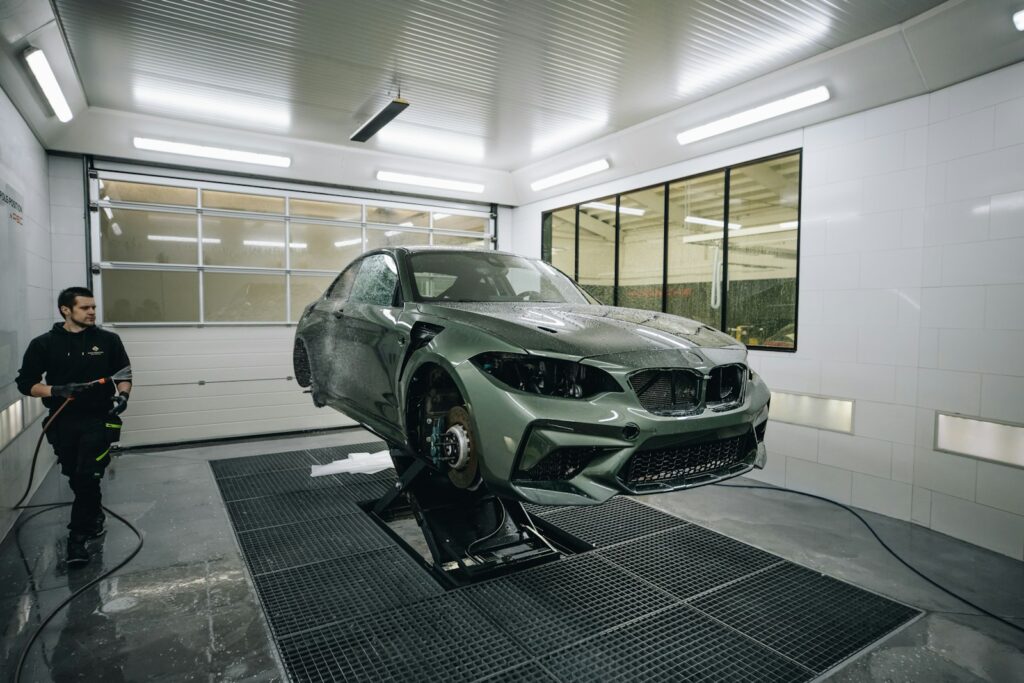
The booth clock was ticking, so he ignored the little warning signs
The first “tell” was subtle: a faint ripple near the front edge, like the paint had skinned over too fast. He blamed airflow, booth temp, maybe the reducer flashing weird. He cracked the gun back open and tried to chase it with a wetter pass, the way you do when you’re trying to bully a finish into behaving.
But it didn’t level out. It kind of… separated. Under the booth lights, the surface looked like it was floating on something, not bonded to anything solid underneath, and every minute it got worse.
The restorer wasn’t a newbie, which made the whole thing more tense. He had that posture of someone who’s done this enough times to be confident and defensive in the same breath. The booth rental was eating his budget, his car was in pieces at home, and this hood was supposed to be the morale boost that carried him through the rest of the build.
The hood started peeling like a sunburn, and nobody wanted to say it out loud
When the lifting really began, it wasn’t a little edge curl you can sand out later. The single-stage paint started to lift in broad, soft sheets, like vinyl wrap being pulled off glass. It crept from the front lip toward the center, and then another section joined it, and suddenly the hood had these hanging, semi-cured flaps of color that looked like melted plastic.
He touched one spot with a gloved finger—just a light tap—and the paint film shifted. Not smeared, not dented, but slid, as if it wasn’t attached. That’s when the room got quiet in that particular way where people stop making shop noise and start calculating how expensive a mistake just became.
The paint tech came back, stood in the doorway, and didn’t step any closer. He asked again, slower this time, what the substrate was and what it was primed with. The restorer answered like he was being accused of something: “Bare aluminum. Clean. Scuffed. Wax and grease remover. I’m running single-stage; it’ll bite.”
The missing step finally surfaced, and it wasn’t a small one
The tech didn’t raise his voice. He didn’t have to. He just nodded once and said something along the lines of, “That’s why it’s coming off,” the way you’d tell someone water is wet.
Aluminum isn’t like steel, and in that booth everyone knew it except the one guy who needed to know it most. Bare aluminum forms oxide fast, and paint doesn’t want to chemically grab onto that layer. Without an etching primer or the right epoxy primer system, you’re basically asking a glossy topcoat to adhere to a surface that’s actively working against you.
The restorer’s face did that thing where you can see him cycling through options: deny it, argue chemistry, blame the paint brand, blame the booth, blame the humidity. He tried the “I’ve done it before” angle, which is a dangerous sentence in any trade. The tech just looked at the hood, where the evidence was literally drooping off the panel.
Then came the worst part: the restorer realized he wasn’t looking at a “sand and reshoot” situation. The paint hadn’t failed like a normal defect. It had failed like a sticker on a greasy surface, which meant anything left on there was untrustworthy, and the clock on his rented booth kept counting down.
Scrambling to save it turned into a messy, expensive scene
He tried to salvage it anyway, because that’s what people do when the alternative is admitting they wasted a day and a stack of money. He grabbed tack cloths, then realized tack cloths were useless because the paint wasn’t dust—there were literal skins of it hanging off. He tried pulling one sheet to “see how bad it was,” and it kept coming, a long, satisfying-but-horrifying peel that exposed perfect bare aluminum underneath like he’d never sprayed anything at all.
The tech told him, pretty plainly, that he needed to stop touching it and get it out of the booth before the mess got worse. The restorer didn’t like being managed in his own project, especially not in front of anyone. He started talking faster, pointing out that he’d paid, that he needed to finish, that the booth’s airflow might’ve been too aggressive, that the reducer might be wrong.
But the hood was already past argument. Every time he moved it, the film shifted and cracked in new lines, like dried mud, except it wasn’t dry. It was half-cured paint behaving like a bad layer of latex on glossy enamel.
Somebody offered him a roll of masking paper and a trash bag, not as a joke but as a practical tool to keep the paint sheets from sticking to the booth floor. He took it without saying thanks, because saying thanks would’ve meant accepting the situation. The hood went from “showpiece” to “hazard” in under half an hour.
The real fight wasn’t about paint—it was about pride and blame
Once it was out of the booth, the conversation shifted from “how do we fix it” to “whose fault is this,” which is where it always goes when money and ego are both on fire. The restorer kept circling back to the idea that the paint should’ve adhered better, like adhesion was a character trait the product was supposed to have. The tech kept coming back to the missing primer system, like repeating it could rewind time.
There was also the awkward detail that the restorer wasn’t just painting a panel. This was his own convertible, his baby, the thing he’d been talking about at meets and posting progress photos of for months. Now he had a hood that looked like it was shedding its skin, and he had to load it back up in full view of other people waiting their turn for the booth.
He tried to bargain for more time, or at least a discounted reshoot, and the shop’s position was simple: they rented him a booth, not competence. They’d sold him materials, but they hadn’t forced him to skip the etching primer. He’d made a decision because he wanted to save time and one more purchase, and now he was paying for it in the most public way possible.
On the drive home, he wasn’t just thinking about stripping the hood again. He was thinking about how he’d tell the story so it didn’t sound like he’d cut a corner. He was thinking about whether his other aluminum panels—if he’d prepped them the same way—were going to do the exact same thing later, after the car was assembled and the stakes were higher.
What stuck with people who heard about it wasn’t the chemistry lesson. It was that moment under the booth lights when the finish looked perfect for a heartbeat, and then reality caught up and pulled it off in sheets. He didn’t lose the project that day, but he lost the illusion that he could muscle past process, and he drove away with a hood that looked fine only from far enough away that you couldn’t see the paint already letting go.
More from Steel Horse Rides: