

He’d been hunting for the right big block coupe for almost a year, the kind of project you tell yourself is “a long-term keeper” so you can justify the price. The ad hit all the buzzwords: “matching numbers,” “numbers verified,” “original big block car,” plus a folder of receipts thick enough to look like homework. The seller wasn’t some teenager flipping a Craigslist beater either—middle-aged guy, clean driveway, nice toolboxes visible in the garage, the whole vibe of someone who “knows what he’s got.”
The restorer showed up with a flashlight, a magnet, and the kind of skepticism you get after you’ve seen too many cars with fresh paint over old sins. He checked the usual stuff: body gaps, trunk drops, torque boxes, the bottoms of the doors, the places where coupes love to rot and bondo loves to hide. The car wasn’t perfect, but it was straight, it ran, and it had the right smell—old vinyl and gasoline, not fresh carpet glue and panic.
When the conversation got to the engine, the seller got a little more animated, like he’d been waiting to say it. Matching numbers. Original block. “You can check it yourself,” he said, and he leaned in like it was a handshake between serious car guys. The restorer did a quick look at the pad where it should’ve been stamped and saw… something. It looked stamped, sure, and the characters were there, but he didn’t have the space or time to really study it in a driveway with the seller hovering two feet away.
The purchase, the paper trail, and that weird little feeling
They negotiated the way people negotiate when both sides think they’re smarter than the other. The seller pointed to the folder, the condition of the interior, the “hard-to-find” big block bits. The restorer pointed to the age of the tires, the slight bubbling at the rear quarter, the brake pedal that felt a little too close to the floor for comfort.
Eventually money changed hands, the title got signed, and the coupe rumbled away sounding every bit like the car it was supposed to be. On the drive back, the restorer tried to enjoy it—big block torque, that heavy nose feel, the way the hood seemed to stretch out in front of him. But that little itch stayed, the one you get when something checks out too cleanly.
Back in his shop, he did what he always does: he made a list, took photos, and started documenting everything before touching a wrench. He flipped through the paperwork more carefully and noticed how the receipts were kind of… scattered. There were genuine parts invoices mixed with generic “engine service” notes, and the dates didn’t always build a neat timeline.
Still, he told himself, paperwork is paperwork. People lose things, people misfile. The car started, didn’t overheat, oil pressure looked decent, and the seller had seemed confident in that casual, unbothered way that makes you think you’re not being played.
Pulling the engine, because that’s what restorers do
The plan wasn’t to yank the motor immediately, but restorations never follow the plan. He found a couple of leaks, discovered wiring that looked like it had been “repaired” with whatever was closest to a pocketknife, and realized the mounts were tired enough that the engine rocked more than it should. A thorough clean and reseal turned into, “Well, if it’s coming apart anyway…”
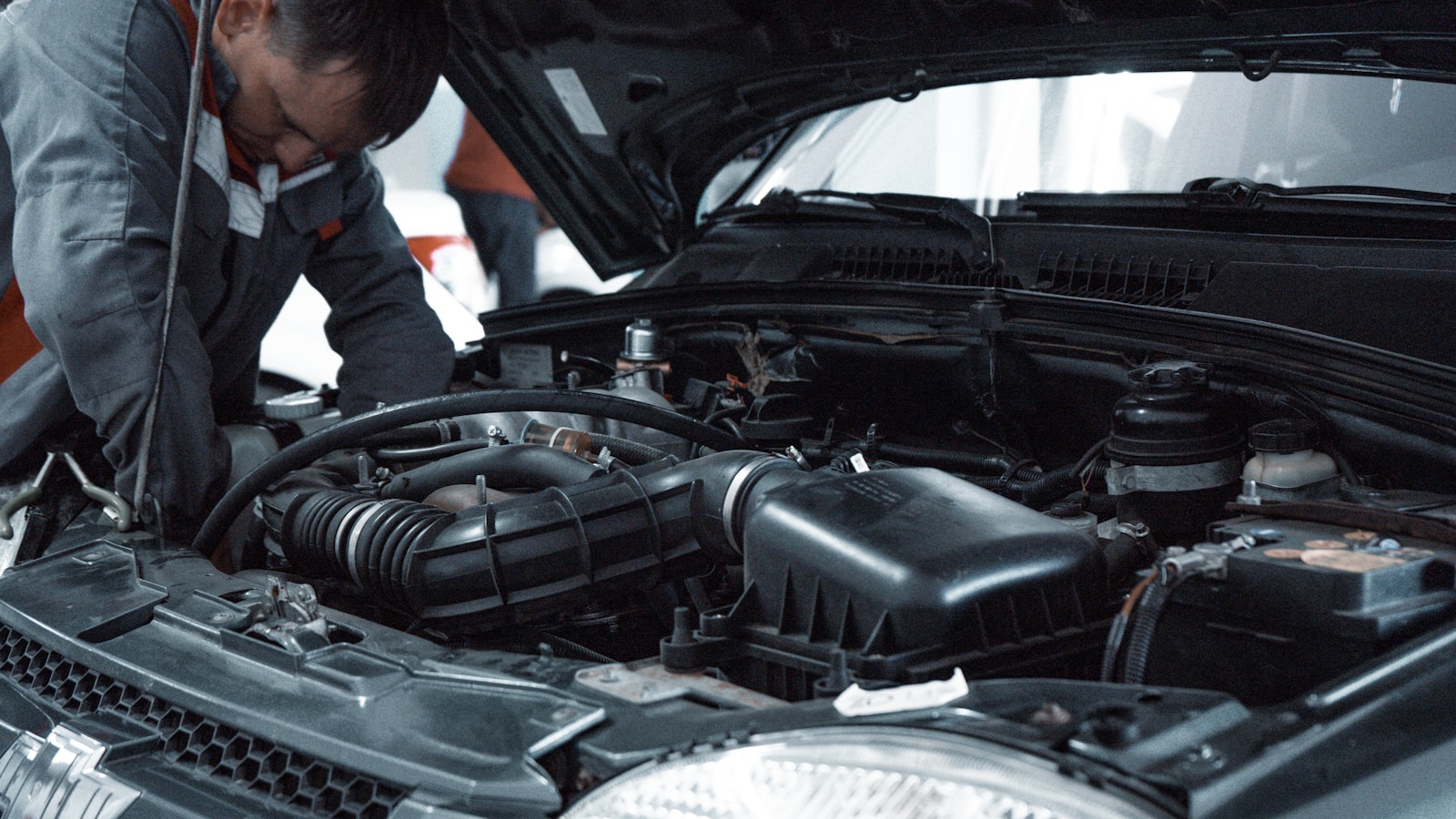
So out it came: radiator drained, headers fought, bellhousing bolts that made him question his life choices. When the engine finally hung from the hoist, dripping old coolant and grime, it felt like progress. He rolled it back, set it on a stand, and started the slower, calmer part—inspection, cleaning, measurements, verifying what he’d paid for.
That’s when the VIN pad became the main character. Not the casting numbers, not the date codes—those were in the ballpark. It was that little rectangle where the factory stamp should look like factory work: consistent depth, aligned characters, a surface that hasn’t been molested by the world.
Under bright light, with the engine turned just right, he saw it: the pad wasn’t just dirty. It wasn’t just worn. It looked like it had been sanded, ground, resurfaced—like someone had intentionally erased something and then tried to put it back.
The VIN pad: ground down, re-stamped, and a letter punch giveaway
At first he thought he was being paranoid. He cleaned it gently with solvent, then more carefully with a soft abrasive pad, trying not to make it worse or convince himself of a story that wasn’t there. The more it cleaned up, the less it looked like a normal factory pad.
Factory stampings tend to have a rhythm to them—same font, same style, and a certain way the metal displaces around the numbers. This pad had uneven character depth, like some digits were hit harder than others. And the characters themselves looked… wrong, in a way that’s hard to describe unless you’ve stared at enough real ones.
The biggest tell was the letter “I,” or what was supposed to be one. Instead of a clean, factory-style character, it looked like it had been made with a generic letter punch from a hardware store set. The edges were sharper, the face was different, and the spacing around it didn’t match the rest of the stamp.
Then he noticed the surface texture. The pad had faint, directional grind marks, like someone had taken a flap disc to it and then tried to smooth it out. It wasn’t the kind of random wear you get from decades of grease and heat cycles; it was the kind of uniform “oops” that comes from someone trying to erase a prior identity.
From “matching numbers” to “matching story”: calling the seller
He didn’t immediately fire off an angry message. He sat with it for a day, took high-res photos from different angles, and compared it to known examples. He talked to a couple of other restorers he trusted, the kind of guys who don’t get excited easily. Their reactions were basically the same: long pause, then, “Yeah… that pad’s been messed with.”
When he finally called the seller, he kept it controlled at first. He explained what he’d found and asked, point blank, if the engine had ever been replaced or if the pad had ever been re-stamped. There was a beat of silence, the kind where you can almost hear someone rearranging their story.
The seller didn’t explode, which almost made it worse. He went into this defensive calm: he bought it that way, he was told it was matching numbers, he never touched the stamp. He asked why the restorer was “tearing into it” if the car ran fine, like the act of verifying the claim was somehow the real offense.
The restorer asked for a partial refund or for the seller to take the car back, because the price had been built around that one big claim. The seller pivoted to semantics—how “matching numbers” gets thrown around, how old cars are complicated, how the receipts show engine work. He offered sympathy without offering money, which is the oldest trick in the book.
The messy part: proof, platforms, and a car that’s suddenly worth less
The restorer started gathering everything: screenshots of the original ad language, texts, the photos of the pad, the paperwork, the title, and the build decoding. He wasn’t looking to start a crusade; he was trying to protect himself in case this turned into a legal fight. But as soon as he started laying it out for a few local car people, the story took on a life of its own.
Because now there was a question bigger than the pad itself: if the stamp is fake, what else is “enhanced”? Was it originally a small block car converted later? Was the block even from the right year? Or was it a real big block car that ate its original engine decades ago, and someone decided they’d rather forge an identity than admit a swap?
The seller kept insisting he didn’t know, which might’ve been true. But “I didn’t do it” doesn’t fix the value difference when the car was advertised as something specific. The restorer wasn’t upset that an old coupe had an engine story—that happens. He was upset because the sale price was built around originality, and the stamping looked like someone had literally edited the car’s DNA with a punch set.
He considered going the legal route, but that opens another door: time, money, and the chance you end up with a judge who hears “classic car” and mentally checks out. Meanwhile the coupe sat there, engine on a stand, VIN pad staring back like a smirk. Every part he cleaned felt like he was restoring a question mark.
And the most awkward part? He still liked the car. He liked the way it looked, the way it drove, the bones of it. But now every time someone asked how the project was going, he had to decide whether to give the polite version—“making progress”—or the real one, where the centerpiece claim of the whole purchase might’ve been fabricated with a grinder and a set of stamped letters.
In the end, the story didn’t land with a neat resolution, just a lingering tension that hung over the whole build: the restorer had a coupe he wanted to save, and a seller who wanted the deal to stay done. The engine pad sat there with its uneven characters and that telltale letter punch “I,” like a tiny, permanent reminder that in the classic car world, the most expensive parts aren’t always the rare ones—they’re the claims you can’t un-buy once you’ve believed them.