

Somewhere inside Richard Childress Racing, a Chevrolet engine was quietly being fitted with cylinder heads that came from Ford. The shop foreman who ran the engine program says the project was so secret that the boss himself was kept in the dark.
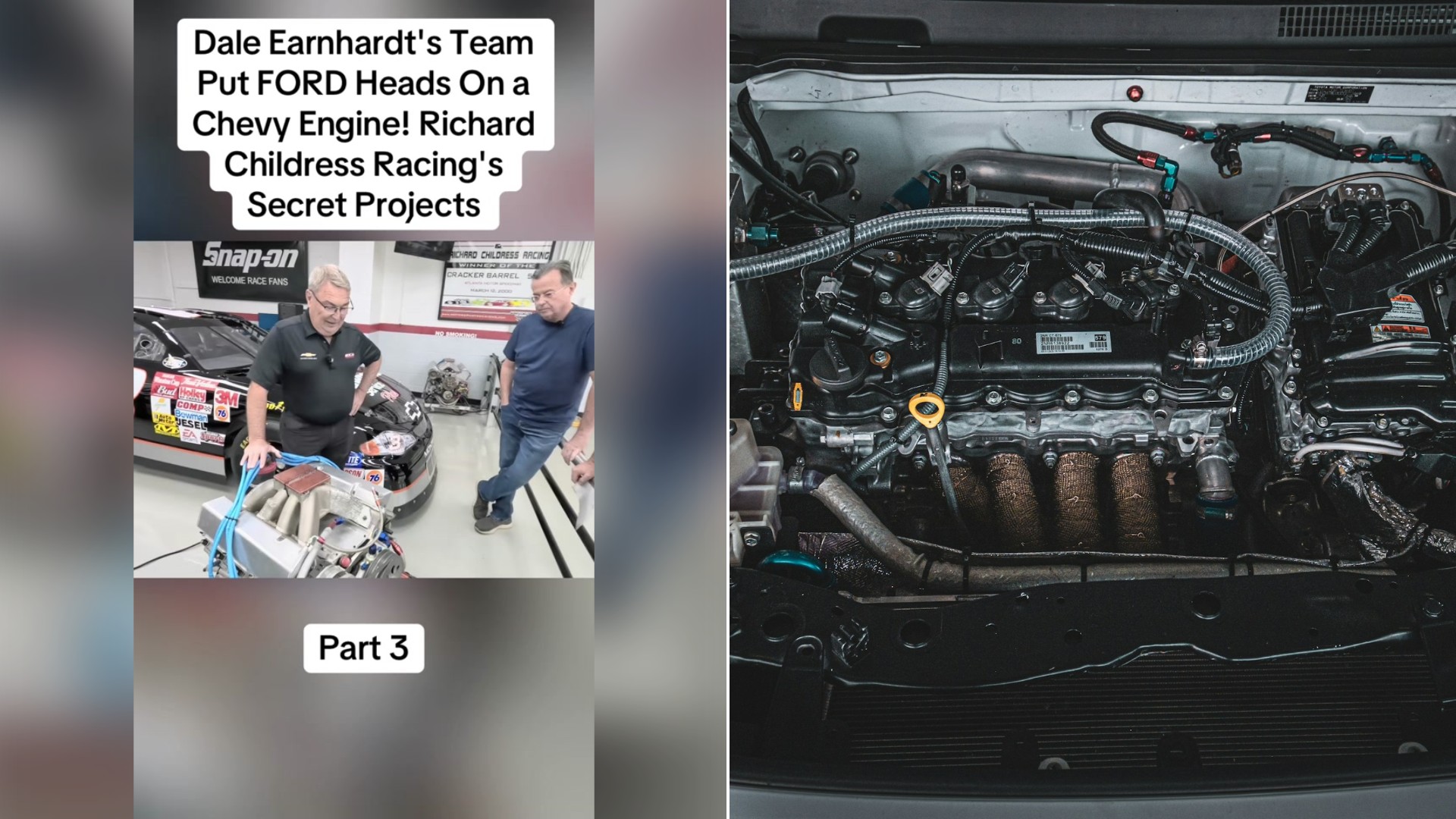
That is the story behind a conversation posted by @ryan.shaw988, where a former shop foreman looks back at the one-of-a-kind engine and the afternoons he spent working on it.
“Nobody Needs To Know What We’re Doing Up In That Building”
The man recalls that there was never a speech about secrecy. It was simply understood. “When nobody needs to know what we’re doing up in that building,” he says, and that was true of this engine and of everything else done in that part of the shop. You did not talk about it.
He says the project got him in some trouble, and he sums up its effect on his life in one line. “This project changed my career path.”
@ryan.shaw988
Every Afternoon At Three, The Foreman Vanished
At the time, he was the shop foreman over the engine program. But every afternoon he would head up to another building and put in four or five more hours on the secret engine. He says the work went on for about three months.
The shop crew could not figure out where he was going. According to him, Richard came looking for him one day and the guys said they could not find him. Every day at three o’clock he left, and nobody knew where.
“So Richard obviously thinks I’m cutting out going home early,” he says. In reality he was working longer days than anyone. He says the project stayed hidden from Richard the entire time.
The Welding Job Nobody Would Call Pretty
His part of the job was welding the cast iron. He says he used a stick welder with a nickel rod, with the flux still on it, and the technique came from an old welding job he had done in Florida. The block would go into a heat treat oven the shop called Lucifer, get heated up, come out for welding, and go back in.
It worked, he says, even if it was not pretty. “Yes, the welds are ugly,” he admits, pointing at a corner of the block. But the team ground the work down and shot paint over it so the block would look like original cast iron again, and silver pressure ports were added along the way.
After all these years, he says, he still has a little pride in it. “I did weld that.”
Why Ford Heads Do Not Simply Bolt On A Chevy Block
Anyone who has built engines knows you cannot just set one brand of cylinder head on another brand of block. The foreman says Ford heads do not fit a Chevrolet block unless you have a master machinist behind it, and the machine work is the hard part.
The only paperwork he could find from the project is a single hand scratched sheet. It lists where the bore centers go and where the head bolt holes should be drilled. He does not have a date on it, but he figures it was around 2002.
He says the head bolts are the notable feature. The engine has four half inch head bolts around each cylinder, set back from the edge. He compares it to the newer R07 block that Chevrolet teams race today, which has a similar layout with two more bolts that this design could also have used.
Who Really Built It And Who Paid For It
The foreman says he did not run the show. He describes being told one day that the team was going to do this, and he was a Ford guy before he came to the shop. Doug and Jerry did the bulk of the work. Decisions above that level were not his to make. “All I know is here’s a bunch of stuff. Let’s make it work.”
His belief is that it was a GM project and that GM was going to pay for it. He says he thinks it worked.
The story ends with a trip to the track in New Hampshire. A team member came to find him and said Richard wanted to talk to him in the motorhome. He remembers thinking it was time to face the boss, with a pat on the back or something worse waiting.
What Racers Can Learn From A Secret Build
The story shows how racing shops work. Teams chase ideas that rarely get seen, and the work behind them is hands-on, patient and often ugly. A few lessons stand out for anyone who builds engines in a home garage.
– Keep your notes. The foreman is still looking at one scratched sheet decades later because one sheet is what survived. – Do not mix parts across brands without the machine work to back it up. Bore centers and head bolt patterns have to line up. – Repairs on cast iron can be done, but heat control matters. His crew preheated the block before welding and returned it to the oven. – Finish matters even on a one-off. Grinding and paint made the repair disappear, and he is proud of that.
A Story That Almost Nobody Was Supposed To Hear
It is rare to hear a shop foreman talk openly about work that was meant to stay inside the walls. Engine rooms in racing are famous for secrecy, and this one stayed quiet for years.
Now the man who spent every afternoon on it is the one telling the tale, and the block with its ugly welds still sits there to prove it happened. Three months of afternoons, one boss in the dark, and a Chevrolet engine wearing Ford heads is the kind of garage legend that fans love to repeat.
More Stories You May Like
- Owner Pays $3,000 To Insure A 2023 Nissan GTR Nismo With 547 Miles On It, Says He Never Even Drove It, And Sells It After Bidding On It At An Auction On His Dad’s 70th Birthday
- 1968 Chevy C10 With What The Seller Says Is An Original 396 Big Block Is Listed For $12,000, But It Needs Floors, Rockers And A Complete Bed
- Dealership Customer Buys A GT3 With The Exact Same Spec As His Old Car And Refuses To Be Filmed Because His Wife Does Not Know He Is Buying A New One