

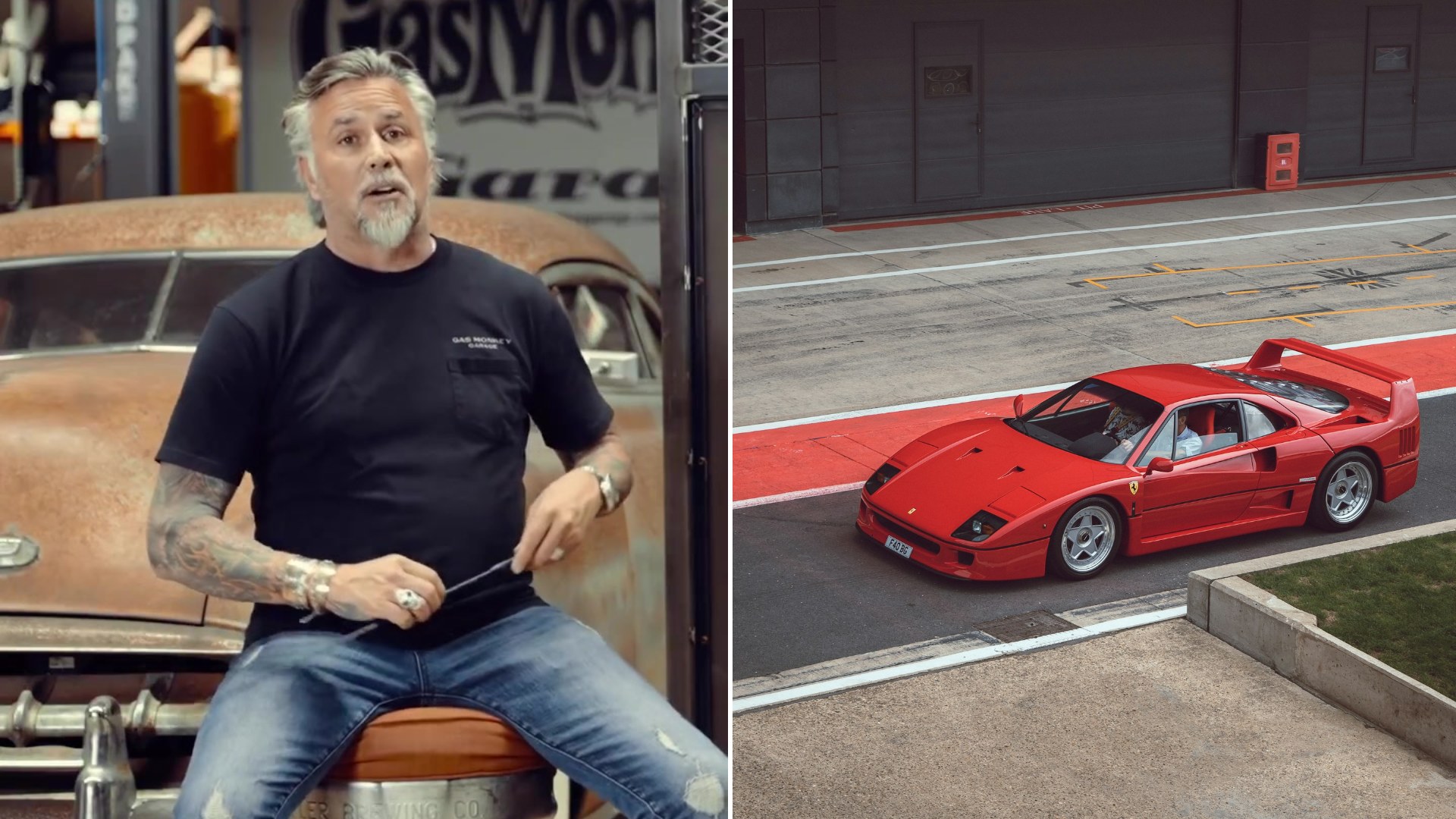
Few builds in Richard Rawlings’ long career have generated as much lasting debate as the Ferrari F40 he revisited in a recent TikTok video. According to Rawlings, Ferrari itself had declared the crashed F40 beyond repair — a total loss, by the manufacturer’s own assessment. He says he took on the rebuild anyway, and then made a decision that car purists still argue about: repainting the famously red Italian supercar black.
“Looking back at arguably my most notorious build I’ve done, the Ferrari F40!” Rawlings says in the caption accompanying the video, tagged with references to Gas Monkey Garage, his own name, and classic cars generally. The framing as his “most notorious” build is itself telling — not his most technically difficult, or his most valuable, but the one that stirred the most controversy, which in the world of high-end restoration and customization often has less to do with the mechanical work and everything to do with the choices made along the way.
The Ferrari F40 occupies a nearly mythical status among car enthusiasts. Built to celebrate Ferrari’s fortieth anniversary, it was the last car personally approved by Enzo Ferrari before his death, and it remains one of the most revered supercars ever produced — raw, analog, and stripped of nearly every comfort feature in the name of pure performance. Any F40 carries weight in the collector world; a specific example with a documented crash history and a controversial rebuild carries an entirely different kind of weight, the sort that generates conversation and disagreement wherever car people gather.
According to Rawlings’ account, Ferrari had declared the crashed car beyond repair before he took it on — a claim that, as with much of the history and backstory he recounts about his own builds, comes from his own narration and recollection of events rather than from independently verified manufacturer records. That distinction matters for a car with this level of provenance: a “beyond repair” designation from Ferrari would represent a significant assessment about the severity of the damage, and taking on a rebuild after that kind of declaration is precisely the sort of decision that separates ambitious restorers from cautious ones.
The decision to paint the finished car black is where the real controversy took hold, at least according to how Rawlings frames the story. Ferrari’s iconic “Rosso Corsa” red is so closely associated with the brand, and with the F40 specifically, that repainting one of these cars any other color tends to provoke strong reactions from purists who view factory-original colors as sacred, particularly on a model as historically significant as this one. Rawlings’ choice to go with black instead reflects a builder’s philosophy that has defined much of his career — a willingness to make bold, personal choices on cars that plenty of others would have left untouched, even at the risk of drawing criticism from collectors who prize originality above all else.
Whatever side of that debate any particular viewer lands on, the rebuild itself — taking a car that had reportedly been written off entirely and returning it to functional, driveable condition — represents a serious undertaking regardless of the paint color that ultimately went on top. Rawlings revisiting the story now, years after the fact, suggests it’s a build that has stuck with him precisely because of how much disagreement it generated at the time.
Takeaway: Restoring a High-Value Collector Car
Anyone taking on the restoration of a high-value or historically significant vehicle should weigh the tension between originality and personal expression carefully before making irreversible choices like a color change — factory-original condition typically preserves and often maximizes long-term collector value, while personalized modifications can divide opinion sharply, even when the underlying craftsmanship is excellent. If a manufacturer or expert has assessed a vehicle as a total loss, get a second, independent structural evaluation before investing in a rebuild, since safety and long-term reliability should outweigh sentimental or financial motivations. And documentation matters: keeping detailed records of a rebuild’s history helps preserve both the story and the value of a car that’s been brought back from the brink.