
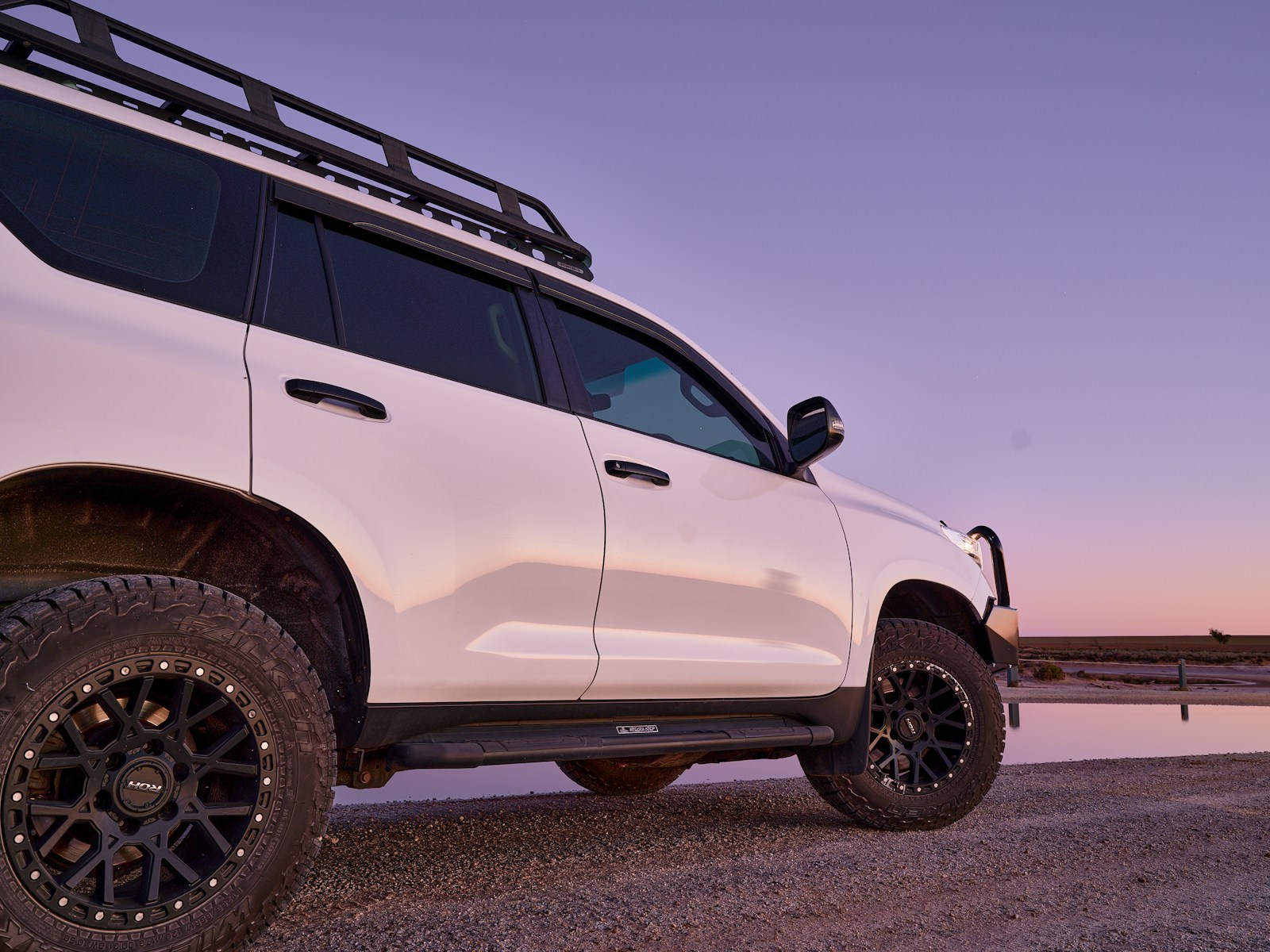

A Roofnest Condor Overland 2 XL rooftop tent weighs 250 pounds empty, before anyone climbs the ladder or packs a sleeping bag inside it. A Ford Bronco’s factory roof rack is rated for roughly 150 pounds while the truck is moving. That means the tent alone, sitting flat and empty on the roof, already exceeds what Ford says the roof can safely carry down the highway, and that’s before counting the crossbars, the mounting hardware, or a single passenger’s gear. Owners are bolting six-figure trucks worth of rooftop camping setups onto load ratings that most of them have never actually read.
Dynamic and Static Are Two Very Different Numbers
Every automaker splits roof load capacity into two figures. Dynamic load is what the roof can carry while the vehicle is being driven, accounting for braking, cornering, and the jolt of hitting a pothole at speed. Static load is what the same roof can hold while parked, with the vehicle’s suspension settled and no driving forces acting on it. A published comparison of factory roof ratings found the 2010-2024 Toyota 4Runner rated at 165 pounds dynamic but 700 to 770 pounds static, while the 2021-2024 Ford Bronco and 2018-2024 Jeep Wrangler JL are both rated at roughly 150 pounds dynamic and 600 pounds static. That’s a four-to-five-fold difference between what the roof can handle parked versus what it can handle in motion, and it’s the dynamic number, the lower one, that governs anything mounted up there while you’re actually driving to the trailhead.
Rooftop Tents Alone Can Eat the Entire Dynamic Budget
Roofnest publishes exact weights for every tent it sells. According to the company’s own support page, the Meadowlark weighs 90 pounds, the Sparrow 2 weighs 145 pounds, the Condor weighs 130 pounds, the Condor XL weighs 180, the Falcon 3 EVO weighs 140, and the flagship Condor Overland 2 XL weighs 250 pounds. Every one of those models except the base Meadowlark already consumes most or all of a Bronco or Wrangler’s 150-pound dynamic rating before a rack, crossbars, ladder, or single occupant’s overnight bag gets added. iKamper’s own product specifications tell a similar story: the company states outright that its Skycamp 3.0 and 2.0 require a minimum of 165 pounds of dynamic roof load capacity just to mount, a threshold a 4Runner clears by a hair and a Bronco or Wrangler doesn’t clear at all.
Where the Confusion Actually Comes From
Part of the problem is that a mounted rooftop tent looks perfectly stable once it’s parked and deployed for the night, because at that point the vehicle is sitting still and the relevant number is the much higher static rating. The tent manufacturers know this, which is why iKamper directs buyers to check their own owner’s manual rather than publishing a single blanket weight limit that would vary by vehicle. But the static rating only applies once you’ve already arrived. Every mile driven with a tent bolted to the roof rack is governed by the dynamic figure, and most tents are marketed and photographed in their parked, deployed state, which is precisely the scenario where the higher, more forgiving number applies. That’s a gap between how the product is sold and how the product is actually used for most of its life cycle.
The Real-World Math Gets Worse With Accessories
A factory or aftermarket roof rack itself typically weighs somewhere between 15 and 40 pounds, and that weight counts against the total load rating the same as cargo does. Add a rooftop tent in the 140-to-190-pound range common among Roofnest and iKamper’s mid-tier offerings, and a Bronco or Wrangler owner has already blown past the 150-pound dynamic ceiling before packing so much as a cooler. The Land Rover Defender, by contrast, carries a notably higher 370-pound dynamic rating, which is one of the few figures in this comparison built with heavier rooftop cargo in mind from the factory. For everyone else, the fix isn’t complicated, it’s just rarely followed: pull the actual owner’s manual for your specific model year, find the dynamic load figure in the load-carrying section, weigh your tent on a bathroom scale before you buy it, and do the subtraction before the rack goes on, not after something starts to creak on the highway.