
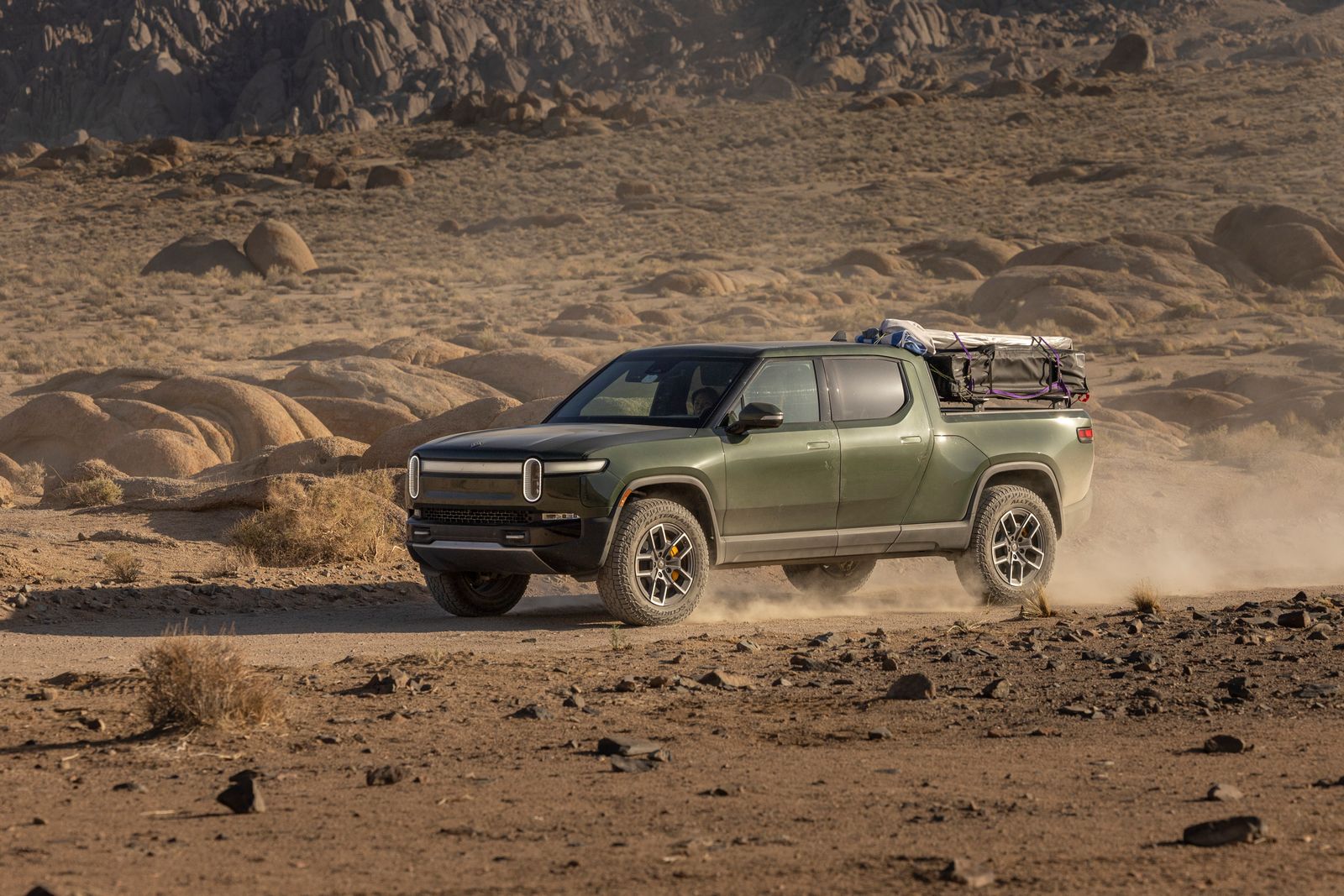

Scout Motors has racked up more than 160,000 reservations for its electric Terra pickup and Traveler SUV, and roughly 87% of those reservation holders are opting for the range-extended EREV version over the pure battery-electric one, according to CEO Scott Keogh’s remarks reported by Backfire News from a March 2026 Automotive Press Association event. What hasn’t happened yet, despite chatter to the contrary, is a final, locked-in price sheet — Scout’s own materials still describe pricing as a target, not a done deal.

What Scout has actually locked down
Scout, the Volkswagen Group-backed revival of the old International Harvester brand, revealed the Terra truck and Traveler SUV back in October 2024 and has been refining specs since. The company’s own site says retail prices are “targeted to start under $60,000” for both vehicles in the U.S., according to Scout’s help center pricing page — language that has not changed to a firm, final number as of this writing.
Range figures are further along: Scout’s own product pages describe the pure-EV versions as good for “up to 350 miles,” while the range-extended Harvester powertrain — a small gas engine that recharges the battery rather than driving the wheels directly — targets “500 miles or more,” per Scout’s Terra product page. Early reveal materials pegged Terra’s towing capacity at 10,000 pounds and Traveler’s at 7,000 pounds, with combined output near 1,000 lb-ft of torque, according to Scout’s own reveal blog post.
Trim and premium pricing remain open questions
What isn’t locked in: the price gap between the base EV and the range-extended Harvester trim. Reporting on the lineup notes plainly that “Scout hasn’t published the Harvester premium yet,” with full trim-by-trim configurator pricing expected to surface only as the 2027 order-to-production window approaches, according to The Weekly Driver’s comparison of the two models. Production itself has also slipped: Scout’s own recent updates now point to volume manufacturing arriving in 2028 rather than the originally floated 2027, tied to the ramp-up of its new Blythewood, South Carolina plant.
How the numbers stack up against Rivian
Even without final Harvester pricing, the under-$60,000 EV starting point undercuts Scout’s most obvious rival by a wide margin. Rivian’s 2026 R1T pickup starts at $70,990 for the Dual Standard trim and climbs to $100,990 for the top Tri Max version, while the R1S SUV runs from $76,990 to $106,990, according to Electrek’s rundown of 2026 Rivian R1 pricing. That’s a gap of $11,000 to $46,000 depending on trim — enough that Scout’s targeted price point alone would represent a meaningfully different market position even before accounting for the EREV option Rivian doesn’t offer at all. That gap helps explain the reservation math: buyers are clearly betting Scout can hit its target price and still deliver real off-road capability and towing numbers close to what a body-on-frame truck buyer expects.
Why the range-extended version is winning the reservation math
The lopsided 87% preference for the Harvester EREV over the pure battery-electric version is arguably the most telling data point in the whole rollout. It suggests Scout’s core buyer looks less like a typical EV early adopter and more like a traditional truck or SUV owner who wants electric-vehicle running costs and quiet, torquey driving most of the time, but doesn’t want to plan road trips around charging infrastructure or lose towing range on long hauls. A small onboard gasoline generator that recharges the battery pack, rather than driving the wheels directly, addresses exactly that anxiety — it’s the same basic pitch that has made range-extended and plug-in hybrid trucks appealing to buyers who’ve been reluctant to go fully electric. Scout leaning into that demand, rather than pushing buyers toward the pure EV, looks like the company reading its own reservation data rather than chasing an EV-only narrative for its own sake.
Backing all of this is Volkswagen Group, which revived the dormant Scout nameplate specifically to build a truck and SUV brand for the U.S. market outside VW’s own dealer network. That parentage matters for credibility on production timelines and parts supply chains — even as the target launch date has already slipped from 2027 to 2028 — in a way that a pure startup wouldn’t have.
The takeaway
The demand signal here is real and well-documented — 160,000-plus reservations is a serious number for a brand that hasn’t sold a single production vehicle yet, and the EREV skew tells you something concrete about who’s actually lining up to buy. But “final production pricing” isn’t the accurate way to describe where things stand today. Scout has locked in a target starting price, solid range estimates, and a heavy tilt toward the range-extended version among reservation holders; the actual trim ladder, the Harvester premium, and the final numbers that will determine whether Scout really undercuts Rivian as much as it looks like on paper are still to come, and won’t be confirmed until the Blythewood plant is closer to actually building these trucks.