
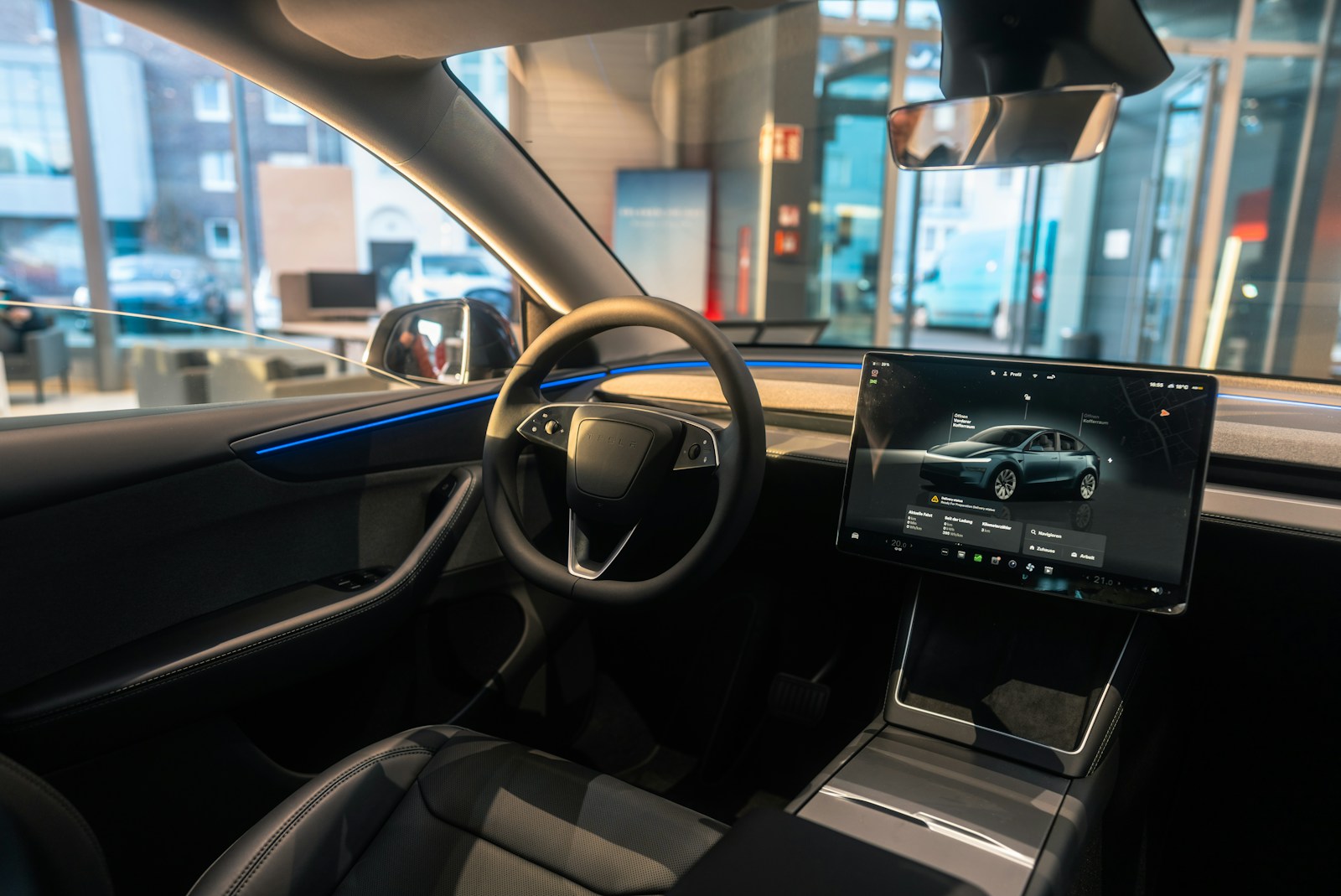

You’ve probably spotted a car steering itself or heard about robotaxis across town, and it feels less like science fiction and more like your next commute. You can experience levelled-up driving today: many vehicles on roads now offer hands-off assistance for stretches of highway or controlled ride services that let occupants relax while the car handles steering and speed.
They’ll describe sensations, safety limits, and when a human must jump back in. Expect clear explanations of the tech behind those features and practical tips for staying safe when you hand control to the vehicle.
What It Feels Like to Hand Over the Wheel
Passengers often notice a quick shift in attention and trust the moment control passes from human to machine. The experience combines sensory calm — fewer micro-corrections and steady speed — with the unusual sensation of watching a vehicle make complex decisions on its own.
First-Time Experience in a Self-Driving Car
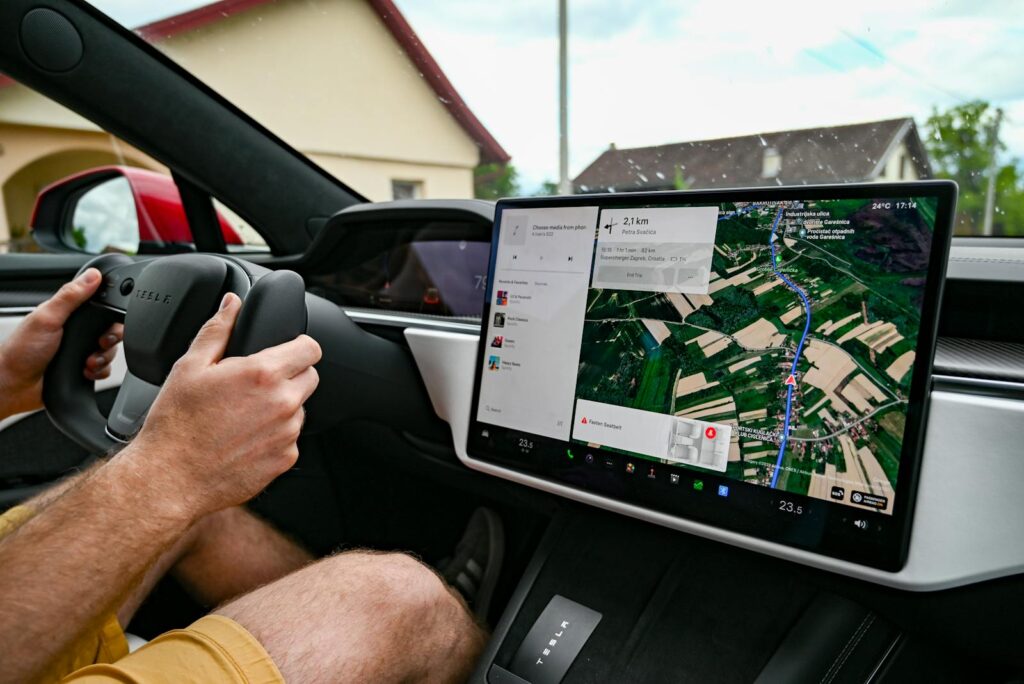
The first ride usually begins with instructions: keep eyes on the road, be ready to intervene, and accept that the car will make small, conservative choices. Riders report a brief period of unease when the vehicle handles merges, traffic lights, or unprotected left turns, then growing confidence as the system demonstrates predictable behavior.
Sensations differ by system. In a Tesla using Full Self-Driving beta, drivers describe frequent prompts and occasional hand-placement checks. In a Waymo robotaxi, passengers often note the absence of a human driver and smoother, more deliberate maneuvers. Both can brake earlier than a cautious human and take wider lines around obstacles.
Emotional response matters. Some feel liberated — especially on long highway stretches — while others stay hyperaware in mixed traffic or complex urban junctions. Clear, calm narration from the app or display reduces anxiety by explaining route choices and upcoming stops.
How Modern Self-Driving Features Work on the Road
Modern systems combine cameras, radar/LiDAR, GPS, and machine learning models to perceive lanes, vehicles, pedestrians, and signage. They fuse sensor data into a live map of the environment and run path-planning algorithms that prioritize safety and legal compliance.
Level-2 systems handle steering and speed but require constant driver supervision; they perform well on highways and marked roads. Higher-level deployments, like Waymo’s robotaxis, operate without an on-board driver by restricting operations to mapped areas and using redundant sensors and runtime safety checks.
Users notice practical behaviors: the car keeps a steady speed, maintains lane centering, and executes smoother accelerations than many human drivers. It yields earlier at crosswalks and slows for ambiguous gaps. Systems vary in assertiveness, so performance on dense urban streets can range from overly cautious to confidently assertive, depending on the company and the vehicle’s design.
Everyday Use for Commuters and Families
Commuters appreciate hands-free segments on highways where adaptive cruise and lane-centering reduce fatigue. They report saving mental energy for work or calls during repetitive commutes, but they still watch the road in case of a sudden takeover request.
Families value features that ease errands: the car navigates parking lots, manages stop-and-go traffic, and can drop off a child at school when regulations and systems allow. In driverless robotaxi services, parents like predictable, rule-abiding routes and in-app trip tracking. Privacy and safety controls remain priorities; parents check monitoring settings and emergency fallback procedures before regular use.
Urban mobility changes slowly. Mixed traffic with human drivers, cyclists, and pedestrians requires constant system updates and human oversight. Riders expect incremental improvements and choose services or vehicles (for example, branded robotaxi networks or cars with Full Self-Driving packages) based on local performance, trust, and regulatory allowances.
How Self-Driving Technology Works Today
Self-driving systems combine cameras, radar, and lidar with mapping, machine learning, and control software to perceive the world, plan routes, and move a vehicle. Today’s deployments range from driver-assist features on consumer cars to limited-area robotaxis operating without a safety driver.
Key Components: Sensors and Artificial Intelligence
Perception starts with hardware: cameras provide high-resolution color images for traffic lights, signs, and lane markings. Radar measures object velocity and performs reliably in rain or snow. Lidar creates precise 3D point clouds for object shape and distance, which helps in complex urban scenes.
Software fuses these sensor streams into a single scene. Machine learning and deep learning models classify objects (pedestrians, cyclists, other vehicles) and predict trajectories. Mapping and localization use HD maps and GPS to locate the vehicle within centimeters. Finally, planning and control modules compute safe paths and translate them into steering, throttle, and brake commands.
Redundant systems and real-time monitoring ensure the stack degrades safely if a sensor fails. Many production cars pair these stacks with driver monitoring to keep a human ready to intervene.
Understanding the Levels of Autonomy
SAE’s levels describe how much driving the vehicle handles. Level 0 means no automation; Level 1 adds a single assist like adaptive cruise control or lane-keeping assist. Level 2 combines multiple assists, for example adaptive cruise control plus lane centering, but requires constant driver supervision.
Level 3 permits the system to drive under limited conditions while the driver must be ready to retake control. A few limited deployments of Level 3 exist. Level 4 offers full autonomy within defined geofenced areas — no human takeover needed in those zones. Level 5 represents full autonomy everywhere, currently theoretical.
Regulators such as the NHTSA evaluate safety, recall systems when necessary, and investigate incidents. Today most consumer vehicles are Level 2 or below, while robotaxi pilots operate at Level 4 in controlled environments.
Who’s Leading: Tesla, Waymo, and Cruise
Tesla pushes advanced driver assistance via over-the-air updates and markets “Autopilot” and “Full Self-Driving,” which the company sells as capable driver-assist packages. Those systems run primarily on cameras and neural networks trained with fleet data; they are widely deployed but remain classified as Level 2 by industry standards.
Waymo operates commercial robotaxis in limited cities using lidar-heavy sensor suites, HD mapping, and conservative planning. Their deployments run in geofenced zones and aim for Level 4 reliability without onboard safety drivers.
Cruise (backed by GM) also fields robotaxis focused on urban service. Cruise uses a mix of lidar, radar, and cameras and has tested large-scale rider programs. After incidents and regulatory scrutiny, Cruise has scaled back some operations while continuing development.
Other companies—Ford’s BlueCruise and GM’s Super Cruise—offer hands-free driving on pre-mapped highways and rely on driver monitoring to meet safety requirements. Each approach trades off sensor choices, mapping dependence, and deployment strategy.
Limitations, Safety Requirements, and the Road Ahead
Current limits include poor weather performance for cameras, lidar cost and complexity, edge-case perception failures, and the need for massive labeled data for machine learning. Systems must handle rare events like unusual roadwork or unpredictable pedestrians; those “long tail” cases remain hard to solve.
Regulatory frameworks require testing, reporting, and sometimes recalls; NHTSA oversight has led to investigations of Tesla’s and others’ software. Safety requirements push for redundancies: multiple sensor types, fail-safe braking like automatic emergency braking, and driver monitoring for Level 2/3 systems.
The industry trend mixes incremental consumer features (adaptive cruise control, lane-keeping assist) with concentrated robotaxi services in defined areas. Wider deployment of Level 4 or higher will depend on improved perception, robust edge-case handling, clearer regulations, and cost reductions for sensors like lidar.